


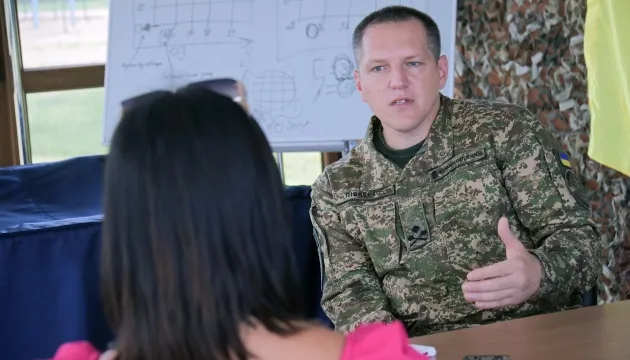
Pivnenko explained how many soldiers are able to return to the National Guard
Category: Politics
Share
Archive
Like
About half of the National Guard service members who leave their military units without permission eventually return to duty. Some of them are identified during joint operations between the National Guard and the police at checkpoints.
National Guard Commander Oleksandr Pivnenko discussed this in a YouTube interview.
He gave a hypothetical example: if 100 soldiers deserted, about 50 of them have already been brought back. According to Pivnenko, soldiers must be returned to duty, but the problem itself has deeper causes.
The commander attributes instances of desertion, in particular, to low morale and the difficult situation within the infantry. In his view, current legislation should also allow the command to discharge service members who are unwilling or unable to properly perform their duties.
'If a person isn't motivated, then give me the opportunity to discharge them in accordance with the law—and that's it,' Pivnenko stated.
He believes that the presence of unmotivated soldiers has a negative impact on other troops and can demotivate units. At the same time, he argues that the funds spent on their pay could be redirected to meet the needs of the infantry.
The senior lieutenant left his military unit without authorization on February 9, but voluntarily returned on May 9 and declared his readiness to continue his service.
For service members who leave their unit without authorization, pay is suspended as of the date of the unauthorized absence. However, the pay the service member has already earned for the previous month is not confiscated—it can be received upon reinstatement to the personnel roster.
Read us on Telegram and Sends
Download our app
A note on cookies
Newshunt uses essential cookies to keep you signed in and to remember your language and country, so the site works the way you expect. With your permission, we'd also like to use analytics cookies to understand how people use Newshunt and improve it over time.
Accepting only affects analytics. To learn more, view our Privacy Policy or Terms & Conditions.
(0)Comments