


The UK Wants To Maintain Ties With Israel, Even As It Looks Like It Doesn't
Category: Politics
Share
Archive
Like
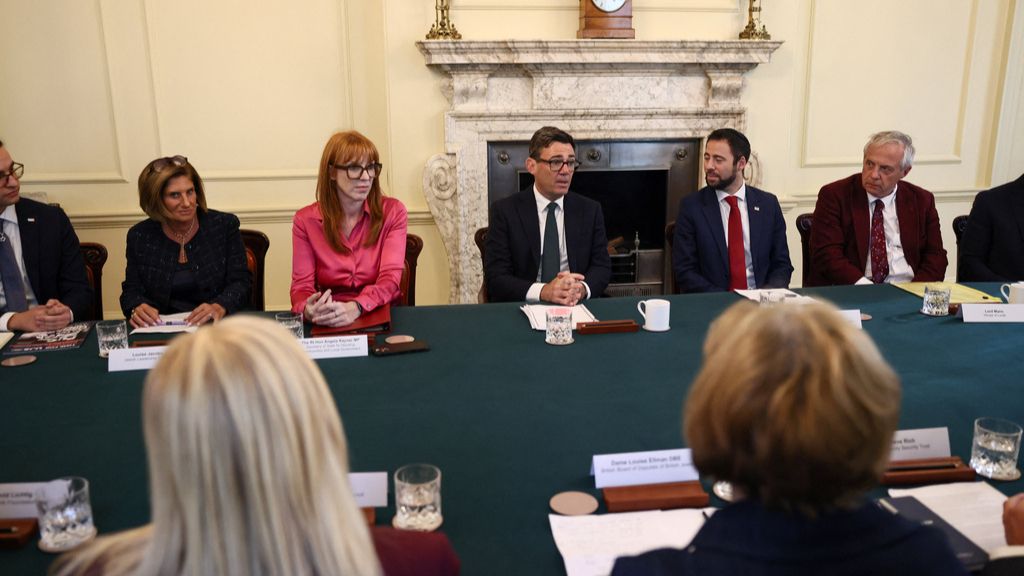
Andy Burnham has been enjoying an extended honeymoon period as British prime minister.
His rapid ascension from mayor of Greater Manchester to 10 Downing Street was maneuvered during the British parliament's summer recess – meaning no unpopular laws could be passed, nor could any scrutiny be directed towards him. Burnham's nationwide tour, small but symbolic pledges, and slick social media videos have given the Labour Party leader a YouGov net approval rating of 13%, the highest for a sitting prime minister since Boris Johnson in the early months of the coronavirus pandemic.
But the holidays are over, and parliament is back in session. The chancellor, John Healey, will announce the British autumn budget at the end of October. Burnham wants to build up as much credit with the public before the seemingly inevitable backlash to his plans to fix the stagnating British economy, whatever they may be.
According to a poll conducted by Opinium and published by the European Council on Foreign Relations, 46% of Brits support a ban on trade with Israeli settlements, while only 18% oppose it. So the decision announced today by Foreign Secretary Ed Miliband will have broad support throughout the country. But the timing of the statement is likely because Burnham has his eyes on another date.
Britain's October 8th
In Israel, 'October 8th' has been used as a shorthand for the elusive date when Hamas ceases its stronghold in Gaza, and the territory can plan for its rehabilitation and future. But this year, the literal date has political significance in London.
Andy Burnham's predecessor as Prime Minister, Keir Starmer, resigned as a member of parliament last week, triggering a by-election in the central London constituency of Holborn & St Pancras, which will take place on October 8th 2026. By-elections are seen as microcosms of the British political climate, and this race may exemplify this more than most.
The likely Green Party candidate is the party's leader, Zack Polanski. The Jewish politician has spearheaded a resurgence of the Green Party. With a coalition of young progressives, eco-warriors and single-issue voting Palestinian supporters who align with their stance on Gaza, they have hemorrhaged support from Labour's traditional left-wing base, one of the many components leading to the downfall of Starmer.
If Labour is able to win this seat at Polanski's expense, they can stop the Green Party's momentum. Many new Green supporters turned their backs on Labour because they felt that Starmer was too weak on Gaza.
There will undoubtedly be some who believe that Burnham has not gone far enough – that the UK should cut all trade and security cooperation with Israel.
But if enough voters in the metropolitan London suburb of Holborn are able to be swayed by the government's latest move, then Burnham could ride his positive wave all the way to the autumn budget, barely needing to look over his shoulder.
A 'symbolic' move
Burnham recognizes the significance of the UK-Israel relationship, and the fine line that must be toed between maintaining this partnership, and appeasing his home base. Just before he became prime minister, his first foreign policy message centered on Israel.
He acknowledged the tragedy of October 7th, but criticized the prolonged IDF campaign in Gaza and the rise in settler violence. However, he made sure to stop short of calling Israel's actions a 'genocide'. Similarly, in Ed Miliband's long and highly critical speech in the House of Commons, he made sure to mention the 'unshakeable bond' the UK has with Israel. The issue, according to Miliband, is the Israeli government.
London wants to separate the country from the government. From the British perspective, it is the country, not the government, that shares vital security information, military equipment, medicinal supplies and technology. If Burnham or Miliband were to go that extra step and accuse Israel of committing genocide in Gaza, they would lose all the benefits of their relationship with Jerusalem. But by being critical of the government, they can appease their base while also maintaining the overall relationship.
https://x.com/i/web/status/2097308980368343205
This post can't be displayed because social networks cookies have been deactivated. You can activate them by clicking manage preferences .
The morning before sanctions were announced, British media was briefed that Miliband viewed the sanctions as 'a symbolic move': the UK's trade with West Bank settlements is so minimal that it doesn't make a dent on either the British or Israeli economies. And the Foreign Secretary was very careful in saying this was directed towards the Israeli government, not the country itself. Therefore, according to him, it would not affect the overall relationship between the UK and Israel.
But it was naive to think Israel would see it as merely symbolic.
A little irrational
US envoy Jared Kushner said Israel's 'crazy election' was making it 'a little irrational' when it comes to Gaza. As parties submit their final lists for next month's election and campaigning begins, rhetoric is high. Like their British counterparts, the Israeli politicians need to appeal to their base.
And Israelis don't take well to countries placing them under sanctions. That's why the UK's decision has been criticized by everyone across the political spectrum, with reactions that the Burnham government would definitely classify as 'a little irrational'.
Finance Minister Bezalel Smotrich, whose inflammatory remarks on Palestinians and support for E1 construction were namechecked by Miliband in the Commons, said that the British ambassador should be expelled and diplomatic relations discontinued. For now, the Israeli government recognises that the UK's actions haven't crossed the threshold for that level of response, and alienating its dwindling number of major allies even further would be cutting off its nose to spite its face.
Israeli Foreign Minister Gideon Sa'ar's response was much more measured. He expelled British representatives from the International Gaza Support Center in Kiryat Gat and ordered the closure of the British consulate in East Jerusalem.
This is the Israeli equivalent of a 'symbolic move' - a gesture to show that they are unhappy with the UK, and that highlights to the Israeli public that they won't stand for it. But as with the British sanctions, it isn't enough to harm the important economic alliance between the two countries, notably the $8.3bn in trade.
Israel is trying to present its response as 'an eye for an eye', but in the grand scheme, it's more of a 'slap for a slap'.
A two-state delusion
At the crux of the British decision is the fact that Israel approved 1,200 new housing units in the area known as E1 – a plot of land in the West Bank between Jerusalem and Ma'ale Adumim. There are roughly 3,700 Bedouin residents sprawled in communities throughout the area, often by the side of roads in poor living conditions. These people would be displaced by the new housing units, to the dismay of the British people, ergo the British government hungry for their support.
But what is it about E1, as opposed to other settlement expansions, that has led to this 'symbolically' drastic action?
E1 essentially acts as a divide between north and south of the West Bank, and is the only corridor that Palestinian vehicles can drive through. It also cuts off East Jerusalem from the rest of the West Bank. It would make a hypothetical, contiguous Palestinian state impossible.
And this is what the UK cares about most. Burnham, Miliband and other Labour politicians love to bring up their support for a two-state solution – a world where Israelis and Palestinians live side by side and everyone is happy. They say that E1 settlements create an obstacle for the two-state solution.
But the main obstacle for a two-state solution is the fact that nobody wants it. Not the Israelis, nor the Palestinians. Only those without skin in the game say that it can happen. British politicians profess their support in the full knowledge that it won't be achieved because it is as popular as it is empty. But pushing for any other alternative, a solely Israeli or solely Palestinian state, is political suicide.
Israel and the United Kingdom will not see eye-to-eye for a long time because its people believe in different things. Especially right now, it is the people who are leading the politicians, rather than the other way around.
A note on cookies
Newshunt uses essential cookies to keep you signed in and to remember your language and country, so the site works the way you expect. With your permission, we'd also like to use analytics cookies to understand how people use Newshunt and improve it over time.
Accepting only affects analytics. To learn more, view our Privacy Policy or Terms & Conditions.
(0)Comments