


Potensic Atom 4K GPS Drone With 3-Axis Gimbal - Sub-249g Camera Quad for 32-Minute Flights
Category: SciTech
Share
Archive
Like
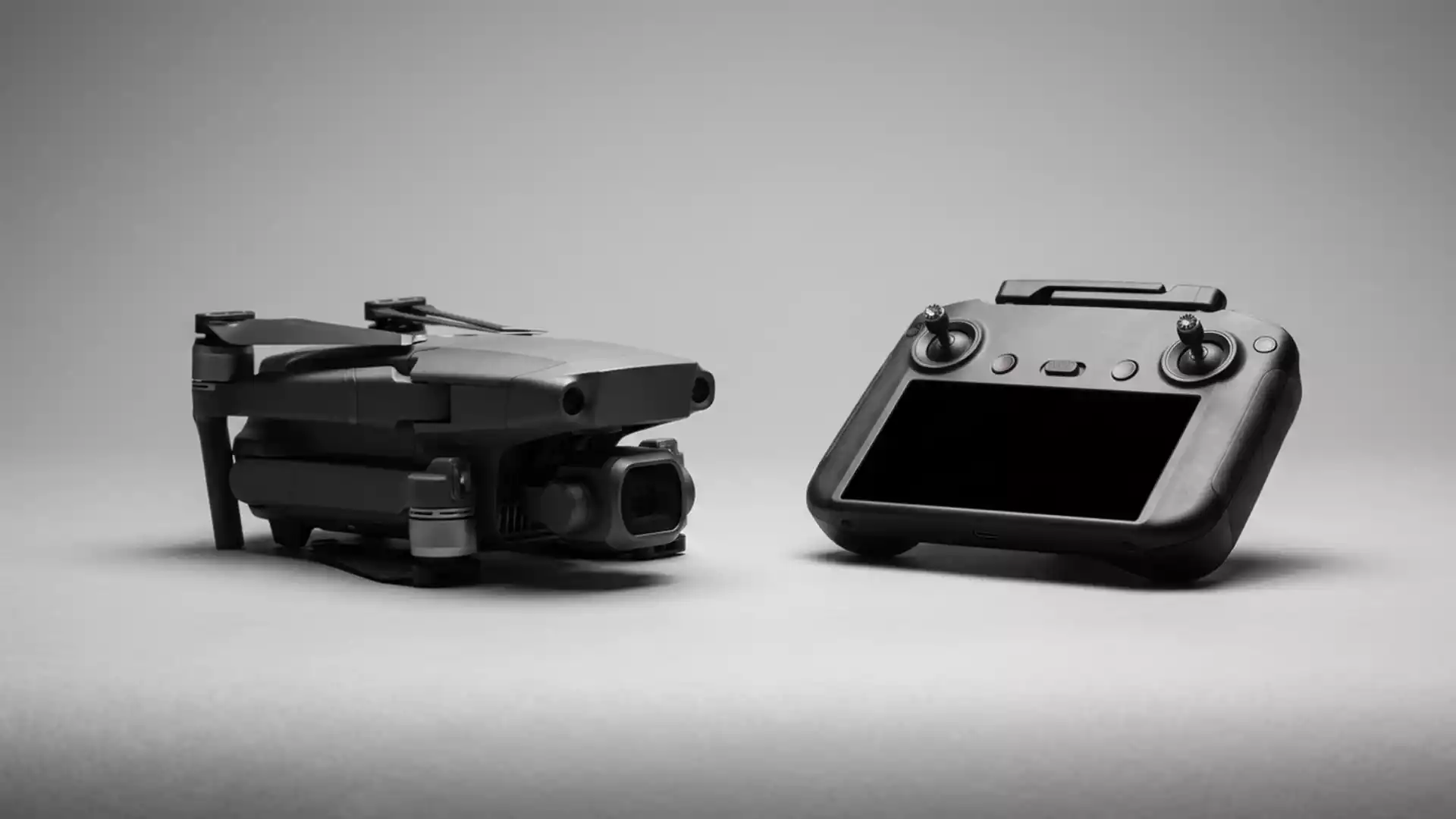
Potensic Atom 4K GPS drone offers a sub-249g takeoff weight, a 3-axis gimbal camera with 4K/30fps video and 12MP stills, plus up to 32 minutes of flight time per battery. For beginner pilots and casual creators, its 6 km transmission range and visual tracking stand out most.
Potensic Atom 4K GPS drone steps into the crowded beginner drone space as a lightweight camera quad that stays under the 249 g registration threshold while still offering a stabilized 4K/30fps camera, up to 32 minutes of advertised flight time per battery, and a 6 km transmission range for FPV control.
Design, Weight And Portability
The Potensic Atom is built as a compact folding drone with arms that tuck into the body for travel, measuring roughly 88 x 143 x 58 mm when folded according to its official specification sheet, and around 300 x 242 x 58 mm when fully unfolded with propeller blades attached.Official Atom dimensions Its listed takeoff weight stays under 249 g when equipped with the standard intelligent battery, propellers, and a microSD card, which keeps it within the sub-250 g class often exempt from heavier registration requirements in many markets.Sub-249 g takeoff weight
The frame uses a diagonal dimension of 219 mm, and the drone is specified to operate between 32°F and 104°F, which matches typical recreational flight conditions, while its Level 5 wind resistance rating equates to handling winds up to 38 km/h under the manufacturer's test scenario.Wind resistance Level 5 spec For altitude, Potensic lists a maximum flight altitude of 120 m, subject to local regulations, and a maximum takeoff altitude of 4000 m above sea level, which provides headroom for mountain travel use cases where thinner air can affect performance.Maximum altitude figures
Camera, Gimbal And Image Quality
At the core of the Potensic Atom's appeal is its stabilized camera setup, combining a 3-axis mechanical gimbal with a Sony CMOS sensor that delivers 4K video at up to 30 fps and 12MP still photos as documented on Potensic's own product page.Potensic Atom camera features Multiple independent reviews confirm that the sensor is a 1/3-inch Sony CMOS unit with a fixed f/2.2 aperture and a lens providing a 78-degree field of view, which places it firmly in line with other compact camera drones in this price band.1/3-inch Sony CMOS and 78° FOV
Video resolution options include 4K at 24, 25, or 30 fps, 2.7K at 24, 25, or 30 fps, and 1080p at frame rates up to 60 fps, giving creators flexibility between maximum resolution and smoother motion capture as laid out in the official specifications.Video resolution options Still photos are recorded at 12MP resolution, and independent test coverage notes support for both JPEG and RAW (DNG) still formats at a maximum still image resolution of 4608 x 2952, which offers flexibility for post-processing workflows.JPEG and RAW still image support
The gimbal provides a tilt range of +20° down to -90°, allowing the camera to point slightly upward for horizon shots or straight down for mapping-style footage and top-down compositions.Camera tilt and gimbal details Trade press reviews highlight that stabilization is handled by the 3-axis brushless gimbal combined with electronic image stabilization on some modes, contributing to smooth footage even when the drone encounters gusts within its Level 5 wind resistance envelope.Stabilization impressions
Battery, Flight Time And Transmission
Power comes from a 2230 mAh intelligent LiPo battery (DSBT02B) with a nominal voltage of 7.7 V and an energy capacity of 17.18 Wh as stated in the technical sheet, with Potensic assigning an advertised maximum flight time of 32 minutes per charge measured at a constant 5 m/s speed at low altitude in windless conditions.Battery capacity and flight time spec The battery pack itself weighs 84 g, uses USB-C for direct charging, and is removable, which is relevant for the Fly More Combo configuration that adds extra batteries and a parallel charging hub bundled in the higher-priced package.Battery pack design and Fly More Combo
Communication between the Potensic Atom and its remote controller relies on the company's third-generation PixSync transmission technology, which advertises a maximum video transmission range of up to 6 km (3.7 miles) under unobstructed, interference-free conditions.PixSync 6 km transmission specification Official specs note that the drone's radio operates in the 2.400 to 2.4835 GHz band for control and video downlink, and the system specifies vertical ascent speeds up to 5 m/s, descent speeds up to 4 m/s, and horizontal speeds up to 16 m/s in Sport Mode.Flight speed and radio band specs
Positioning is achieved with GNSS and vision systems; Potensic publishes vertical positioning accuracy to within ±0.5 m with GNSS and horizontal positioning to ±0.3 m using vision positioning in appropriate conditions, expanding to ±1.5 m when GNSS alone is in use.Positioning accuracy figures That combination of satellite and visual sensors underpins functions such as precise hovering and automatic return-to-home behaviors when signal loss or low battery conditions are detected.
Flight Modes, Controls And App Integration
On the flight software side, the Potensic Atom integrates GPS-based intelligent flight modes including visual tracking, QuickShots, and waypoint missions, as outlined in retail descriptions of the drone's feature set.Visual tracking and QuickShots features Visual tracking uses onboard computer vision to follow a moving subject automatically once it has been selected, while QuickShots allow the drone to perform pre-programmed movements such as orbit or rocket-style climbs to generate cinematic clips with minimal pilot input.
The Atom's remote controller connects to smartphones via USB OTG cable, and compatibility listings highlight support for iOS 11 or later and Android 7.0 or later, which covers current mainstream devices used to run the Potensic app.Remote controller and smartphone compatibility Within the app, pilots can access manual camera controls, perform firmware updates, and manage media storage, while the drone itself relies on microSD cards up to 128 GB with a UHS-3 speed rating for recording, as noted in detailed technical reviews.MicroSD storage capacity support
Price, Packages And US Positioning
For US buyers, the Potensic Atom's pricing has been documented across several reviews and retailer listings; a detailed comparison of Atom and Atom SE states the standard Atom package with one battery was offered at $299, with the Fly More Combo including additional batteries and accessories listed at $399 at the time of that coverage.Standard and Fly More Combo dollar prices Another mainstream review of the Atom mentions a $279 price for the standard configuration and a $100 premium for the Fly More Combo, pointing to a $379 figure for the multi-battery kit, illustrating how price points can fluctuate between sales and channel offers over time.Alternate standard and combo pricing
One independent test publication reinforces the Atom's positioning by noting that its price bracket places it in competition with established consumer drones but with the advantage of sub-250 g weight and 4K/30fps capture, framing it as a beginner-friendly model that undercuts some rivals on sticker cost.Tom's Guide pricing and category placement For US readers, those figures represent typical midrange consumer drone pricing, and discounts or bundle variations are dependent on the specific retailer and timing of promotions.
Direct from the Manufacturer Potensic Atom 4K Drone Official Details
For full specifications, supported accessories and the latest firmware information, Potensic's dedicated Atom page provides the most complete manufacturer overview. View Potensic Atom Specifications
How Potensic Atom Compares To Atom SE And Rivals
Within Potensic's lineup, the Atom sits alongside the Atom SE, which shares the sub-249 g designation but uses electronic image stabilization rather than a full 3-axis gimbal and is often cited with a longer combined flight time of 62 minutes using two batteries, compared with the single-battery 32-minute figure for the Atom.Atom vs Atom SE comparison That trade-off underscores the Atom's focus on stabilized 4K footage and gimbal performance over extended total airtime per kit, delivering 4K@30fps QuickShots with 12MP stills versus the Atom SE's emphasis on dual-battery endurance.
Independent reviewers frequently compare the Atom's 4K/30fps capability and 6 km transmission range with rival drones that top out at 2.7K video or shorter ranges, arguing that Potensic's model provides a higher-resolution capture option and longer control distance in the sub-250 g bracket while maintaining a price point in the upper-$200s to lower-$300s range depending on package.Category comparison with other beginner drones For US drone hobbyists, that mixture of resolution, gimbal stabilization, and compact size puts the Atom into consideration against more established brands, especially for those who prioritize weight limits and value 4K capture over the absolute longest possible flight time.
Use Cases, Limits And Buyer Takeaway
In practical use, the Potensic Atom's sub-249 g takeoff weight, 32-minute battery rating, and 4K/30fps gimbal camera equip it for travel, casual landscape shooting, and social media content creation in environments where heavier drones might raise additional registration or transport concerns.Travel and aerial imaging positioning The 6 km transmission range and visual tracking modes help solo operators capture moving subjects without manual stick control for every shot, while RAW stills and manual camera settings cater to users who intend to edit footage or photos more extensively.
Limits show up in the form of Level 5 wind resistance rather than higher grades, and a maximum flight altitude of 120 m in line with many local rules, which means it is built around recreational, line-of-sight operation rather than heavier-duty commercial scenarios.Operational altitude and wind resistance limits For US readers weighing options, the Potensic Atom aligns most closely with beginner and intermediate users who want a compact, gimbal-equipped 4K drone that balances registration-friendly weight and midrange pricing, accepting that truly professional aerial platforms will bring higher cost, higher weight, and more advanced obstacle sensing systems.
Potensic Atom 4K Drone Key Facts Product: Potensic Atom 4K GPS drone with 3-axis gimbal camera
Potensic Atom 4K GPS drone with 3-axis gimbal camera Manufacturer: Potensic Co., Ltd.
Potensic Co., Ltd. Category: Camera drone (sub-250 g, 4K)
Camera drone (sub-250 g, 4K) Model designation: DSDR04C Atom with DSBT02B intelligent battery
DSDR04C Atom with DSBT02B intelligent battery Takeoff weight: < 249 g including battery, propellers and microSD card
< 249 g including battery, propellers and microSD card Dimensions: 88 x 143 x 58 mm folded; 300 x 242 x 58 mm unfolded with propellers
88 x 143 x 58 mm folded; 300 x 242 x 58 mm unfolded with propellers Camera resolution: 4K video up to 30 fps; 12MP still photos
4K video up to 30 fps; 12MP still photos Battery capacity: 2230 mAh, 7.7 V, 17.18 Wh LiPo pack
2230 mAh, 7.7 V, 17.18 Wh LiPo pack Advertised flight time: 32 minutes per battery measured at 5 m/s in windless low-altitude conditions
32 minutes per battery measured at 5 m/s in windless low-altitude conditions Transmission range: Up to 6 km video and control range via PixSync at 2.400-2.4835 GHz
Up to 6 km video and control range via PixSync at 2.400-2.4835 GHz Wind resistance: Level 5, up to 38 km/h
Level 5, up to 38 km/h Price: Standard package around $279-$299, Fly More Combo around $379-$399, depending on retailer and date
Standard package around $279-$299, Fly More Combo around $379-$399, depending on retailer and date Target audience: Beginner and intermediate drone pilots seeking a compact sub-250 g 4K camera drone with gimbal stabilization and midrange pricing
A note on cookies
Newshunt uses essential cookies to keep you signed in and to remember your language and country, so the site works the way you expect. With your permission, we'd also like to use analytics cookies to understand how people use Newshunt and improve it over time.
Accepting only affects analytics. To learn more, view our Privacy Policy or Terms & Conditions.
(0)Comments