


Zephyrhills Home Fire: Lithium Battery Destroys Family's House
Category: Health
Share
Archive
Like
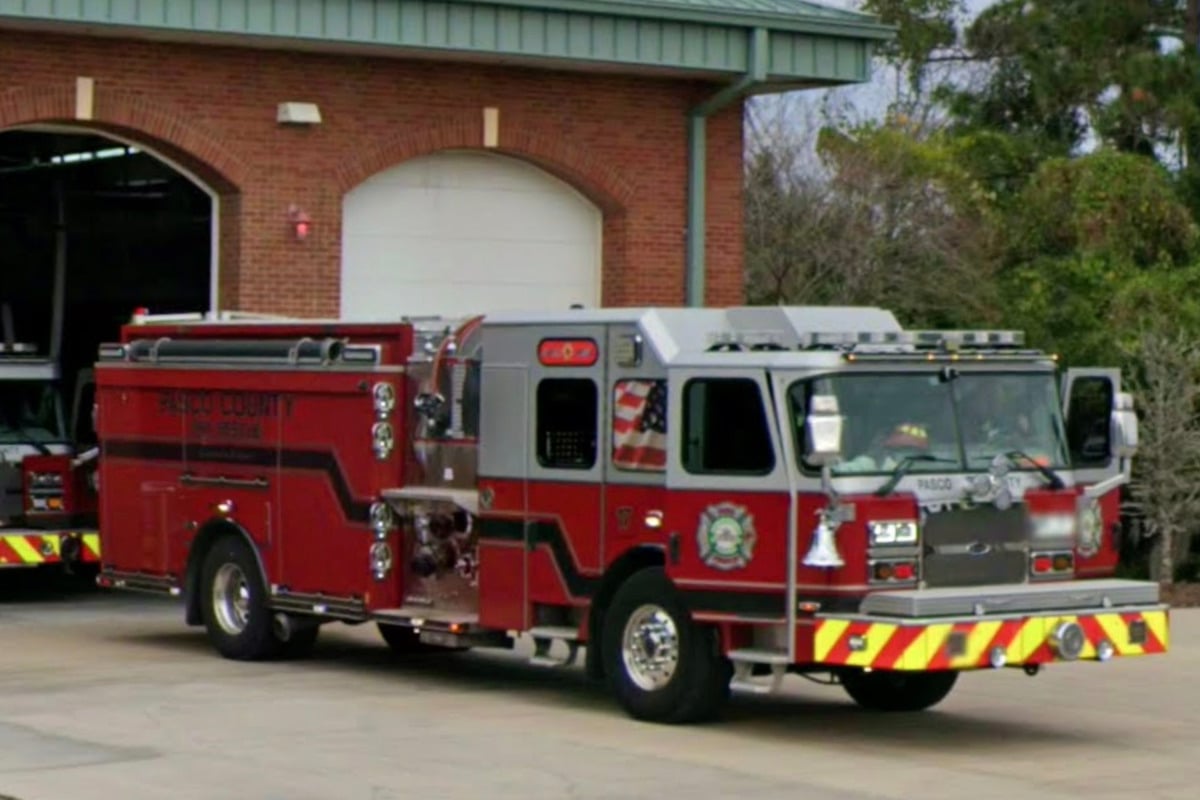
A lithium-ion battery charging inside a backyard shed sparked a house fire that destroyed a Zephyrhills couple's home, including the mobility lift Rebecca Sims relies on to get around and the prosthetic leg she has worn since losing her left leg to a blood clot in late 2023. Pasco County Fire Rescue responded to the mobile home around 8:30 p.m. on Aug. 31, and firefighters determined the blaze started from a lithium-ion battery in a shed near the house.
Steve Sims had landscaping equipment charging in the shed that afternoon, including an electric blower, a weed-eater and a drill that all used the same batteries, according to Tampa Bay 28. He said he had switched a battery that morning because landscapers mow on Mondays. After swapping the battery, Sims took the couple's dog, Zeus, for a walk and then to the dog park, unaware of what was brewing back at the house.
By the time the fire took hold, neighbor Rick Vawter said he saw flames rolling out of the carport and smoke pouring from the eaves. Steve Sims grabbed a garden hose and tried to put out the flames himself, even returning to the burning home in the process. He later said he should have backed immediately away from the fire instead.
That instinct to fight the fire with water is a common but dangerous mistake, according to official guidance from the U.S. Fire Administration, which instructs residents never to use water on an active lithium-ion battery fire and instead recommends evacuating immediately or using a specialized Class D extinguisher. Research from the Fire Safety Research Institute shows that when a large lithium-ion battery goes into thermal runaway, the time available to escape a home can drop from roughly three minutes to a minute or less, underscoring how little margin residents have once a battery ignites.
Rebecca Sims escaped the home safely, but the fire ultimately destroyed everything the couple owned, including her lift and prosthetic leg. Steve Sims said the couple had experienced too much bad luck already.
Vawter has since created a GoFundMe page to raise money for the couple, with the funds going toward covering necessities and helping rebuild their home.
The Zephyrhills fire is not an isolated incident in Pasco County. Fire Rescue crews responded to a similar blaze in January, when malfunctioning lithium-ion batteries sparked a garage fire at a home in Dade City, as reported by FOX 13 Tampa Bay. After that fire, Pasco County Fire Rescue Deputy Chief Shawn Whited warned residents that lithium-ion batteries store high energy density and urged people never to charge devices unattended or near combustible materials.
Federal regulators have also flagged risks tied to charging conditions like the ones inside an unconditioned Florida shed in late summer. The U.S. Fire Administration warns against charging or storing lithium-ion batteries in direct sunlight or in ambient temperatures above 105 degrees Fahrenheit, conditions that can accelerate degradation inside the cells. The agency has also cautioned that faulty or third-party chargers can trigger fires; the Consumer Product Safety Commission issued a warning in October 2024 about third-party lithium-ion battery chargers sold online, citing severe fire hazards and at least one fatal house fire linked to electrical arcing. It remains unclear whether the equipment involved in the Zephyrhills fire used original manufacturer batteries and chargers or aftermarket parts, and whether the specific battery model has been subject to any recent recall.
The scale of the recall problem is significant. In July, the Consumer Product Safety Commission and Greenworks Tools recalled more than 554,000 Kobalt-branded yard power tools after finding that their lithium-ion batteries could short-circuit while charging, posing serious fire and burn hazards. Separately, the commission has previously reported that lithium-ion batteries in consumer products were involved in more than 25,000 overheating or fire incidents between 2012 and 2017 nationwide.
Even so, a March report from the National Institute of Standards and Technology noted that tracking consumer lithium-ion battery fires remains difficult nationally, since incident reporting across federal databases like NFIRS and the CPSC's own systems remains fragmented. That makes it hard to know exactly how many home fires like the one in Zephyrhills are happening each year.
Pasco County Fire Rescue, which operates 29 fire stations across the unincorporated county and responded to more than 102,000 calls in 2025, has now dealt with multiple battery-sparked residential fires this year alone. For Steve and Rebecca Sims, the immediate concern is rebuilding what the flames took, with neighbors and the community now stepping in to help fill the gap.
A note on cookies
Newshunt uses essential cookies to keep you signed in and to remember your language and country, so the site works the way you expect. With your permission, we'd also like to use analytics cookies to understand how people use Newshunt and improve it over time.
Accepting only affects analytics. To learn more, view our Privacy Policy or Terms & Conditions.
(0)Comments