


Reported US military deaths exceed Pentagon tally: Report
Category: Politics
Share
Archive
Like
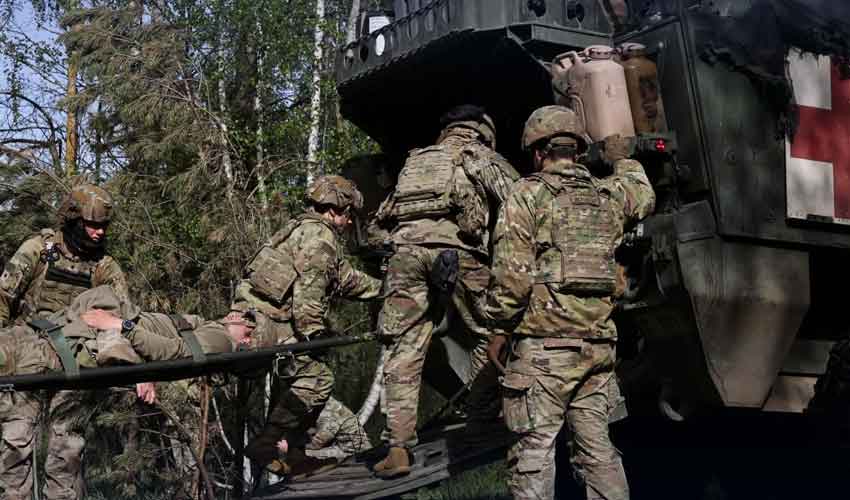
More US service members may have died during the ongoing Iran war than the Pentagon has publicly acknowledged, according to six US officials familiar with the Defense Department's internal casualty data.
The reported discrepancy comes as the conflict's estimated cost has climbed to $43.6 billion.
The Washington Post reported that at least 22 US military personnel have died, four more than the 18 fatalities listed in the Pentagon's public casualty database. A sixth official put the number at 23, while saying not all of the additional deaths were directly linked to combat.
Five officials cited by The Washington Post said there had been at least 22 military fatalities since the conflict began on February 28, when the United States and Israel launched the war against Iran.
The sixth official said 23 service members had died in the region, including personnel whose deaths occurred amid ongoing hostilities but were not necessarily caused by the fighting. That official also said three US contractors based in the region had been killed since combat operations began.
The Pentagon's Defense Casualty Analysis System listed 18 US military fatalities as of Friday, including deaths resulting from both hostile and non-hostile actions. The circumstances, identities and locations surrounding the additional reported deaths remain unclear.
The Pentagon declined to address questions about the reported discrepancy in casualty figures.
Hegseth rejects report
US Defense Secretary Pete Hegseth rejected The Washington Post report, describing it on X as 'DISGUSTING and FAKE' and calling it a 'complete LIE.'
The Washington Post did not immediately respond to a request for comment. In its report, the newspaper said the Pentagon had declined to answer its questions regarding the difference between the internal and publicly available casualty figures.
The reported figures have added scrutiny to the Pentagon's handling of military casualty information. Proper accounting can also affect official line-of-duty investigations and the survivor benefits available to families of fallen service members.
More than 820 US troops wounded
The Pentagon's public casualty database says more than 820 US service members have been wounded in action since the Iran conflict began.
Many of those troops have suffered traumatic brain injuries linked to Iranian counterstrikes against US military bases across the Middle East. The conflict has also depleted US stocks of precision weapons, damaged military facilities and disrupted global energy markets after Iran closed the Strait of Hormuz.
The casualty dispute comes as the financial burden of the war continues to increase.
US Central Command estimates that the war had cost approximately $43.6 billion by September 3, according to a document provided to lawmakers.
The figure includes about $28.1 billion in munitions and more than $4.3 billion in equipment that was lost or damaged. It does not include future expenses or the cost of rebuilding damaged US military facilities in the region.
The Congressional Budget Office had estimated that the war cost about $38 billion through August 1 and could add another $2 billion to $3 billion per month, depending on the intensity of the fighting.
The latest Central Command estimate shows weapons expenditure rising sharply. Munitions costs increased from $21.7 billion in the CBO estimate to $28.1 billion in the newer military figures.
US bases suffer extensive damage
The US military's latest cost breakdown includes expenses for operating warships, aircraft and bases, as well as equipment losses and medical support for troops.
However, it does not include damage to American bases across the Middle East. A Pentagon inspector general report said Iranian ballistic missile and drone strikes had damaged or destroyed hundreds of buildings and other structures at US facilities in Kuwait, Bahrain, Qatar, the United Arab Emirates, Saudi Arabia, Iraq, Oman and Jordan.
Munitions account for well over half of the reported costs. Defensive missile interceptors, including those used by the Army's Patriot and THAAD systems, have been among the weapons most heavily demanded.
The depletion of US missile-defence stocks has also raised concerns among European allies. US and NATO officials have described the shortage of missile interceptors in Europe as reaching a critical level.
Saudi Arabia is also facing shortages of interceptors and has sought assistance from regional and Western partners as its confrontation with Houthi rebels in Yemen continues.
Trump administration seeks larger defence budget
The latest cost figures emerged as the Trump administration seeks approval for a historic $1.5 trillion military budget proposal.
The White House is also asking Congress to approve a $95 billion package intended to help finance the Iran war and other priorities.
Hegseth called for approval of the larger defence budget during a Friday speech in Austin, Texas, at Saronic Technologies, a company that manufactures drones for the US Navy.
'We're asking for $1.5 trillion in the current budget to make generational investments,' Hegseth said, adding that the administration would fund the department and support US manufacturing jobs.
Democrats demand full accounting
Democratic senators have called on Hegseth to provide a complete accounting of the costs of the Iran war.
In a letter to the Pentagon chief, the lawmakers criticized the Defense Department for withholding what they described as basic budget information from Congress and the public as military casualties and taxpayer costs rise.
The Pentagon's one-page breakdown provided to Congress includes expenses for warships, aircraft and bases, equipment losses and medical support for troops.
Separately, Politico reported Friday that sensitive F-35 components went missing after being diverted to Hong Kong while being transported from Australia to the United States. The report said the Pentagon confirmed it was aware of a shipment issue involving unserviceable F-35 Lightning II components and was working to recover them.
One of the missing components reportedly includes an F-35 canopy incorporating specialized stealth technology. Two sources told Politico that a rival could potentially reverse-engineer the technology if the component were obtained.
It remains unclear why the components, which were being transported by an intermediary on behalf of F-35 manufacturer Lockheed Martin, were diverted to Hong Kong.
Lockheed Martin told Politico that its teams handle shipments with strict safeguards to protect the F-35 programme and allied partners, while declining to discuss the shipment's status for security reasons.
Congressional national security committees, along with State and Defense Department officials, were briefed on the matter in June, with additional meetings expected in the coming weeks.
War puts pressure on US military resources
The reported casualty discrepancy and rising financial costs come as the Iran conflict continues to put pressure on US military resources.
The latest official estimates show that the conflict has consumed tens of billions of dollars in weapons and operations, while Iranian strikes have damaged facilities and contributed to shortages of missile-defence interceptors. The Pentagon's public casualty database, meanwhile, continues to show a lower death toll than the figures reported by officials to The Washington Post.
A note on cookies
Newshunt uses essential cookies to keep you signed in and to remember your language and country, so the site works the way you expect. With your permission, we'd also like to use analytics cookies to understand how people use Newshunt and improve it over time.
Accepting only affects analytics. To learn more, view our Privacy Policy or Terms & Conditions.
(0)Comments