


Laguna Beach, Providence Explore Small Hospital to Save ER
Category: Health
Share
Archive
Like
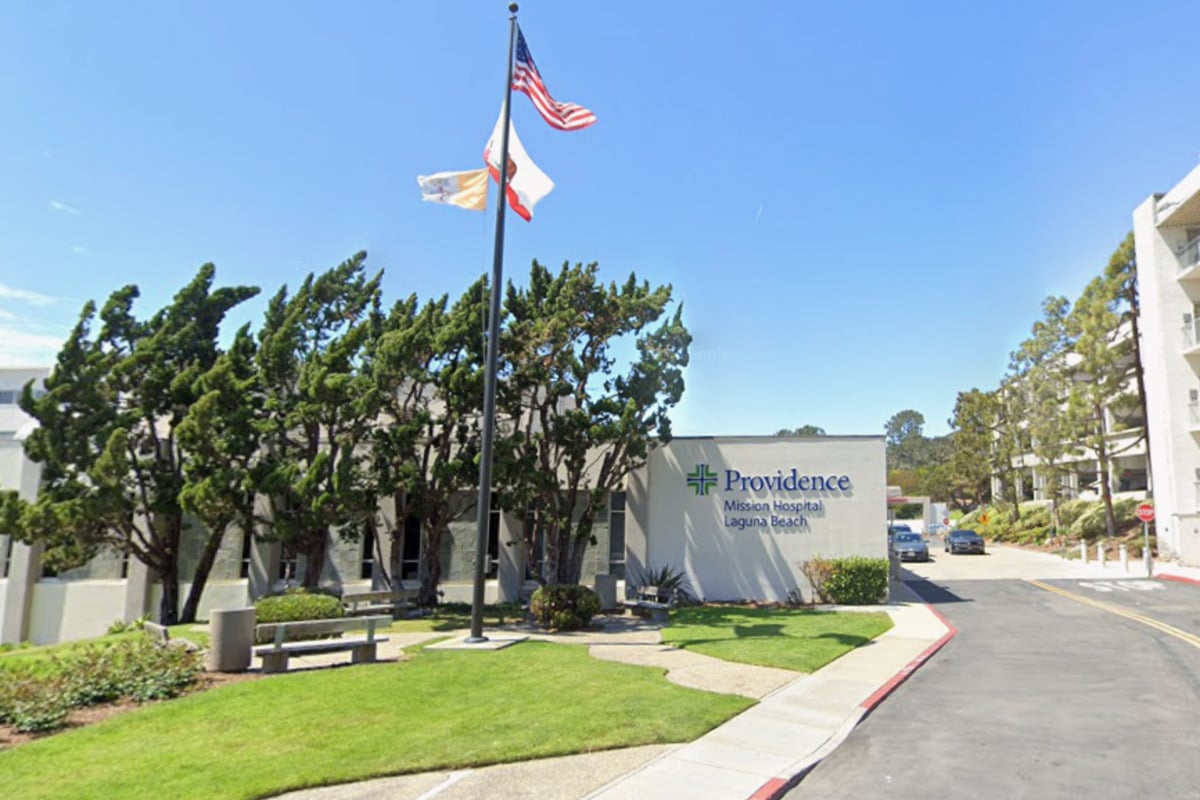
Laguna Beach's only emergency room, which handles about 17,000 visits a year, is at risk of closing by 2030 unless the city and Providence Mission Hospital can find a way around strict state hospital rules. The two sides have now agreed to study whether a small-scale hospital could keep emergency care running on the 20-acre South Laguna site once state seismic mandates force a reckoning over the aging facility's future.
The agreement, detailed in a joint statement, comes after Providence Mission Hospital told the city in January that it did not intend to keep running an acute care hospital at the Laguna Beach campus, according to the Los Angeles Times. Providence had considered shifting the site to an outpatient-focused model, a change that would have meant the loss of the emergency room altogether, since a care facility without an emergency department cannot accept ambulance traffic. Seth Teigen, chief executive of Providence Mission Hospital, said California does not allow standalone emergency departments, which is why the hospital system and the city are now weighing a small-scale hospital instead of simply closing the ER outright.
Providence has pointed to the cost of seismic retrofitting required under state law as the driving factor behind its retreat from acute care at the 1959 facility. The hospital system has estimated seismic compliance costs of $300 million to $350 million, a figure that, per Becker's Hospital Review, includes an estimated $50 million just to replace aging electrical and plumbing systems on top of roughly $300 million in structural upgrades mandated by SB 1953. Those costs are landing on a facility where, according to the same report, an average of 80 percent of its 159 licensed beds sit unused each day, undercutting the case for pouring hundreds of millions into acute inpatient capacity.
Laguna Beach responded by launching plans to save its emergency room, forming a 16-member hospital task force that has now met twice, most recently on August 20. At that meeting, Providence Chief Medical Officer Melanie Wolf described an ambulance as 'an icu on wheels,' underscoring how much local emergency response depends on the hospital staying open. Ron Geisman told the task force the community is not interested in an outcome without emergency department services, a sentiment the task force echoed when it reaffirmed that the emergency department must remain.
The stakes are concrete: the Laguna Beach emergency department recorded 14,827 visits last year, and about 3,400 patients annually require admission. Roughly 60 percent of Laguna Beach Fire Department ambulance transports go to the local emergency room, according to the task force's findings as reported by the Los Angeles Times. Without it, ambulance patients would instead be routed to neighboring specialty care facilities, including Hoag Hospital in Newport Beach and Mission Hospital in Mission Viejo, since a campus without emergency services cannot accept patients suffering heart attacks, strokes, or critical illnesses in children — and would send Laguna Beach patients to the Mission Viejo regional trauma center by ambulance instead.
On August 24, Providence agreed to evaluate the micro-hospital model, though the health system stopped short of committing to pursue it. Health systems in other states have used micro-hospitals — small-scale facilities with 8 to 12 inpatient or observation beds — to legally operate 24/7 emergency rooms and maintain Medicare billing, according to research published in Health Affairs. Because California law does not allow standalone emergency rooms, that small-bed model, or a change to state law itself, may be the only routes left to keep a Laguna Beach ER open once the 2030 seismic deadline hits.
City leaders are pursuing both tracks at once. Laguna Beach and Providence have agreed to pursue legislation that would allow a standalone emergency department, and Councilman Bob Whalen said the city and Providence have discussed that legislative option with their shared lobbying firm. Teigen has expressed willingness to pursue legislation for a standalone emergency department, and said hospitals across California face similar circumstances as the 2030 deadline approaches. That statewide pressure is real: less than half of California's acute care hospitals were on track to meet the 2030 seismic mandates as of late 2025, according to Health Care Construction News, with RAND Corporation estimating statewide compliance costs between $143 billion and $176 billion.
The California Legislature has historically been reluctant to allow standalone emergency rooms, and Governor Gavin Newsom underscored the state's firm stance on seismic deadlines in September 2024 when he vetoed Senate Bill 1432, which would have pushed the acute care compliance deadline from 2030 to 2035. That veto, according to Hanson Bridgett LLP, affirmed that noncompliant hospitals must retrofit, rebuild, or cease acute operations by January 1, 2030 — leaving Laguna Beach little room to simply wait out the problem.
Councilman Alex Rounaghi, who along with Whalen serves on an ad hoc committee for the hospital, said health and safety is local government's highest obligation. Rounaghi has also noted that attorney general reviewers called it critical in 2016 for Laguna Beach to keep its emergency services when Providence's predecessor took over the site. That 2009 acquisition, when St. Joseph Health (now Providence) bought the struggling South Coast Medical Center, kept the hospital from closing altogether and folded it into the health system as a secondary campus.
The push to preserve emergency care in Laguna Beach traces back to a tragedy that predates the hospital itself. In 1953, Laguna Beach police officer Gordon French was shot during a jail booking attempt and bled to death while being transported to Hoag Hospital in Newport Beach because no local emergency facility existed. His death mobilized residents to build the city's first hospital, which opened in 1959 as the same South Laguna facility now at the center of today's fight.
Community investment in that emergency department has continued in the decades since. In December 2014, Laguna Beach residents Sue and Bill Gross donated $10 million — the site's largest gift ever — to fund a multi-phase expansion of the emergency department that bears their name, a project completed in October 2019. That history helps explain why a June survey of 400 Laguna Beach residents found that 88 percent rated maintaining a local 24/7 emergency room as important, a finding reported by Voice of OC. The city has also issued a request for qualifications to hire an independent consultant who will study the technical, financial, and public-safety impacts of a potential closure, giving Laguna Beach its own outside analysis as it negotiates with Providence over what comes next.
A note on cookies
Newshunt uses essential cookies to keep you signed in and to remember your language and country, so the site works the way you expect. With your permission, we'd also like to use analytics cookies to understand how people use Newshunt and improve it over time.
Accepting only affects analytics. To learn more, view our Privacy Policy or Terms & Conditions.
(0)Comments