


IMF report groups Moldova with EU applicants ahead of Ukraine
Category: Financial
Share
Archive
Like
Ukraine's and Moldova's EU membership bids have so far moved in tandem, but an International Monetary Fund (IMF) report released on Sept. 8 has separated Kyiv from Chisinau and grouped the latter with the Western Balkans, where several countries are further ahead in the process.
Moldova and Ukraine had their membership applications joined together when they opened the six so-called enlargement clusters: to-do lists of reforms that the countries have to do in order to align with the EU.
They have each opened only two clusters so far, on rule of law and external relations, respectively, but there are signs that Moldova is starting to advance at a faster pace.
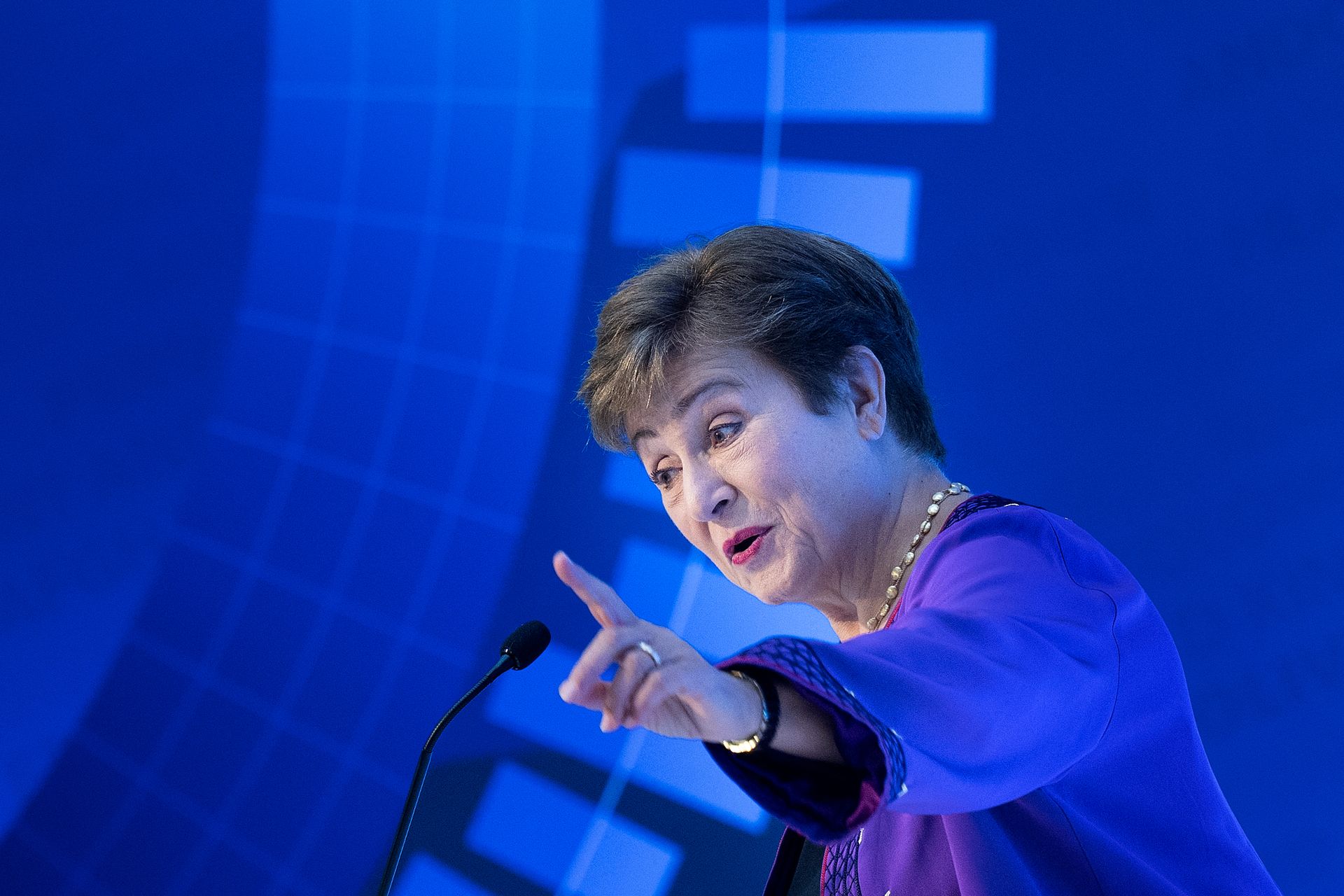
IMF Managing Director Kristalina Georgieva said the decision to group Moldova with the Western Balkans was because they "share very similar features."
The IMF report itself mentions Ukraine's "much larger size and ongoing military conflict" as reasons for its exclusion.
The report is meant to answer questions about the potential gains to EU candidate countries from membership, as well as to the bloc as a whole.
"We recognize the importance of continuing engagement with other countries seeking to join, especially with Ukraine," Georgieva said at a launch event for the report organized by the Center for European Policy Studies (CEPS), a Brussels think tank.
The EU's Enlargement Commissioner Marta Kos already singled out Moldova in July as the "best performer" in accession talks.
Meanwhile, Ukraine's parliament has struggled to advance reforms required by the EU and the IMF.
The EU's Economy Commissioner, Valdis Dombrovskis, held a call with Prime Minister Serhii Koretskyi on Sept. 7, during which Dombrovskis insisted that Ukraine adhere to the agreed-upon timetable for reforms.
The commissioner is also set to discuss the topic with Georgieva later on Sept. 8.
Several of the countries in the Western Balkans are significantly ahead of Moldova and Ukraine in their EU accession processes.
In Montenegro, work is already underway to draft an accession treaty for it to join the EU as the 28th member state.
Albania is working to close negotiation chapters rather than open them.
Serbia remains ahead of Ukraine and Moldova in the number of negotiating chapters opened, even as the gap closes.
But North Macedonia, Bosnia and Herzegovina, and Kosovo all lag behind.
The IMF report nevertheless underscored that EU membership would be a major economic boon for countries joining, including Ukraine.
Georgieva presented data showing that after 10 years of membership, the countries in the study saw their GDP per capita increase by roughly 35%, mostly due to productivity gains (~20%) and partially to capital investment (~12%).
Those increases would be driven by three roughly equally important factors, Georgieva explained: participation in the EU single market, the inflow of EU funds, and domestic reforms.
The latter refers to adopting the EU's to-do list for fully aligning with the bloc.
Kos said she has "no doubt" that Ukraine could enjoy similar economic prosperity, "if it delivers on EU accession reforms."
Ukraine could "become one of the most dynamic investment markets in the world" upon EU accession, the enlargement commissioner said.
"Another Wirtschaftswunder ('economic miracle') in Europe."
Geopolitics threatens integration
Kos also emphasized that "for the first time in history, we have adversaries in the enlargement process."
"Clearly, Russia is one of them," Kos said, accusing Moscow of seeking to prevent candidates from joining the bloc.
The full-scale war in Ukraine and the Russian occupation of Moldova's Transnistria region are both issues that complicate accepting them as members of the EU.
Countries are generally required to have sovereign control over all their territory, though Cyprus shows there are exceptions: its government does not exercise control over the northern part of the island, which is de facto governed by a Turkey-aligned, internationally unrecognized authority.
"We also feel pressure from the West, from the MAGA ideologists who try to persuade us that our European civilization is in decline, that our economy is in decline."
Kos also pointed to China as a potential challenge for EU enlargement.
Beijing is "somehow nestling in our candidates," Kos explained, so that once the countries join the EU, these Chinese companies will have infiltrated the bloc's single market.
Kos warned that if candidates are left outside the EU for years or decades, these adversaries will "jump in and turn them against us."
"We have to be clever enough to jump in first, in the sense that they (candidate countries) will be able to get some fruits of the membership before they become members."
A note on cookies
Newshunt uses essential cookies to keep you signed in and to remember your language and country, so the site works the way you expect. With your permission, we'd also like to use analytics cookies to understand how people use Newshunt and improve it over time.
Accepting only affects analytics. To learn more, view our Privacy Policy or Terms & Conditions.
(0)Comments