


Why I'm Asking Our Community to Support Speech-Language Pathologists
Category: Health
Share
Archive
Like
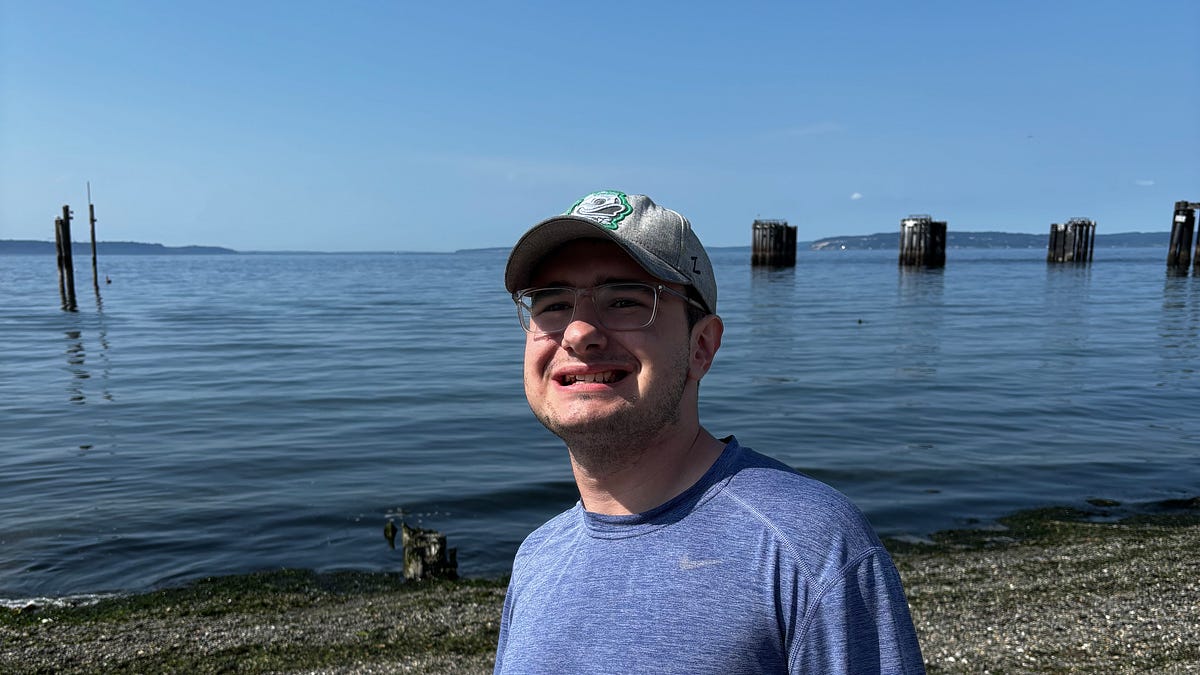
Four years ago, we stopped taking Stone to speech therapy.
And later this month, almost exactly four years after Stone began learning to communicate through spelling, he'll be going back.
The difference this time is pretty remarkable.
Stone asked to go.
He's been speaking more, wants to continue working on his speech, and has told me he still believes he may be able to give speeches someday.
I have no idea where that journey will take him. But I know something now that I wish I had understood much earlier:
Communication rights aren't about choosing one method of communication over another. They're about giving people access to the methods that work for them and the opportunity to pursue the ones they want.
Stone should have the right to spell. To type. To use AAC. To speak. To use some combination of all of them.
And he should be the person at the center of those decisions.
That's one reason I want to ask the Speller and nonspeaking community to help my friendDr. Jeanette Benigaswith something important today.
Jeanette is one of the co-founders of Fix SLP and someone I've come to admire tremendously. She's also been willing to have difficult conversations about communication and nonspeakers even when doing so has brought her criticism from within her own profession.
Right now, she and her colleagues have launched theSPEAK Project — Speech Pathology Education, Advocacy and Knowledge —in response to proposed Medicare reimbursement rates that could make it increasingly difficult for speech-language pathologists to provide sustainable care.
They've already collected more than1.25 million data pointsfrom SLP practices documenting what it actually costs to provide these services.
But numbers aren't enough.
They need our stories.
If your child or loved one has benefited from working with an SLP, SPEAK has created a simple system that asks five questions about your experience and uses your answers to help create an individualized letter. Their advocacy team can then use those stories as they make the case to policymakers about why access to speech-language services matters.
And I think our community has some especially important stories to tell.
Maybe an SLP helped your child access AAC.
Maybe someone recognized apraxia or motor-speech challenges that others had missed.
Maybe an SLP helped with feeding or swallowing.
Maybe someone presumed competence when others didn't.
Maybe an SLP advocated alongside you in a school or healthcare setting.
Tell that story.
There is also an opportunity to donate to support SPEAK's advocacy work after submitting your story, but donating is completely optional.What I'm asking you to do today is share your experience.
I've spent a lot of time challenging ASHA's position on communication methods used by nonspeaking people, and I'm going to continue doing that.
But challenging ASHA when we believe it's wrong and supporting SLPs fighting to preserve access to care arenot remotely contradictory.
In fact, they're connected by exactly the same principle:
Everyone deserves the right to communicate. Period.
That's what Communicators for Communication Rights is about.
And I can't think of a better way to demonstrate that principle in action than by standing alongside professionals who are fighting to make sure communication services remain available to the people who need them.
If an SLP has made a difference in your family's life, please take a few minutes today and tell SPEAK your story.Share your story here: https://form.jotform.com/262386270505154Watch the video to learn more:
A note on cookies
Newshunt uses essential cookies to keep you signed in and to remember your language and country, so the site works the way you expect. With your permission, we'd also like to use analytics cookies to understand how people use Newshunt and improve it over time.
Accepting only affects analytics. To learn more, view our Privacy Policy or Terms & Conditions.
(0)Comments