


FOOTBALL: THE LONG PASS FROM QUETTA
Category: Sports
Share
Archive
Like
Syed Munazir Agha returned to Pakistan this week after representing the national U17 side in the Asian Football Championship Qualifiers in Laos. The 16-year-old from Quetta is a tall, left-footed full-back who can also play at centre-back or on either flank. He featured in all four of Pakistan’s qualifying matches, including wins against Laos and Sri Lanka and a draw against Jordan.
Agha tells Eos that he models his game on Portuguese and Barcelona left-back João Cancelo. His favourite Pakistani footballer is fellow left-back Junaid Shah, whom he regards as a hometown hero, who saw red in the recent SAFF final against India.
“Setbacks are part of football, but it is important to focus on the game and do your best,” says Agha, who first represented Pakistan at the U14 level. “We also failed to qualify for the U17 Asia Cup, but we are proud of our performances.”
A matriculation student at FG Public School in Quetta, Agha is already looking ahead to his next opportunity. His enthusiasm is evident in the fact that he returned to training on Tuesday, a day after arriving in Quetta, following an exhausting journey from Laos via China and Lahore and a trip to Islamabad for an official dinner.
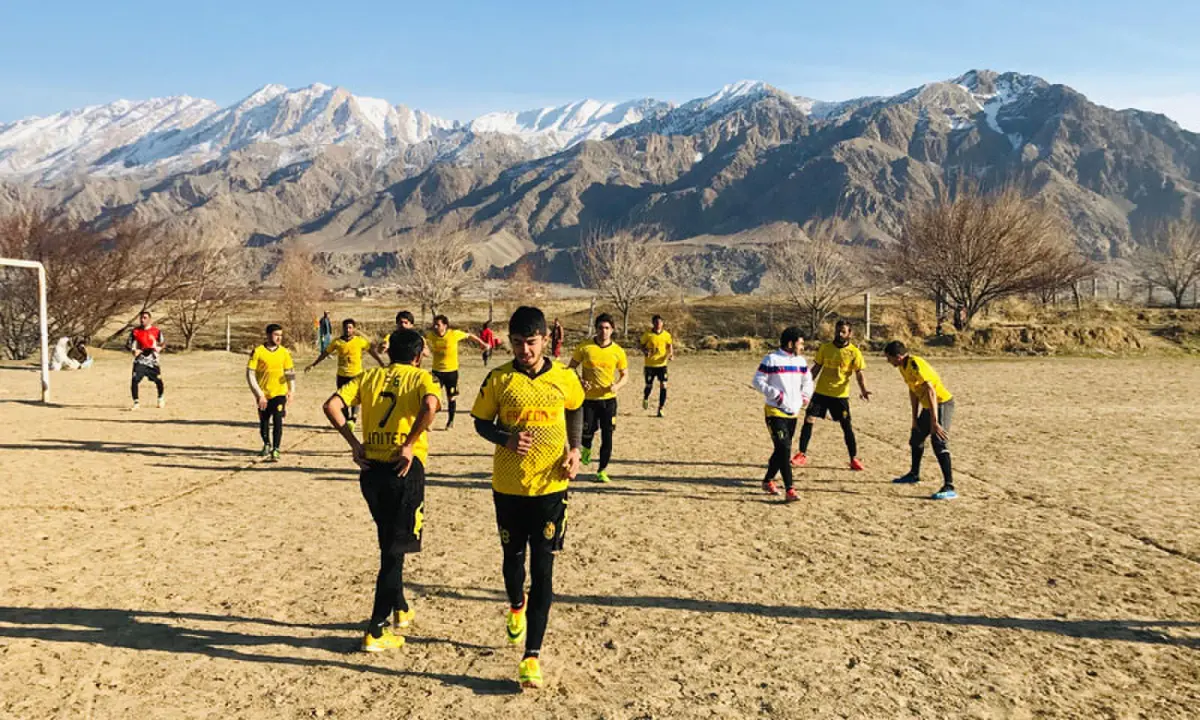
But Agha’s journey to the national team began much closer to home. He plays for FG United, a Quetta football club established by three former students of the same school he attends today.
Three former schoolmates established FG United in Quetta and built it into a successful grassroots football club. But can such a club and its players’ ambitions survive with domestic competitions stalled and little institutional support?
A CLUB OF THEIR OWN
Bahadur Khan, Syed Shahabuddin and Muhammad Atif graduated from FG Public School in 2006. Having played football from an early age and represented their school, the three friends decided to establish a club of their own.
Shahabuddin, a midfield playmaker and captain of the school team, says they already had a core group of players who wanted to continue playing together. “When Bahadur, Atif and I decided to register one, we knew we had to name the club after the school,” he says.
The friends had the support of their veteran physical training teacher Tariq Mahmood, known affectionately as Sir Tariq. The founders pooled their resources to finance tours, buy kits and footballs, house players and meet the club’s other expenses.
The club began at the bottom of the local football pyramid. Yet its progress was swift. In its first year, FG United qualified for the seventh-tier D Division. Among its early players were Ehsanullah, who went on to represent Pakistan at various age-group levels and the senior national team between 2004 and 2016, and Hayatullah Khano, who later played for departmental side KESC in international club competitions. The club won successive district leagues over the next two years, reaching the B Division in 2008. After finishing runners-up in the A Division in 2013, it won the championship in 2015.
The next step was the inter-district championship, which brought together district winners from across Balochistan. Under the previous promotion system, winners of inter-district competitions from the four provinces could progress to the B Division of the Pakistan Premier League (PPL), the country’s top domestic competition.
For FG United, this was an opportunity to move beyond district football. But the opportunity never materialised.
NOWHERE TO GO NEXT
The PPL was last held in 2021, with domestic football subsequently disrupted by administrative turmoil and the country’s suspensions by the global football governing body Fifa. In the last decade alone, Fifa has suspended Pakistan thrice over governance issues. The latest such suspension took place in February 2025, with the suspension lifted after the first presidential election in a decade, in May 2025.
The disruption has had consequences far beyond the federation’s offices. FG United has been waiting to compete in the inter-district championship since 2016. The tournament, however, has not been held for a decade.
“A player needs a pathway to progress, to compete at a higher level and see where football can take him,” says Atif. “It can be frustrating because we continue to train and invest in these boys, but we cannot tell them what lies ahead,” he continues.
FG United has nevertheless won more than a dozen provincial tournaments and three national-level competitions, according to the founders, although they acknowledge that some were not officially sanctioned. “Even in the National Challenge Cup, we went up against departmental sides such as Army and Wapda and gave them a tough time,” says Atif.
The ban on departmental teams delivered a severe blow to domestic football, with a large number of footballers, including those who came through FG United, losing their livelihoods. “Some of them now work as labourers, guards etc,” adds Atif.
For a country where football continues to struggle for institutional attention, clubs such as FG United have become important sources of talent. Yet they are often left to develop players with little support from the very institutions responsible for governing the sport.
THE COST OF KEEPING THE GAME ALIVE
Running a football club entails registration fees, equipment, coaching and travel expenses. For FG United, much of this expenditure falls on its three founders.
Shahabuddin currently works as the club’s coach and chief scout, supported by his former teammate Hayatullah Khano. An empty plot that his family owns functions as the team’s training ground. He studied sports management at Russian International Olympic University in Sochi and has been using his skills to improve the team.
Right now, though, the team is struggling to sustain itself. “For any given month, we need a budget of between 100,000 and 200,000 rupees,” says Shahab. This includes travel and refreshment allowance for players coming from the outskirts of the city.
“A trip to another city can cost between half a million to one million rupees,” he adds. The cost varies, depending on whether tournament organisers provide accommodation or the team can secure rooms at a Pakistan Sports Board hostel.
The club’s responsibilities also extend beyond the playing field. In 2017, Atif received a referral about three brothers working as colliers in a mine in Dukki, around 300 kilometres from Quetta. Orphans, the boys were between 10 and 17 years old. Two of the brothers now play for FG United, while the younger ones have been enrolled at FG Public School. They live at the residence of one of the club’s three co-founders, who has taken on the boys as wards.
For the founders, developing footballers appears to have become inseparable from helping young people access opportunities that might otherwise remain out of reach. “We don’t want a talented boy to give up football simply because he cannot afford the expenses,” says Bahadur.
A FUTURE STILL TAKING SHAPE
Despite the obstacles, FG United continues to recruit and train young players through school connections and referrals from across Balochistan. With Sir Tariq’s recent retirement, however, the school pipeline has dried up, says Atif.
Agha is among the latest generation to emerge from this set-up. His selection for Pakistan’s U17 side is a reminder of what grassroots football can produce, even in the absence of a dependable domestic structure.
“I love playing for FG United,” says Agha. “I am confident that my coaches will help me progress to the senior national team.”
For the three friends who began with a school team and pooled their money to establish a club, that remains the ambition: to keep producing players, even when the path beyond the district is far from clear.
The writer is a staff member.
X: @hydada830
Published in Dawn, EOS, November 29th, 2026
A note on cookies
Newshunt uses essential cookies to keep you signed in and to remember your language and country, so the site works the way you expect. With your permission, we'd also like to use analytics cookies to understand how people use Newshunt and improve it over time.
Accepting only affects analytics. To learn more, view our Privacy Policy or Terms & Conditions.
(0)Comments