


RTX 5090 Connector Melts During DLSS 5 Test: Correct Installation No Longer Enough
Category: SciTech
Share
Archive
Like
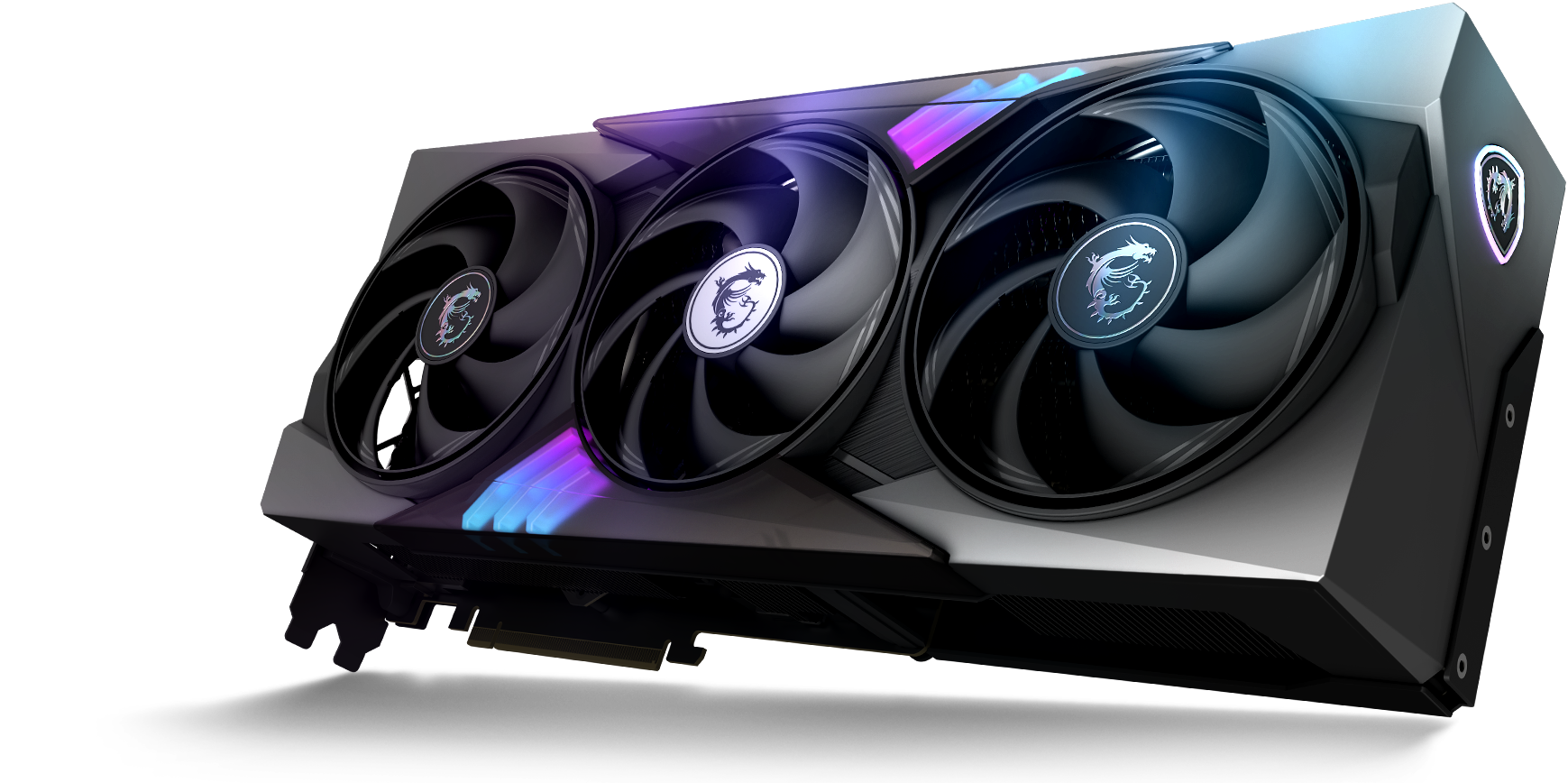
An MSI GeForce RTX 5090 Gaming Trio OC suffered a melted, fused 16-pin power connector while its owner was testing DLSS 5 Neural Rendering in NBA 2K27 — the only game with official support for the feature — and GPU-Z logs show the card sustained board power above 610W for an extended period, with a
For three and a half years, the central mitigation advice for RTX 5090 and RTX 4090 connector failures has been consistent across every hardware publication, every NVIDIA guidance document, and every accessory manufacturer's documentation: seat the cable fully, use the correct cable, and use a per-pin monitor if you want extra protection. The erek incident, first documented on HardOCP and subsequently covered by VideoCardz and Tom's Hardware on September 7, 2026, identifies the limit of that advice. Correctly installed hardware, using a manufacturer-approved cable, failed because a software feature drove sustained board power to a level the connector was never designed to endure continuously.
What DLSS 5 Added to a Card Drawing 450W
The affected user, identified by the handle erek on HardOCP forums, was running DLSS 5 3D-Guided Neural Rendering in NBA 2K27 when the failure occurred. Before enabling the feature, the MSI RTX 5090 Gaming Trio OC was drawing approximately 450W — a typical gaming load for the card. After DLSS 5 was activated,
Independent power testing by Tom's Hardware, conducted on the MSI Lightning Z variant of the RTX 5090 — a dual-connector card with a 1,000W XOC BIOS — confirmed the scale of the power premium DLSS 5 commands. In
Control
, enabling DLSS 5 pushed that card from 691W to 800W, an increase of 109W. In
Hogwarts Legacy
, the same card climbed from 480W to 720W with DLSS 5 active — a 50% increase attributable entirely to activating a single software feature. The standard single-connector Founders Edition of the RTX 5090 saw its
Hogwarts Legacy
load rise from 417W to 547W with DLSS 5 on, a 31% power increase. For the RTX 5080, DLSS 5 adds roughly 100W,
Read more:
Why Sustained Load Is Different from a Spike
The 12V-2×6 connector — the current iteration of the 16-pin high-power standard — carries a theoretical maximum of 600W across six 12V terminals, with each pin rated for 9.5A. NVIDIA's RTX 5090 carries a
The distinction that matters is between a transient power spike and a sustained power load. The ATX 3.1 specification — the power supply standard these systems use — includes a provision for transient power excursions of up to 200% of rated load. An RTX 5090 demanding 700W for a fraction of a second during a compute burst is the kind of event ATX 3.1 was designed to tolerate: it arrives and departs within the transient window, and the power supply absorbs the excursion without shutting down. Sustained saturation — the specific pattern DLSS 5 produces, running the Tensor Cores and memory subsystem at near-maximum utilization continuously for as long as the neural rendering pass executes — is categorically different. It does not trip a transient threshold, because
Research by German overclocker and hardware investigator der8auer documented this failure dynamic before DLSS 5 existed: under sustained full load, 12V-2×6 connectors can reach approximately 150°C (302°F), and uneven current distribution across the parallel pins can push individual contacts well past their rated current even when the total draw remains within spec. RTX 50-series reference cards lack per-pin current measurement capabilities, which means no onboard mechanism can detect or correct the kind of localized overloading that precedes thermal runaway. When two of six pins carry disproportionate current because of minor contact resistance variation, the temperature at those pins climbs, their resistance increases further, more current concentrates on them, and the process accelerates — all without the power supply's rail-level protection detecting anything unusual, because
The Mitigation Gap DLSS 5 Exposes
Four years of connector failures on NVIDIA's high-end GPUs produced a well-established set of mitigations: use the manufacturer's cable, not a third-party adapter; use a native ATX 3.1 connection from the power supply where possible; seat the cable fully until the yellow-tipped confirmation indicator shows the correct color; consider a per-pin current monitoring accessory like the Cooler Master GPU Shield, Thermal Grizzly WireView Pro, or Seasonic 12V-2×6 Ti Smart Power Cable. These mitigations address the historically documented failure cause: partial insertion, damaged cable bridges, or contact oxidation creating high-resistance points under load.
DLSS 5 introduces a failure vector none of those mitigations were designed to prevent. The erek incident involved a yellow-tipped cable — the category-specific confirmation of correct seating. The cable was not a third-party adapter but an MSI-designed cable for this exact card. The connection was seated correctly. What changed was the software workload: a feature that
Tom's Hardware noted directly in its September 7 coverage that DLSS 5's sustained high power draw represents a qualitatively new stress on an already-strained connector standard, while acknowledging that loose connector fit remains the most commonly cited proximate cause of individual failures and that it cannot be confirmed with certainty whether DLSS 5 was the direct trigger for erek's failure rather than a pre-existing marginal connection
Read more:
How DLSS 5's AI Architecture Drives the Power Draw
The reason DLSS 5 produces this sustained power signature — rather than a brief spike — is architectural. DLSS 5 uses a compact one-step pixel-space diffusion transformer: a neural network with approximately 148 million parameters stored in FP8 (8-bit floating-point) format. The model runs after the game engine has produced a conventionally rendered frame, ingesting that frame's color buffer, motion vectors, surface normals, and lighting data to infer and enhance material properties — subsurface scattering on skin, light transmission through hair, fine-surface contact shadows — that real-time rasterization can only approximate. These details are confirmed in
Running this 148-million-parameter inference pass on every frame requires two things happening simultaneously: the GPU's fifth-generation Tensor Cores operating at near-maximum FP8 throughput, and GDDR7 memory bandwidth sustaining the continuous transfer of model weights and frame buffer data. Rasterization alternates between different pipeline stages — geometry, vertex, pixel — with variable utilization across the GPU's compute resources. A diffusion transformer inference pass does not alternate. It loads Tensor Cores and the memory subsystem continuously for the full duration of the neural rendering pass, which for a 60 FPS game is the full 16-millisecond frame budget. The result is a power draw profile that sits near the card's ceiling not as a spike but as a
This is why NVIDIA's requirement that DLSS 5 run on 5th-generation Tensor Cores — the Blackwell-exclusive hardware — matters not only for performance but for power efficiency. The 5th-generation cores complete FP8 inference faster per operation than earlier generations, which is what allows DLSS 5 to fit within a 16ms frame budget. A faster implementation requires fewer cycles to accomplish the same inference, which would in principle allow the GPU to return to lower-utilization states between frames. DLSS 5 is computationally expensive enough that even the most efficient implementation currently available keeps the GPU near its power ceiling during neural rendering. NVIDIA has confirmed it has already achieved a 5x performance gain on DLSS 5 since its March 2026 announcement — meaning the feature was significantly more power-intensive at initial demonstration. TechPowerUp's coverage of
A Recurring Pattern Gets a New Mechanism
The erek incident is the latest in a monthly series of connector failures on RTX 5090 hardware. Reports began surfacing within ten days of the card's retail availability and have continued with near-weekly frequency since. Failures have spanned a wide range of conditions: with third-party cables and with manufacturer-issued ones; through adapters and through native ATX 3.1 connections; on cards running at reduced power limits as well as at stock. Tom's Hardware documented
In June 2026, UK hardware outlet Club386 had a professionally assembled RTX 5090 review system destroyed — with a native single 12V-2×6 cable connected to a 1,000W power supply — removing the "user error" explanation entirely from that incident. In July 2026, a user running an RTX 5090 reported a second melt incident even with ASRock's TempGuard safety cable installed, which failed to trigger a protective shutdown before the connector overheated. Both incidents were covered in
What distinguishes the erek incident from these predecessors is its cause. Prior failures have generally been attributed to some combination of connector fit, cable tension, or contact quality — all conditions that exist before the GPU begins drawing power. DLSS 5 adds a new variable: a software-determined power ceiling that is higher than the connector's rated maximum, sustained for as long as the feature runs. NVIDIA has not issued a public statement addressing the DLSS 5 power safety concern or explaining whether the company intends to implement power-draw limits on DLSS 5 to protect against connector-level failures.
What RTX 5090 Owners Running DLSS 5 Need to Know Now
DLSS 5 officially launched September 3, 2026, exclusively in NBA 2K27 for RTX 50-series hardware. NVIDIA confirmed the launch date and exclusivity through
For RTX 5090 owners enabling DLSS 5 today, the erek incident defines the relevant risk clearly: the 12V-2×6 connector's 600W theoretical ceiling was already close to the card's 575W TDP under rasterization. DLSS 5 adds 130W or more above that baseline on single-connector cards. Running board power above 600W for extended periods is the specific condition that most precedes connector-level thermal events, and the erek incident is the first publicly documented case in which DLSS 5 appears to have driven that condition to failure in an otherwise properly installed system. Disabling DLSS 5 reduces the risk to pre-launch levels; monitoring GPU-Z during DLSS 5 sessions for sustained readings above 600W board power provides visibility into whether a given system is operating in the risk zone.
Frequently Asked Questions
Does enabling DLSS 5 make my RTX 5090 connector more likely to melt, even if the cable is properly seated?
The erek incident suggests yes — at least in the specific scenario where DLSS 5 drives sustained board power above 600W on a card that was drawing 450W or less without the feature. A properly seated, manufacturer-approved cable can still fail if the total board power it carries remains above the 12V-2×6 connector's rated 600W ceiling for an extended period, because the failure mechanism (per-pin current imbalance and thermal runaway) does not require improper installation to trigger at very high sustained loads. RTX 5090 owners enabling DLSS 5 should monitor GPU-Z board power figures during DLSS 5 sessions and treat sustained readings above 600W as a connector-risk condition.
Why does DLSS 5 add so much power draw — is it a permanent feature of the technology or something NVIDIA can fix?
DLSS 5's power overhead comes from running a 148-million-parameter FP8 diffusion transformer inference pass on every frame, simultaneously saturating the GPU's Tensor Cores and GDDR7 memory bandwidth. This is structurally different from rasterization workloads, which distribute load across the pipeline more variably. NVIDIA has said it achieved a 5x performance efficiency gain on DLSS 5 between its March 2026 announcement and its September launch, and further optimization is planned — including model updates targeted for later this fall. Whether future optimizations will reduce the power overhead to within the connector's safe sustained range for single-connector RTX 5090 cards is not yet known. TechPowerUp has
Is the 12V-2×6 connector itself going to be replaced to handle DLSS 5-level sustained loads?
No replacement or revision has been announced. The 12V-2×6 was itself the replacement for the 12VHPWR standard that caused widespread RTX 4090 failures beginning in 2022, with revised sense-pin lengths to prevent partial-insertion failures. TechTimes covered the
Will DLSS 5 on RTX 40-series GPUs carry the same connector risk?
RTX 40-series cards will receive official DLSS 5 support after NVIDIA completes RTX 50-series optimization, but RTX 40-series DLSS 5 will be limited to a maximum of 2x Multi Frame Generation rather than the 6x available on Blackwell. This is confirmed in
A note on cookies
Newshunt uses essential cookies to keep you signed in and to remember your language and country, so the site works the way you expect. With your permission, we'd also like to use analytics cookies to understand how people use Newshunt and improve it over time.
Accepting only affects analytics. To learn more, view our Privacy Policy or Terms & Conditions.
(0)Comments