


How US Sanctions and Fuel Blockade Caused a Sharp Drop in Cuba Tourism
Category: Tourism
Share
Archive
Like
How US Sanctions and Fuel Blockade Caused a Sharp Drop in Cuba Tourism
Written By:
Arpita Bhowmick
I'm from Jamshedpur, Jharkhand. Raised in Tatanagar, I carry the balanced spirit of the Steel City and greenery of the city with me- resilient, gritty,grounded, and committed to excellence yet calm and composed in times of tenacity. I value integrity, teamwork, and delivering results with honesty. Sacred Heart Convent School was the place where I built my foundation of discipline and curiosity and completed schooling. Then moved to Bhawanipur Education Society College, Kolkata, there I broadened my perspective and developed strong academic roots and also got first big exposure to a metro city & diverse cultural heritage. Currently I'm a student of ICFAI Business School, Mumbai , where I'm evolving my business acumen and leadership skills and working for your company Travel and tour world as a freelancer. I love to watch movies and travel, through them I collect stories, not just memories. They shape my personality by making me curious, creative, adaptive and more understanding of people. I'm always eager to learn, explore and contribute to organizations that prioritize people, purpose, and performance and keep learning and growing. Arpita Bhowmick
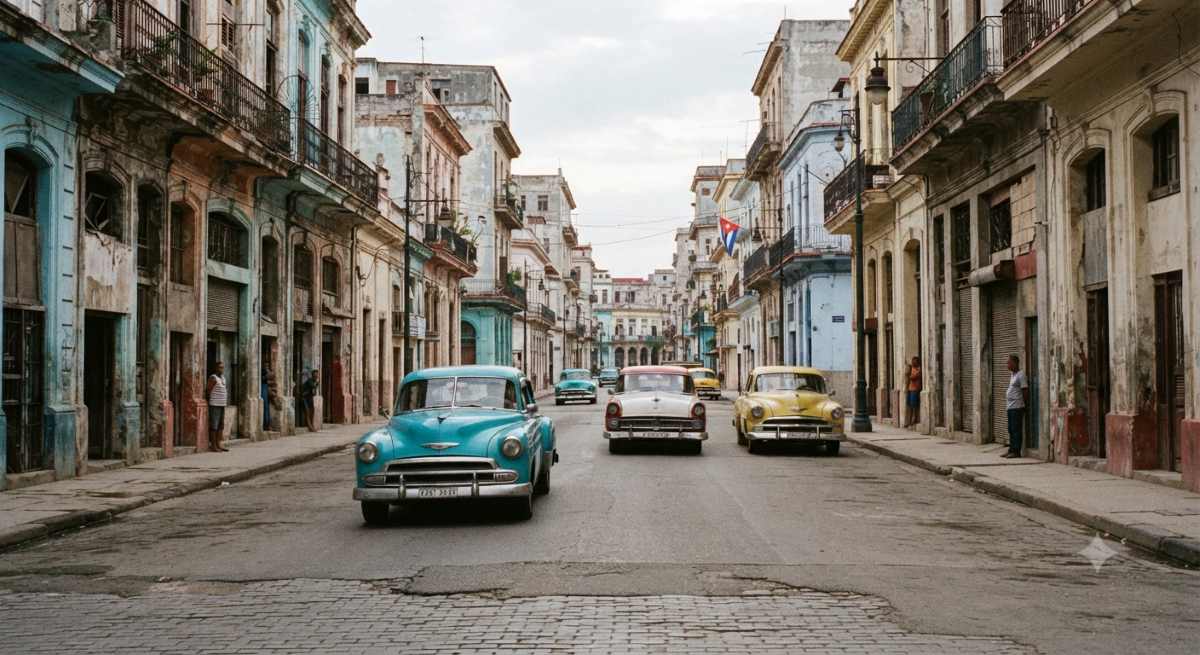
Image generated with Ai
The historical trajectory of Caribbean holiday destinations has frequently been shaped by geopolitical tensions and external economic pressures. Cuba and the US blockade have shared a long and turbulent history that directly impacts regional mobility and visitor economics.
According to data released by the National Office of Statistics and Information, the total flow of travelers experienced a dramatic contraction during the opening seven months of the year, falling by half compared to the corresponding timeframe of the previous year.
Official metrics indicate that the Caribbean nation welcomed just over 794,000 travelers until July, translating to an absolute reduction of nearly 788,000 individuals. International visitors absorbed the most severe blow, plummeting by 62.8 percent and resulting in more than 708,000 fewer arrivals than those recorded previously.
These outcomes are heavily linked to the island's controversial inclusion on unilateral lists concerning state sponsors of terrorism, alongside the enforcement of far-reaching extraterritorial laws. Such measures are deployed to obstruct foreign investment destined for hotel infrastructure and to stifle the capture of foreign currency required for maintaining domestic social welfare programs.
Impact on Travellers
The cascading effects of these geopolitical measures are acutely felt by individuals attempting to navigate holiday itineraries across the region. Transport networks have faced acute disruptions, largely driven by fuel shortages that have forced several international airlines to suspend scheduled routes or halt operations entirely.
Traditional source markets have witnessed staggering reductions, most notably the Canadian market—historically the leading supplier of vacationers to the island—which registered a contraction exceeding 350,000 visitors.
Significant declines were likewise documented among travelers originating from the Russian Federation, the Cuban community residing abroad, and citizens arriving from US soil. Consequently, transport logistics, accommodation availability, and recreational outings have become exceptionally unpredictable, leaving holidaymakers to contend with sudden schedule alterations and diminished hospitality services.
Industry Insights
Sector specialists and institutional representatives emphasize that current travel restrictions and ongoing financial persecution prevent billions of dollars from integrating into the national economy. Industry projections estimate that absent the limitations enforced by Washington, the destination could effortlessly draw between one and two million additional North American visitors annually.
Despite these aggressive economic hindrances, the local administration continues to pursue systematic strategies aimed at diversifying source markets while aggressively promoting distinct cultural and natural heritage attractions. Nevertheless, systemic financial pressure continues to restrict the optimal development of a pillar industry traditionally relied upon to finance essential public services, including health, education, and food security provisions.
Practical Information
Navigating the current landscape requires meticulous planning and heightened awareness of logistical limitations. Visitors are advised to monitor flight availability continuously, as fuel constraints frequently induce sudden alterations in carrier schedules. Comprehensive travel insurance and secured, independent lodging verifications are strongly recommended prior to departure to mitigate unexpected operational hurdles on the ground.
While the local administration keeps structural gateways open for international guests seeking sustainable and culturally immersive experiences, travelers must remain adaptable to shifting infrastructure capacities and localized resource constraints.
Comparison with Previous Policies of US or Developments
When juxtaposed with previous political climates, the current situation represents a profound regression from periods marked by diplomatic dialogue and commercial easing. Earlier phases of administrative rapprochement had catalyzed a temporary revival in visitor numbers and foreign capital inflows.
However, the subsequent introduction of intensified sanctions, coupled with comprehensive fuel embargoes and the tightening of financial restrictions, has plunged the hospitality sector into an unprecedented economic low. Unlike past eras where recovery was achievable through standard marketing adjustments, contemporary policies of US are specifically designed to induce absolute structural isolation, severely limiting the sector's capacity to rebound.
Advertisement
Share On:
Gtranslate
A note on cookies
Newshunt uses essential cookies to keep you signed in and to remember your language and country, so the site works the way you expect. With your permission, we'd also like to use analytics cookies to understand how people use Newshunt and improve it over time.
Accepting only affects analytics. To learn more, view our Privacy Policy or Terms & Conditions.
(0)Comments