


Pakistan Auto Policy: Suzuki, Honda, Toyota and Kia cars new expected prices
Category: Business
Share
Archive
Like
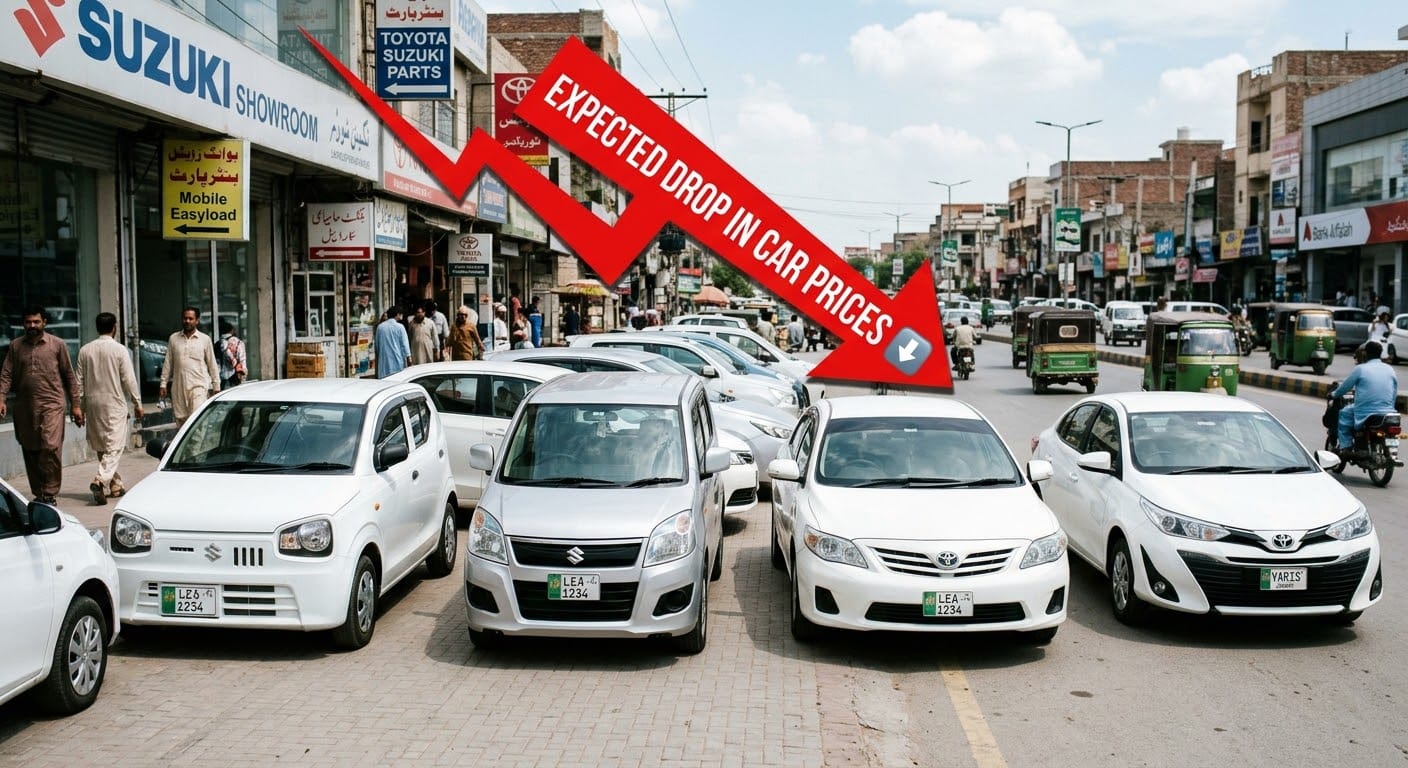
ISLAMABAD – Pakistan has introduced new Auto Policy 2026-31, raising expectations of a dip in prices of petrol cars, electric vehicles (EVs) and plug-in hybrid in future.
The federal government has identified reducing vehicle prices, promoting electric mobility, expanding local manufacturing of vehicles and auto parts, and increasing automotive exports as key priorities under the new policy.
Phased Decrease in Car Prices Planned
According to the government's announcement, gradual price reductions are targeted for almost all vehicle categories, except luxury cars.
However, consumers should not expect immediate relief, as the proposed reductions are linked to a phased decrease in import duties over the next five years.
Initial estimates suggest that prices of small petrol-powered cars could decline by around 11 to 12 per cent, while selected electric and plug-in hybrid vehicles could become 20 to 33 per cent cheaper.
Estimated Price Changes for Popular Cars
The initial projections indicate that several popular models could see substantial price reductions during the first year of the policy.
The Suzuki Alto, currently priced at approximately Rs3.2 million, could become available for around Rs2.845 million, potentially saving buyers Rs355,000.
Similarly, the Suzuki Cultus could see its price fall from Rs4.3 million to Rs3.8 million, offering an estimated saving of Rs500,000.
The Toyota Yaris 1.5 could become cheaper by approximately Rs700,000, with its estimated price declining from Rs6 million to Rs5.3 million.
The MG HS petrol variant could also see a modest reduction, with its price potentially falling from Rs9.5 million to Rs9.2 million.
Electric and Hybrid Vehicles May See Major Reductions
Electric and plug-in hybrid vehicles are among the segments expected to benefit significantly from the proposed policy changes.
The Wuling Bingo electric car, currently priced at around Rs4 million, could see its price drop to Rs2.7 million, representing a potential reduction of Rs1.3 million.
Another small electric vehicle, currently costing approximately Rs5.3 million, could become available for Rs3.6 million, translating into estimated savings of Rs1.7 million.
The Baojun Yep Plus electric vehicle could also become cheaper, with its price potentially declining from Rs6.3 million to Rs5 million.
Meanwhile, the MG HS plug-in hybrid could see its price fall from Rs10.3 million to Rs9 million, while the Haval AWD plug-in hybrid could decline from Rs12.9 million to Rs11.1 million.
The Toyota RAV4 plug-in hybrid is among the models with the largest projected reductions. Its estimated price could decrease from Rs23.3 million to Rs18.3 million, offering potential savings of Rs5 million.
SUV Prices Also Expected to Decline
Several SUV models could also become more affordable under the proposed changes.
The Kia Sportage could see its price fall from Rs12.2 million to Rs11.1 million, representing a potential reduction of Rs1.1 million.
The GAC Aion UT could become available for approximately Rs5 million to Rs5.2 million, compared with its current estimated price of Rs6.4 million.
Similarly, the Jaecoo J7 PHEV could see its price decline from around Rs10 million to Rs8 million.
Selected variants of the Honda HR-V e, Haval Jolion and Toyota Corolla Altis could also become cheaper by approximately Rs600,000 to Rs800,000.
Electric SUVs such as the BYD Atto 3 and GAC Aion V could also potentially benefit from the new policy.
Toyota Fortuner Could Become More Expensive
Despite the expected reductions across several vehicle categories, not all models are projected to become cheaper.
The Toyota Fortuner could see its price increase from approximately Rs20.5 million to Rs21.7 million, representing a potential rise of Rs1.2 million.
Price Reductions Are Still Estimates
The projected prices are based on preliminary estimates for the first year of the Auto Policy 2026-31 and should not be considered confirmed company prices.
The expected reductions will depend on the phased implementation of changes in import duties and other policy measures over the coming years.
If implemented as anticipated, the policy could make several petrol, electric and hybrid vehicles more affordable in the country.
A note on cookies
Newshunt uses essential cookies to keep you signed in and to remember your language and country, so the site works the way you expect. With your permission, we'd also like to use analytics cookies to understand how people use Newshunt and improve it over time.
Accepting only affects analytics. To learn more, view our Privacy Policy or Terms & Conditions.
(0)Comments