


The Norwegian Kings Named Haakon Before Haakon VIII
Category: Blend
Share
Archive
Like
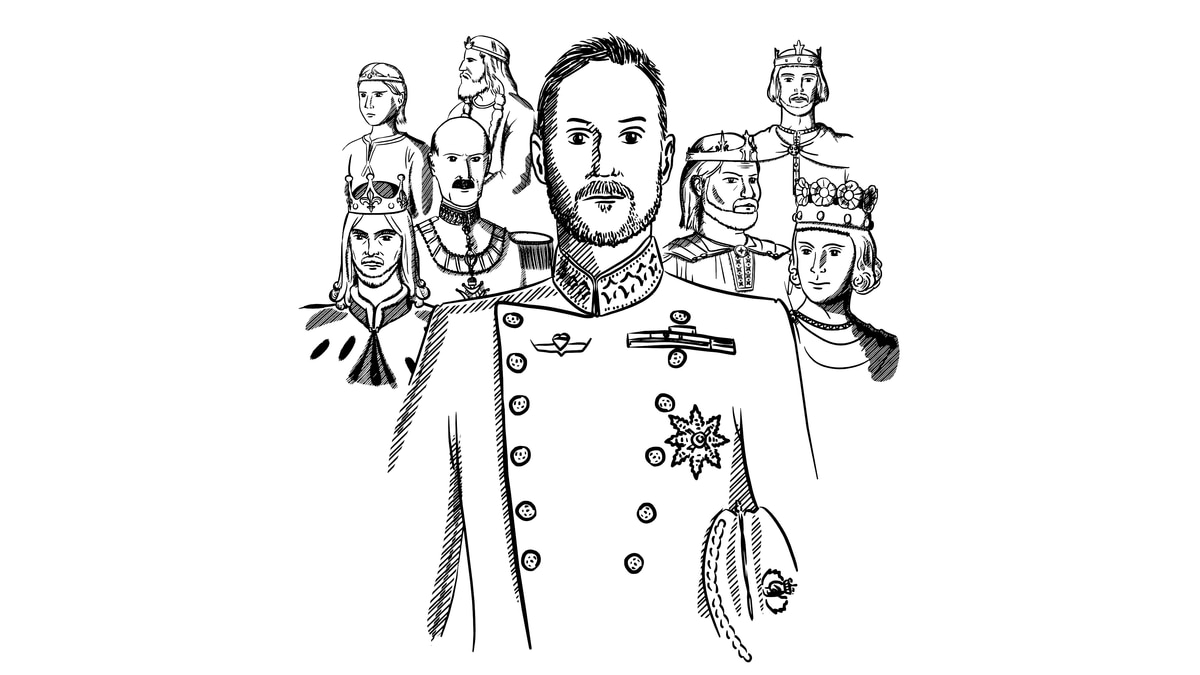
The name Haakon carries deep historical significance in Norway, stretching back centuries through medieval rulers and modern monarchs alike. According to Are Sende Osen, host of the podcast 'Kongerekka,' it stands as a solid royal name. Hans Jacob Orning, a professor of medieval history at the University of Oslo, notes that the name carries a good resonance, observing that none of the historical Haakons are viewed as deeply controversial or as having made entirely wrong moves.
Did You Know? The very first King Håkon, known as Håkon the Good, grew up with the English King Athelstan and was forced by Trøndelag locals to eat horse meat during a pagan blot to prove he belonged among them.
While the numbered succession provides a clear timeline, historical records include four additional figures who ruled as de facto leaders or held royal titles without receiving official ordinal numbers. Erik Opsahl, a professor of medieval history at NTNU and the academic supervisor for the Norwegian royal line in Store norske leksikon, explains that historians generally assign ordinal numbers only to monarchs who held a formal royal title and exercised real, independent ruling power either alone or as a co-ruler.
Among them is Håkon Sigurdsson jarl (Håkon Jarl the Old), who governed Norway for roughly 25 years toward the end of the 10th century using the title of jarl rather than king. Later, Håkon Eiriksson jarl governed the land under the Danish king Cnut the Great between 1028 and 1029. Neither held a formal royal title, while Håkon Magnusson Toresfostre ruled parts of the country from 1093 to 1095 but passed away before establishing independent royal authority. Additionally, Håkon Håkonson the Younger served as a co-ruler under his father Håkon IV Håkonsson starting in 1240, but died before his father and never became sole monarch.
Early Numbered Monarchs and Medieval Rule
The traditional numbered royal line begins with Håkon the Good, who ruled around 934 to 961 after returning from England to challenge his half-brother Eric Bloodaxe. Centuries later, Håkon Herdebrei ruled from 1157 to 1162 as a teenage monarch during the turbulent civil war era before falling in battle at age 15. He was followed by Håkon Sverresson, who governed briefly from 1202 to 1204 and made peace with the church before dying under suspicious circumstances linked by sagas to his stepmother, Queen Margrete.
The longest-reigning medieval monarch was Håkon IV Håkonsson, who sat on the throne for 46 years between 1217 and 1263, a period recognized as Norway's storhetstid when the realm extended from the mainland to western islands including Iceland, Greenland, the Faroe Islands, Orkney, and the Hebrides. His infant flight across the mountains on skis by Birkebeiners Torstein Skevla and Skjervald Skrukka during the winter of 1205 to 1206 remains the historical origin of the modern Birkebeinerrennet race.
Later Medieval Transitions and Modern Continuity
Håkon V Magnusson (Hålegg), who ruled from 1299 to 1319, shifted the capital to Oslo and oversaw the construction of Akershus Fortress, but his death without a son ended the male line of the Sverre dynasty.
Tale Kong Haakon VIII. Etterfulgte sin far som Norges konge da Kong Harald V gikk bort 28. august 26
Frequently Asked Questions
Who was the first king named Håkon?
The first numbered king in the traditional royal lineage was Håkon the Good (Håkon I), who ruled as king from approximately 934 to 961.
Why are some historical figures named Håkon excluded from the official royal numbers?
According to professor Erik Opsahl, historians assign ordinal numbers primarily to monarchs who held a formal royal title and exercised real, independent ruling power. Individuals who held the title of jarl or died before exercising independent authority did not receive numbers.
What is the origin of the Birkebeinerrennet ski race?
The race commemorates the winter journey of 1205 to 1206, when Birkebeiner warriors Torstein Skevla and Skjervald Skrukka carried the infant royal son Håkon Håkonsson across the mountains from Lillehammer toward Østerdalen to escape opponents.
How will the newly named monarch shape the future of Norway's ancient royal traditions?
A note on cookies
Newshunt uses essential cookies to keep you signed in and to remember your language and country, so the site works the way you expect. With your permission, we'd also like to use analytics cookies to understand how people use Newshunt and improve it over time.
Accepting only affects analytics. To learn more, view our Privacy Policy or Terms & Conditions.
(0)Comments