


Meet the Candidate: Jessica Wark — Albany City Council, Ward 3A
Category: Politics
Share
Archive
Like
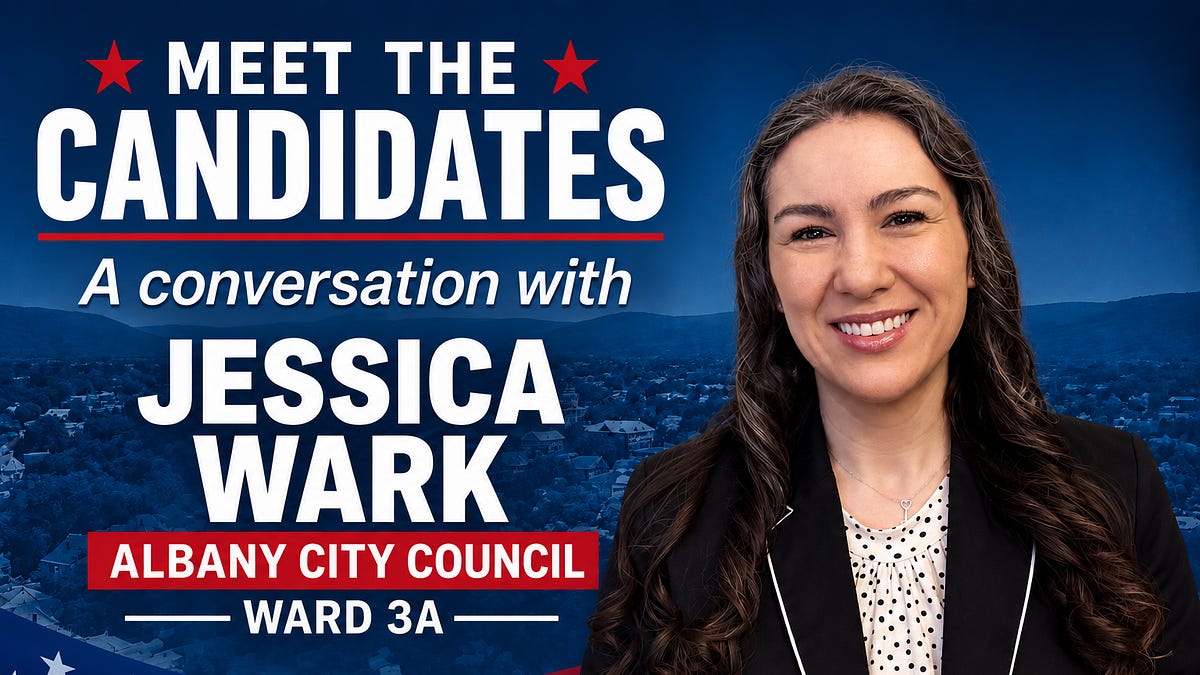
As part of my continuingMeet the Candidatesseries for Albany's 2026 city elections, I recently sat down with Jessica Wark, who is running for the Ward 3A seat currently held by Councilor Ramycia McGhee.
As with the other candidates I have interviewed, my goal was not to debate Wark or persuade her toward my positions. I wanted to give her essentially the same questions I have been asking other candidates and let voters hear how she approaches the issues facing Albany.
Those questions covered the role of a city councilor, street maintenance and taxes, housing and growth, homelessness, public parks and what she would prioritize if elected.
Wark was concise throughout our roughly 23-minute conversation. If there was one theme that kept resurfacing, it was this:roads, transparency and showing taxpayers where their money is actually going.
Wark describes herself as a business owner, educator and project-management professional.
She told me she ownsTruffle Bear Oil, an Oregon truffle-based business, and serves as CEO and sales director atAdytum, a company developing AI solutions for individuals, businesses and nonprofits. She also described herself as aScrummaster, an experience she says has taught her to focus on process, organization and helping teams accomplish their work.
Her professional background also includes teaching. Wark earned a degree in early childhood and elementary education, completed her student teaching in Albany, and later taught elementary school in Baltimore and Minneapolis before eventually returning to Albany. She said she has lived in Albany for about seven years and in her current ward for five.
Hercampaign websiteboils down her approach to a simple line:'The council should sound like the neighborhood.'The site says her platform is being developed by 'listening first' to Ward 3 residents.
That theme came through in our conversation.
'My job is to help people to get their work done and support them through my leadership.'
Wark said that as a councilor she wants to listen to her neighbors, represent their goals and make what she called 'pragmatic decisions' for Albany.
I have asked every candidate some version of the same question:What is the proper role of a city councilor when balancing the interests of a ward, the city as a whole, city staff and the public?
For Wark, the answer begins with representation.
'I really think that it's to bring the needs of the people in front of the council.'
She said a councilor should represent the neighborhood in how they vote — and emphasized the importance of simply being present when those votes happen.
Wark was also willing to criticize the incumbent directly. She argued that McGhee has missed meetings and votes and told me she has heard from people across the political spectrum who want a change in representation.
That is Wark's characterization and should be treated as such. I did not independently audit McGhee's attendance record as part of this interview.
McGhee is serving her first term representing Ward 3A, which began January 1, 2023 and expires at the end of 2026, according to the City of Albany.
If there is one issue Wark clearly wants voters to associate with her campaign, it isAlbany's streets.
Her argument is not simply that Albany needs to spend more money. She wants the city to establish measurable standards and show residents exactly what they are buying before asking them to pay more.
Wark laid out three things she wants:
Adopt a pavement-condition standard for local streets. Publish the city's prioritized street-repair list. Show taxpayers exactly what additional street-maintenance revenue will accomplish.
'Just show the math.'
That may have been the shortest summary of her campaign philosophy during our conversation.
There is considerable factual support for her concern about neighborhood streets.
Albany's 2025 pavement assessment put the city's overall Pavement Condition Index at59 — rated 'fair.'More importantly for Wark's argument, approximately41.4% of Albany's 153 miles of local streets were classified as poor, compared with just 6% of arterial mileage and 14.4% of collector mileage.
The city has established a minimum PCI goal of 60 for arterials and collectors, buthas not established a minimum PCI for local streets— exactly the distinction Wark was talking about during our interview.
The city itself acknowledges the history behind that disparity: limited funding has generally been directed toward the most heavily traveled roads, while many neighborhood streets have continued to deteriorate.
So when Wark talks about the road directly in front of your house, she has identified a real policy question facing the next council.
On another question I have been asking candidates, Wark gave a much less complicated answer.
Would she support a citywide gas tax for street maintenance?
'Gas tax? No. I don't want to increase [taxes] on our gas. It's already so expensive for people.'
Wark said she would rather examine the existing city budget and pursue outside funding sources before adding another tax at the pump.
Albany voters have some history with this issue. According to the city, voters rejected local fuel-tax proposals in1982, 1991 and 2018.
The city has nevertheless continued exploring other mechanisms for filling its street-maintenance funding gap, including a street-maintenance fee. The council began formally developing such a fee in 2024 and continued studying possible structures and rates through 2025.
Wark isn't necessarily closing the door on that fee. Instead, she wants the city to tell residents what standard it intends to achieve, which streets are in line for repairs and what the additional money will actually purchase before setting the rate.
On housing, Wark sounded considerably more flexible than someone looking for a single government solution.
She supports manufactured housing, accessory dwelling units, cottage clusters, apartments and condominiums, along with exploring tiny-home communities.
She also raised an argument that often gets overlooked in Albany's growth discussion:building upward rather than continually outward.
'More condos, more apartments — building up would really help us to keep the footprint that we have.'
Her reasoning is largely infrastructure-driven. Available land isn't necessarily development-ready land. Expanding outward means extending streets, sewer, water and other infrastructure, all of which ultimately carries a cost.
Wark also sees ADUs and smaller housing types as potential stepping stones toward homeownership. An accessory dwelling can provide income to an existing homeowner while providing a lower-cost housing option for someone else.
Rather than treating 'housing' as synonymous with conventional single-family construction or large apartment projects, she wants Albany to continue allowing a variety of options.
Our discussion then moved to an issue that has become increasingly important to me following the cleanup of Simpson Park: homelessness and the use of Albany's parks and natural areas.
I asked Wark directly whether camping should be allowed in Albany's parks and public spaces.
Her answer was no.
'Parks should be used for places for kids to play, for us to all get out in nature. I think that's what they were intended for.'
But Wark's answer didn't end with enforcement.
She argued that repeatedly clearing camps without addressing why people are homeless simply moves the problem somewhere else.
Her preferred approach includes tiny-home villages where appropriate, job training, addiction treatment, homelessness prevention and other wraparound services tailored to individual circumstances.
'Not every person that's unhoused is there for the same reason.'
She also sees a potentially larger role for churches and community organizations, arguing that Albany already possesses considerable compassion but needs a better system for connecting people with effective services.
That puts Wark somewhere between two positions that are too often presented as mutually exclusive:public parks shouldn't become permanent campsites, but simply moving homeless residents from one campsite to another isn't much of a solution either.
I followed up specifically about litter, abandoned property and the enormous amount of public resources required to clean heavily impacted areas.
Wark said volunteer organizations, churches and community groups could supplement city cleanup efforts while Albany works toward longer-term solutions.
'Right now it does take up too much of our budget. It's a lot of work for our public servants.'
Her emphasis was on community participation as an interim tool rather than treating volunteer cleanup as the ultimate solution.
When I asked Wark to identify her top priorities, she returned immediately to streets.
She wants a minimum pavement standard for neighborhood streets, a publicly accessible list showing which streets are prioritized for repair, and a clear accounting of what any new street-maintenance fee would accomplish.
She also connected road conditions with public safety.
'We also want a nice road in front of our house.'
Poor neighborhood streets, she argued, aren't merely an inconvenience. They affect vehicles, pedestrians and potentially emergency response.
Beyond roads, Wark said her broader concerns include homelessness, keeping taxes low and making city government easier for ordinary residents to understand.
That last point may ultimately be as central to her campaign as pavement.
'Here's this city budget that you might not understand, but let me break it down for you.'
Wark believes her education background can help her serve as a translator between City Hall and residents — taking complicated budgets, policies and projects and explaining what they actually mean to the people paying for them.
Jessica Wark isn't presenting herself as someone arriving with a sweeping ideological program for Albany.
Her pitch is narrower and considerably more local:fix neighborhood streets, resist additional gas taxes, explain where the money goes, broaden housing choices, keep parks available to the public and listen to the people who live in the ward.
Whether Ward 3A voters believe that approach warrants replacing an incumbent is ultimately their decision.
CouncilorRamycia McGheebrings her own professional and community background to the race. McGhee is an English faculty member at Linn-Benton Community College and holds an Ed.D. in Education Leadership Management, along with graduate and undergraduate degrees in journalism. She also founded theValencia Cooper 2nd Chance Opportunity Scholarship Awardin memory of her mother.
As I continue this series, my intention remains the same:give Albany candidates an opportunity to explain themselves in their own words and give voters enough information to do their own homework.
I have extended these conversations across political lines and will continue trying to provide candidates the same opportunity to discuss Albany's issues at greater length than a campaign mailer, yard sign or Facebook post allows.
Because municipal elections shouldn't be popularity contests.
They should be job interviews.
And the voters are doing the hiring. That's my viewpoint.
Share
Subscribe now
Jessica Wark for Albany City Council — campaign website:Jessica \for Albany
Ramycia McGhee — professional and community biography:Dr. Ramycia McGhee biography
City of Albany — condition of Albany's streets:2025 Street Condition Assessment
City of Albany — pavement goals and estimated costs:Pavement Condition Goals and What That Costs
City of Albany — street-maintenance funding discussions:Past Presentations and Public Meetings
A note on cookies
Newshunt uses essential cookies to keep you signed in and to remember your language and country, so the site works the way you expect. With your permission, we'd also like to use analytics cookies to understand how people use Newshunt and improve it over time.
Accepting only affects analytics. To learn more, view our Privacy Policy or Terms & Conditions.
(0)Comments