


Pakistan's freelancing force beings home $1.7bn as PAFLA honours digital champions
Category: Financial
Share
Archive
Like
Summary KARACHI: Pakistan's growing army of freelancers has emerged as a major contributor to the country's digital economy, generating $1.7 billion in foreign exchange during fiscal year 2025-26, according to figures highlighted at a national recognition ceremony held in Karachi.
He said freelancers had managed to generate substantial foreign exchange despite difficulties including payment-related problems, connectivity disruptions and other challenges facing the digital workforce.
For many of the freelancers recognised at the event, the journey from small online assignments to established companies reflects the expanding role of digital skills in Pakistan's economy.
AI Generated Summary
KARACHI: Pakistan's growing army of freelancers has emerged as a major contributor to the country's digital economy, generating $1.7 billion in foreign exchange during fiscal year 2025-26, according to figures highlighted at a national recognition ceremony held in Karachi.
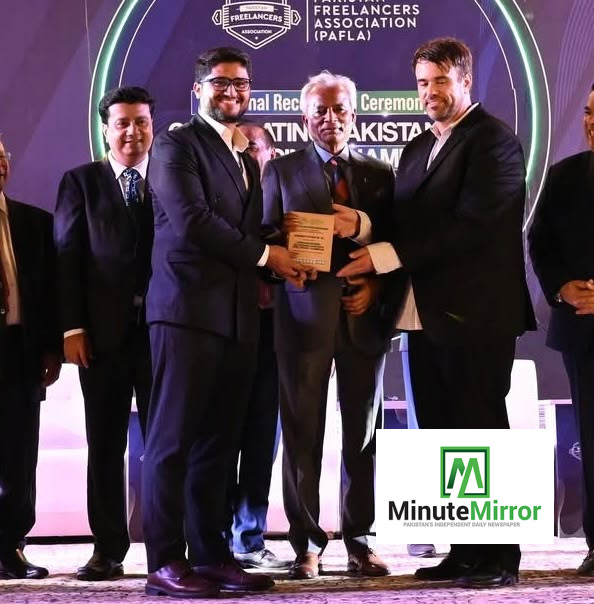
The Pakistan Freelancers Association (PAFLA) organised the country's first national ceremony dedicated to recognising leading freelancers on August 29 at Governor House, Sindh, with Governor Sindh Syed Muhammad Nehal Hashmi attending as the chief guest.
Addressing the gathering, the governor praised Pakistani freelancers for their skills, determination and resilience, saying their contribution to the national economy had increased significantly over the years.
He said freelancers had managed to generate substantial foreign exchange despite difficulties including payment-related problems, connectivity disruptions and other challenges facing the digital workforce.
PAFLA Chairman and co-founder Ibrahim Amin, in his welcome address, called for a more supportive financial and digital environment for freelancers. He said the sector had become an important source of economic activity and foreign exchange and deserved greater recognition at the national level.
The awards brought together professionals, technology experts, mentors and freelancers from across the country. The judging panel included Irfan Malik, Azam Mughal, Muhammad Zohaib Khan, Imran Ali Dina, Javed Yousuf Edhi, Nabhan Karim and Nadia Patel Gangjee.
The PAFLA Awards 2026 recognised professional achievement, measurable contributions to Pakistan's IT exports and foreign-exchange earnings, as well as performance in the international gig economy. A separate focus was placed on women working in Pakistan's digital sector, acknowledging their growing participation and leadership.
Technology mentors and industry figures, including Irfan Malik and Dr Imran Batada, were also recognised for their contribution to developing technology and freelancing talent and helping establish training and professional networks for young people.
The ceremony also highlighted the experiences of freelancers who have transformed individual digital skills into growing businesses.
Among them was Lahore-based Muhammad Bilal Bhatti, chief executive of Softmind Solutions, who began his freelancing career with small projects on Fiverr and has since built a company employing around 60 people. His firm now serves clients in the United States, the Netherlands, the Middle East and North Africa, and the United Kingdom.
Bhatti began working as a software developer in 2017 and entered freelancing in 2019 while continuing his job. His professional growth later took him to a remote position with a US-based company, where he became an operations manager in 2021 and supervised a team of 12.
In 2022, he became the first Pakistani employee of the company to be invited to the United States to gain an understanding of its operations. A year later, he established his own software house, initially operating with a single employee.
Speaking about Pakistan's competitive advantage in the global freelancing market, Bhatti said Pakistani professionals were distinguished by their adaptability, work ethic and willingness to understand clients' broader objectives rather than simply completing assigned tasks.
However, he said freelancers continued to encounter significant structural barriers, particularly in banking and digital payments.
According to Bhatti, many freelancers struggle to establish access to conventional banking facilities and face difficulties when receiving international payments in foreign currency. He also pointed to disruptions in internet services as a serious concern for professionals whose livelihoods depend entirely on uninterrupted connectivity.
He called for greater policy support, including improved international payment mechanisms and a regulatory framework that treats freelancing as a mainstream component of the economy.
Bhatti also urged policymakers to broaden tax incentives beyond software developers registered with the Pakistan Software Export Board (PSEB), arguing that a wider range of digital professionals should be covered.
He said international clients increasingly expected service providers to have access to globally recognised digital payment platforms and urged the government to create conditions that would encourage international payment companies to operate in Pakistan.
For young people entering the sector, Bhatti advised aspiring freelancers to gain professional experience and develop strong communication, organisational and workplace skills alongside their technical abilities.
He said the rapid integration of artificial intelligence was changing the nature of IT and freelancing, creating new opportunities while increasing the importance of communication, adaptability and client management.
The PAFLA ceremony ultimately placed the spotlight on a segment of Pakistan's workforce that increasingly operates beyond traditional office structures and serves clients across international markets.
For many of the freelancers recognised at the event, the journey from small online assignments to established companies reflects the expanding role of digital skills in Pakistan's economy. The challenge now, industry representatives say, is to ensure that banking, payment systems, connectivity and public policy evolve alongside the sector.
A note on cookies
Newshunt uses essential cookies to keep you signed in and to remember your language and country, so the site works the way you expect. With your permission, we'd also like to use analytics cookies to understand how people use Newshunt and improve it over time.
Accepting only affects analytics. To learn more, view our Privacy Policy or Terms & Conditions.
(0)Comments