


What Might a Positive ANA in Aging Really Be Telling Us?
Category: Health
Share
Archive
Like
As I was preparing to give a four-part lecture series on reversing cognitive decline at a functional medicine conference in Taiwan, I found myself thinking more deeply about ANA positivity, something that, at first, may not seem to have much to do with Alzheimer's disease.
We know that antinuclear antibodies, or ANAs, become more common with age. That's usually where the explanation ends. ANA positivity increases as we get older.
Thanks for reading TruNeura's Substack! Subscribe for free to receive new posts and support my work.
But I kept coming back to the same thought:
Age isn't a mechanism.
Something has to be happening biologically to make those antibodies more likely to appear.
And the more I thought about what has to happen for an ANA to become positive, the more it struck me that this might be a small example of a much larger idea about aging and neurodegeneration.
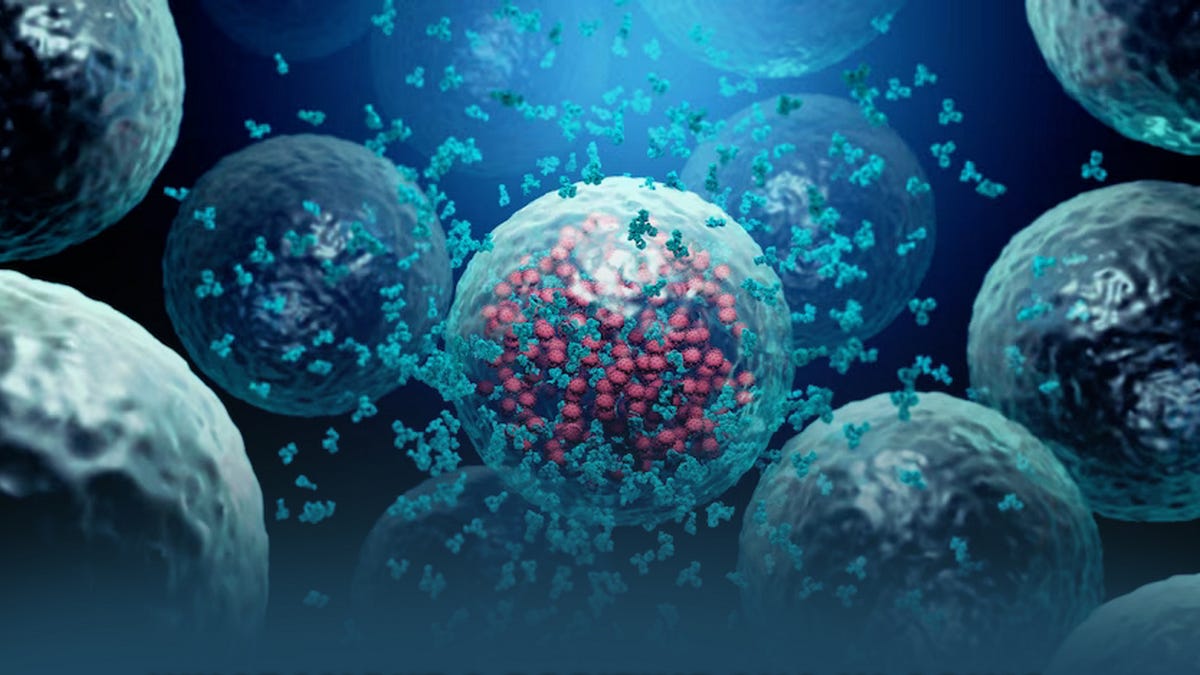
A positive ANA means that the immune system has developed antibodies against material normally sequestered inside the nuclei of our own cells.
But how did the immune system gain meaningful access to that nuclear material in the first place? And even if it did, why did the regulatory systems designed to prevent an immune response against 'self' fail to stop it?
Those two questions lead somewhere interesting.
An ANA tells us that the immune system has developed antibodies directed against components normally found inside the nucleus of our own cells.
That is remarkable when you think about it.
Under healthy conditions, nuclear material is carefully protected from inappropriate immune exposure. Even when cells reach the end of their lives, the body has an elegant system for disposing of them.
Through apoptosis, cells essentially dismantle themselves in a controlled fashion. Their contents, including nuclear material, remain contained within membrane-bound structures while neighboring cells and immune cells quietly remove the debris.
This process is deliberately non-inflammatory. The immune system isn't supposed to interpret the contents of those cells as a threat.
So a positive ANA raises an interesting mechanistic question:
How did nuclear material become sufficiently visible to the immune system to generate a sustained antibody response against it?
Apoptosis is only one way cells die.
When tissues are under significant stress, cells can undergo other forms of death that are far less tidy, including pyroptosis, necroptosis, NETosis and ferroptosis. These pathways differ considerably in their biology, but they can occur in an inflammatory environment and increase the exposure of intracellular material, danger signals and cellular debris to the immune system.
Even normally apoptotic cells can become a problem if the body's cleanup mechanisms fail or become overwhelmed. If apoptotic debris isn't rapidly removed, those cells can eventually lose membrane integrity and expose material that should have remained contained.
This suggests the first part of a potential two-hit model:
Inflammation, infection, metabolic and mitochondrial dysfunction, oxidative stress and toxic exposures can all increase cellular stress, tissue injury and inflammatory cell death. Impaired cellular cleanup can compound the problem by allowing material from dying cells to persist.
Either way, the immune system may gain access to self-antigens it would ordinarily encounter only under tightly controlled conditions.
But exposure alone isn't enough.
Our immune system has multiple checkpoints designed to prevent it from attacking us. Autoreactive immune cells aren't unusual. What matters is what happens to them.
Normally, central and peripheral immune-tolerance mechanisms prevent these cells from developing into a sustained autoimmune response. When that regulatory architecture becomes less effective, autoreactive B-cell populations can survive, mature and produce antibodies directed against our own tissues.
Put the two together:
Abnormal self-antigen exposure + impaired immune tolerance → increasing opportunity for autoantibody formation
That doesn't mean every positive ANA represents disease. It clearly doesn't. But it may mean that a positive ANA contains more biological information than simply, 'This becomes more common as we get older.'
We know ANA positivity increases with age. But clearly chronological aging isn'tcausingANA positivity.
What if age simply increases the opportunity for both sides of this equation to develop?
Over decades, cellular injury accumulates. At the same time, the systems responsible for immune regulation, repair and cleanup can become progressively less resilient. Eventually, the combination may allow something that was once tightly controlled to become visible.
In that sense, ANA positivity might be viewed not simply as a phenomenonof aging, but as a marker of biological processes that haveaccumulated during aging.
And that's where I think this becomes relevant to the brain.
Age is the greatest risk factor for Alzheimer's disease and many other neurodegenerative disorders. But saying that a disease happens 'because of aging' doesn't explain why one 75-year-old develops cognitive decline while another remains cognitively vibrant.
Both have lived for 75 years. What differs is what has happened biologically during those years.
The systems that support the brain don't operate independently. Metabolism affects inflammation. Inflammation affects mitochondrial function. Vascular health affects oxygen and nutrient delivery as well as tissue integrity. Infection and toxic exposures can add additional stress. Repair mechanisms can compensate for a remarkable amount of dysfunction, until eventually they can't.
This is the basis of a multimodal model of neurodegeneration:disease may emerge not from one isolated cause, but from the accumulated effect of multiple interacting disturbances exceeding the brain's capacity to compensate.
Chronological age tells us how long these biological processes have had to accumulate. It doesn't tell us which processes are driving disease in a particular person.
That's why I think the positive ANA is such an interesting example.
Instead of stopping at'ANA positivity becomes more common with age,'we can ask:
What is happening underneath aging that makes abnormal self-antigen exposure and loss of immune tolerance increasingly likely?
And perhaps we should ask the same thing about Alzheimer's disease.
Instead of accepting that cognitive decline becomes more common as we age, we can ask what has been accumulating, what has stopped working as well as it once did, and what is now exceeding the brain's ability to compensate.
Age describes the association.
Mechanism tells us where to look for opportunities to intervene.
A note about this hypothesis:The relationships among inflammatory cell-death pathways, impaired clearance of cellular debris, immune tolerance and autoimmunity are active areas of scientific investigation. A positive ANA cannot identify which cellular-death pathway occurred, nor does ANA positivity by itself establish autoimmune disease or significant tissue injury. The two-hit framework described here is a mechanistic model for thinking about why autoantibody formation may become more common with biological aging and how that concept may illuminate broader multimodal models of age-related disease.
Thanks for reading TruNeura's Substack! Subscribe for free to receive new posts.
Thanks for reading TruNeura's Substack! This post is public so feel free to share it.
Share
A note on cookies
Newshunt uses essential cookies to keep you signed in and to remember your language and country, so the site works the way you expect. With your permission, we'd also like to use analytics cookies to understand how people use Newshunt and improve it over time.
Accepting only affects analytics. To learn more, view our Privacy Policy or Terms & Conditions.
(0)Comments