


De la Espriella's security blocs draw paramilitary comparisons as gun legalization plan leaks
Category: Politics
Share
Archive
Like
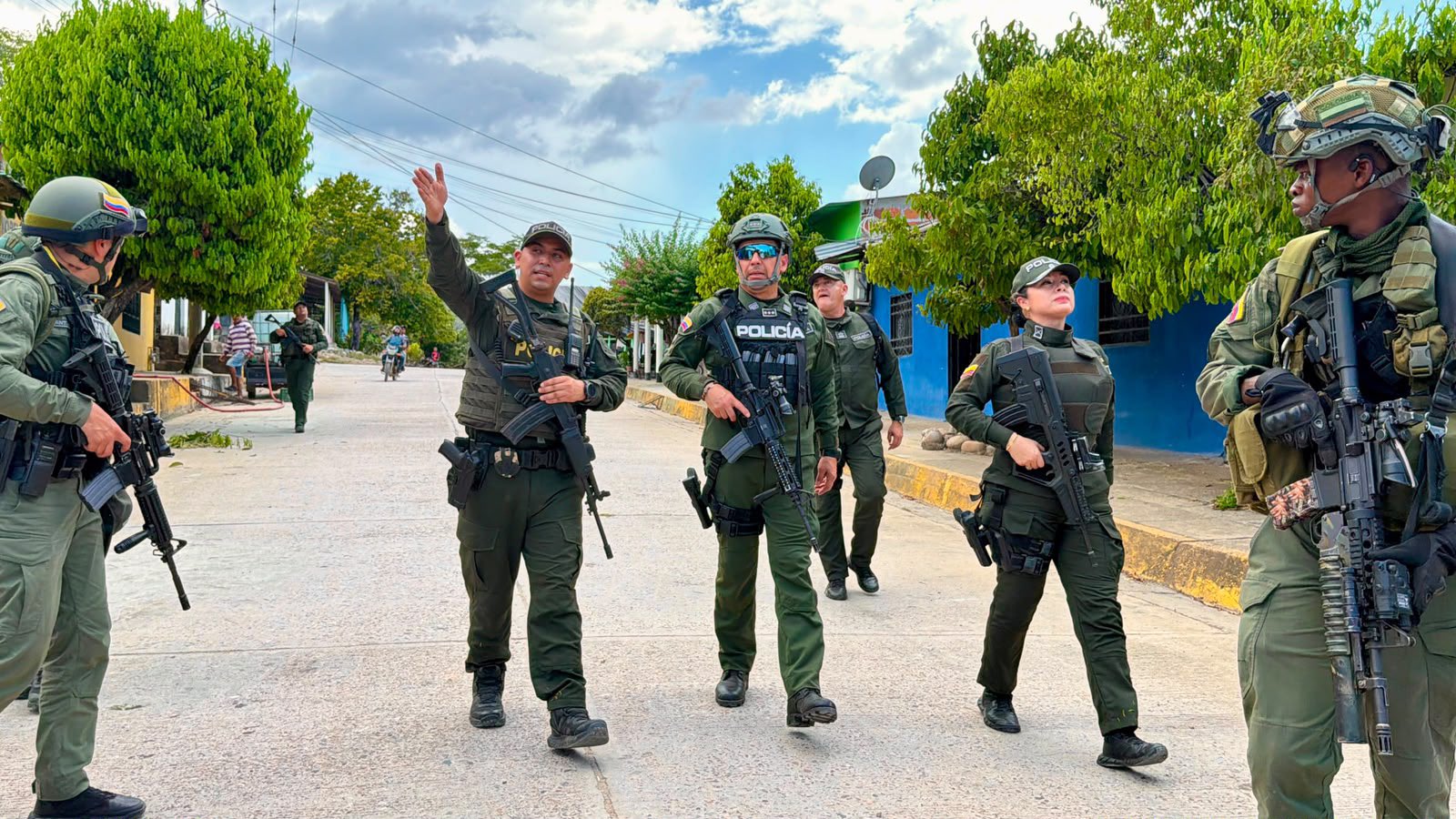
Medellín, Colombia – President Abelardo de la Espriella's government is rolling out armed 'Urban Security Blocs' staffed in part by military veterans and reservists, and a leaked planning document shows his administration is also considering legalizing gun ownership for 'decent' citizens.
What began as a campaign promise in July has become one of the most contested policies of his first month in office, drawing direct comparisons to Colombia's paramilitary history from opposition senators, a leaked whiteboard photo, and now members of the U.S. Congress.
Since the blocs were first announced, criticism has hardened. Senator Iván Cepeda, runner-up to de la Espriella in the June 21, 2026, elections and now the opposition leader in Congress, said the plan 'configures a paramilitary government,' also objecting to the planned revival of the riot police unit ESMAD and the construction of megaprisons.
Senator Alejandro Ocampo and Representative Óscar Benavides, meanwhile, invoked the Convivir cooperatives directly. 'Yesterday, the Convivir, today the defense blocs for urban security. We already know what kind of paramilitary groups this ended up in,' Benavides said on X in July.
Ocampo asked whether Colombia would see 'paramilitarism 2.0', referencing former AUC commander Salvatore Mancuso by name.
The pushback has also crossed into Washington. Three Democratic members of the U.S. House, Jesús 'Chuy' García, Alexandria Ocasio-Cortez and Greg Casar, introduced amendments this summer seeking to condition U.S. military assistance to Colombia on human rights safeguards, specifically to prevent American resources from reaching networks linked to paramilitarism.
The amendments follow a letter signed by eleven Democratic members of Congress and a dozen civil society groups raising concerns about de la Espriella's alleged ties to money laundering and AUC-linked organizations, which the U.S. designated a foreign terrorist organization in 2001.
Separately, Pablo Hernán Sierra, a former paramilitary commander who testified as a witness against former president Álvaro Uribe, named de la Espriella in June as an alleged contact in an AUC scheme to influence the Constitutional Court in favor of demobilized paramilitary leaders, as reported by independent Colombian outlet Revista Raya .
De la Espriella has not been charged in connection with the allegation.
The scrutiny traces back to a leaked photo of a whiteboard, made public by journalist Daniel Coronell, summarizing proposals discussed at Colombia's National Planning Department (DNP) under de la Espriella's Patria Milagro (Miracle Homeland) development plan. Among the items listed: An end to 'Total Peace,' former President Gustavo Petro's policy of negotiating simultaneously with multiple armed and criminal groups;
Legal gun ownership for 'decent' citizens
A 'first line of security' made up of military veterans and reservists
Efforts to close the JEP, the transitional justice tribunal created under the 2016 peace deal with the FARC
A renewed 'Plan Colombia' security partnership with the U.S. and Israel
Fumigation of 330,000 hectares of coca crops
Ten new maximum-security prisons modeled on El Salvador's Bukele-style mega-jails
Coronell compared the leak to a similar incident during U.S. President Donald Trump's first term, when photographed whiteboards revealed policy plans from campaign strategist Steve Bannon's office.
De la Espriella confirmed the shift away from Total Peace in a presidential address on August 26, saying his government would 'dismantle that model of false peace and replace it with a policy of security, legality and authority of the state.'
He signed extradition orders for five Colombians wanted by the United States, including Giovanni Andrés Rojas, a leader of a FARC dissident faction captured in February while his group held talks with the Petro government.
Read more: Abelardo de la Espriella begins to dismantle Colombia's peace process
He has since signed more than 41 extradition orders in total, as per Colombian outlet Semana , and confirmed a military strike, Operation Amón in Guaviare that killed a preliminary eight fighters, his first major offensive operation since taking office.
The blocs, meanwhile, were already moving before that speech. De la Espriella first pitched the Urban Security Blocs at a July summit in Barranquilla, with mayors from the country's largest cities and who publicly backed the plan, including Bogotá's Carlos Fernando Galán and Cali's Alejandro Eder.
The rollout began on his first day in office, August 7, when he signed a decree creating the blocs.
Defense Minister Jorge Eduardo Mora, a retired general, told Colombian radio station W Radio he has rolled out an initial deployment of 2,000 police officers as part of new Urban Security and Defense Blocs (Bodsu) units in nine cities – Bogotá, Medellín, Cali, Barranquilla, Cartagena, Cúcuta, Ibagué, Soacha and Bucaramanga – targeting high-impact crimes including homicide, extortion and drug trafficking.
Mora has described the approach as a 'trinity' of government, citizens and the armed forces: 'Local authorities, together with the security forces, a reserve of veterans and business owners, becoming a single force against violent actors.'
According to National Police and National Administrative Department of Statistics (DANE) figures, homicides fell to a three-decade low of 11,957 in 2017 after the FARC peace deal, then rose 54,866 during Petro's four years in office. The 7% increase was attributed by researchers at Colombia's Externado University, in part, to the growth of FARC dissident structures that Total Peace had been negotiating with.
In 1994, then-President César Gaviria authorized private citizen security cooperatives, known as Convivir, through Decree 356, which were then regulated under President Ernesto Samper, who governed from 1994 to 1998.
Nearly 530 of those cooperatives registered nationwide by 1997, concentrated especially in Antioquia and Córdoba, according to Colombian independent outlet Las 2 Orillas.
Multiple accounts tie the Convivir units directly to the rise of the AUC, the paramilitary umbrella group that demobilized between 2003 and 2006. Testifying before the JEP in 2023, former AUC commander Salvatore Mancuso said the Convivir cooperatives were 'the mother of the AUC,' describing them as a hinge between legality and illegality that helped normalize the paramilitary project among skeptical communities.
Colombia's National Center of Historical Memory has documented 94,754 deaths attributed to paramilitary groups between 1958 and July 2018, out of approximately 261,600-262,200 total conflict deaths in that period – more than any other armed actor, ahead of both guerrilla groups (35,683 deaths) and state agents (9,804).
Featured image: Mindefensa via X.
A note on cookies
Newshunt uses essential cookies to keep you signed in and to remember your language and country, so the site works the way you expect. With your permission, we'd also like to use analytics cookies to understand how people use Newshunt and improve it over time.
Accepting only affects analytics. To learn more, view our Privacy Policy or Terms & Conditions.
(0)Comments