


What type of graduate does Uganda want?
Category: Politics
Share
Archive
Like
OPINION
Since the 1964 Education Report, successive commissions have tried, again and again, to cure Uganda's education system of its oldest ailment: rote learning. We have, at last, been unambiguous about the remedy. The move to a competence-based curriculum confronts the problem head-on. If we stay the course, within a few years Uganda will have a workforce that is genuinely hands-on and job-ready.
Yet let us not squander this rare opportunity for curriculum reform by treating Character and Citizenship Education as an afterthought. This, I would argue, is the true core of the reform: the wheels that will carry Uganda towards the ambition President Yoweri Museveni has worked so hard to deliver.
Uganda's Vision 2040 and the Tenfold Growth Strategy built upon it aim to expand our economy from roughly $50b to $500b by 2040. That leap will require sustained double-digit growth for a decade and a half. It can only be achieved with a workforce equal to the ambition. Graduates must be more than technically competent; they must be disciplined, honest and committed enough to build rather than plunder what is built. No amount of capital or infrastructure will deliver the tenfold growth if the hands running our factories, farms and public offices are not matched by hearts anchored in integrity.
Balaam Barugahara, the Minister of Local Government, has toured the districts and returned with a troubling picture: development stalled because roads and bridges are being 'eaten' through corruption. The fight against graft is welcome, but we need not wait for enforcement alone to win it. Let us embed integrity where character is first formed: in our families and in our schools. Let the portrait of our graduate be someone who loves Uganda and abhors corruption.
This week, I ran a small poll on X and in several WhatsApp groups, posing a simple scenario: You are hiring someone to run your business while you are away and one trait alone decides it: innovation, intelligence, integrity, or hard work. Eighty per cent chose integrity. If we prize integrity so highly in our workforce, should we not take a harder look at how deliberately we are cultivating it, starting with Character and Citizenship Education?
This call is not a new one. The First Lady and Minister of Education and Sports, Maama Janet Kataaha Museveni, has for some time championed this cause through the Emerging Leaders Programme, a values-based initiative nurturing character, integrity and disciplined leadership among young people in higher learning. The programme has quietly been doing at Makerere University what I am proposing we now do system-wide. Her example is one our curriculum planners would do well to draw on.
Every education philosophy must answer to the needs of its country. For years, our chief failing was producing graduates who were highly knowledgeable yet unable to apply what they knew, a gap the competence-based curriculum is now beginning to close. That, however, was never our only problem. Many graduates remain unemployable not for want of knowledge or skill, but because they are let down by character. Some carry first-class degrees and upper seconds yet cannot translate that brilliance into workplace discipline.
When I speak of the graduate, I mean it broadly: from Primary and O' and A' level through vocational, teacher and medical training institutions and beyond, not the university graduate alone. Uganda's education must form the whole graduate: the head, the hands, the heart and the feet. The head supplies knowledge and the hands supply skill; these are the two that the competence-based curriculum is built to strengthen. The heart decides how that knowledge and skill will be used, while the feet determine whether a graduate serves their community or merely extracts from it. Character and Citizenship Education is where the heart and feet are formed, so a curriculum that sharpens only the head and hands will keep producing graduates who are able but not anchored.
Most employers, if asked, would say they would rather hire an average performer who is disciplined than a brilliant one who is not. So, as we review and redesign the curriculum around competence, we must resist the temptation to treat Character and Citizenship Education as a footnote. Yes, measuring a values-based curriculum is harder than measuring a skills-based one. Yet it is not impossible and we can build and refine it patiently, provided we do not leave character formation out altogether.
Of course, the home remains the first classroom of character. Dear parent, 'monkey see, monkey do': by the time our children step into the world, we hope they carry a foundation of values already laid at home. Love, trust, honesty, truthfulness, caring and sharing are values a child catches from us, much as they might catch a cold from anyone near them. Still, this does not absolve our education planners of their share of the responsibility.
So, what type of graduate does Uganda want? What does the portrait of a successful, employable Ugandan look like? I suspect the answers would not all be identical, but I am equally certain a national survey would return a familiar shortlist: intelligent, innovative, hardworking, honest. If Ugandans were asked to rank them, integrity would very likely come first. The question is not whether we value it but how deliberately we are cultivating it within our education system.
This is where Government has a clear role to play. The relevant ministries, among them Education and Sports and the National Planning Authority, together with curriculum developers and other stakeholders, should agree on the portrait of a Ugandan graduate. At every level, educators and institutions should then work towards that one goal. This is how it is done within organisations: goals are set and everyone works towards them. Could our education goal be to produce graduates who embody the values of our country?
The competence-based curriculum gives us a rare opportunity. Let us take a second look and resist any temptation to shy away from entrenching Character and Citizenship Education within it.
Education systems can change the character of a nation; Uganda has done it before. After independence in 1962, the Government moved to reverse the tribalism of the colonial era through education itself. The 1963 Castle Education Commission shaped the 1964 Education Act, which sought to Africanise education, make it more practical and break down tribal barriers, partly by sending students to study far from their home districts, so a student from western Uganda might be posted to Boroboro in the north and one from the north to Busoga College Mwiri or Ntare in Mbarara. Our boarding schools became places of formation, where pupils worked across tribal lines and learned one another's languages and dances.
Uganda then aspired to produce a self-reliant, practically skilled, nation-oriented graduate who would foster unity and break down the divisions inherited from colonial schooling. By nationalising education this way, Uganda made real progress in dismantling the tribalism that hung heavy in the air at independence.
Today, we can ride on the education review already underway to entrench this values-driven approach once more. Doing so would go a long way towards correcting many of the ills we see around us: mob violence, littering, the everyday abuses we have grown too used to tolerating. That, in the end, is the graduate our nation truly needs.
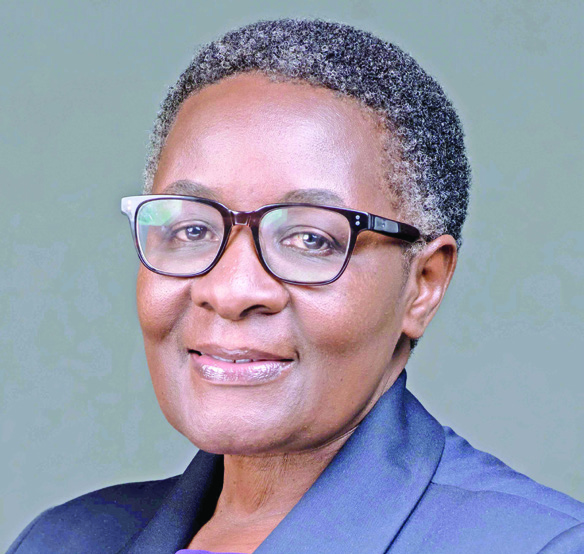
The writer is an educationist, media communication specialist and the chairperson of the board of the Emerging Leaders' Programme Kaijabarbara@gmail.com WhatsApp: 0708746624
A note on cookies
Newshunt uses essential cookies to keep you signed in and to remember your language and country, so the site works the way you expect. With your permission, we'd also like to use analytics cookies to understand how people use Newshunt and improve it over time.
Accepting only affects analytics. To learn more, view our Privacy Policy or Terms & Conditions.
(0)Comments