


Forget tanks, fighter jets: US, Russia & China are preparing for battles beyond Earth, where destroying one satellite could disrupt an entire military network
Category: Politics
Share
Archive
Like
For centuries, armies have fought for the high ground because whoever could see farther and strike from above held a decisive advantage. That principle is now moving far beyond mountains, hills and aircraft — and into orbit.
The next major contest between the world's military powers could increasingly take place hundreds or thousands of kilometres above Earth.
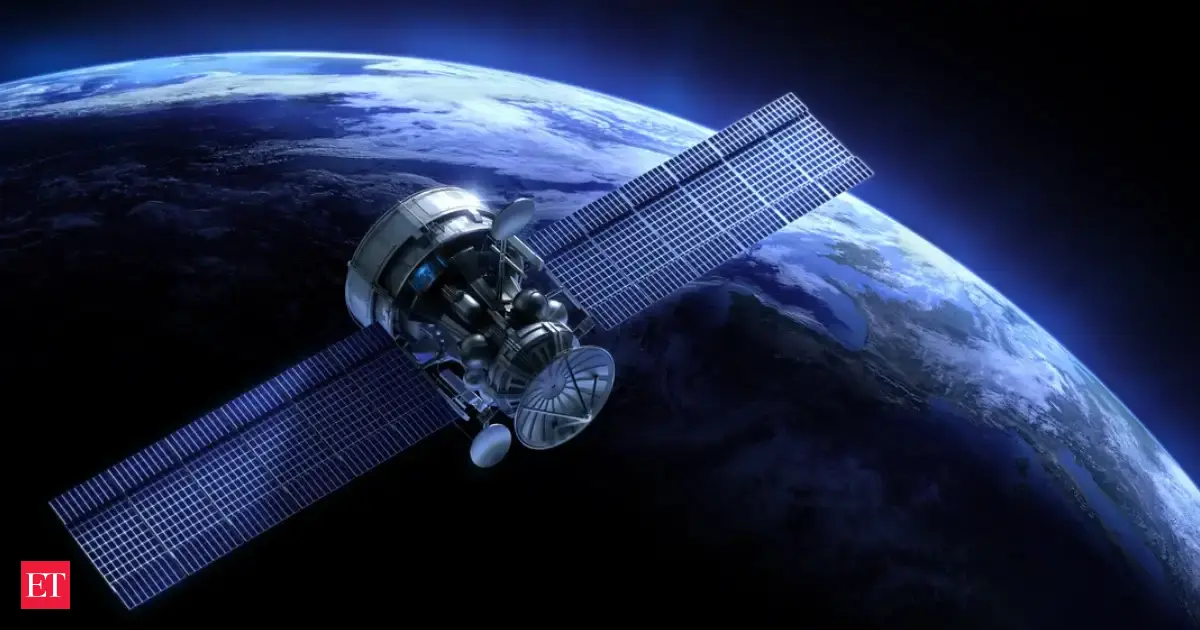
The United States, Russia and China are developing increasingly sophisticated capabilities to monitor, disrupt and potentially disable satellites, turning space into a contested military domain.
What once seemed like science fiction — satellites stalking other satellites, communications being jammed from orbit and spacecraft being targeted by missiles — has already become part of modern military planning.
The stakes are enormous.
Satellites now support military communications, navigation, intelligence gathering, missile guidance and battlefield surveillance.
As modern warfare becomes increasingly dependent on interconnected sensors, autonomous weapons and precision strikes, space-based systems have become the invisible infrastructure holding the battlefield together.
The world's major space powers are already much deeper into the contest.
Why America, Russia and China are watching the skies
Modern militaries no longer operate through simple chains of command in which one sensor identifies a target and one weapon destroys it.
Instead, they increasingly rely on what military planners describe as a kill web — a network connecting satellites, aircraft, drones, sensors, command centres and weapons.
A satellite can detect an object, another system can process the information, and a weapon hundreds of kilometres away can potentially act on it.
That makes satellites extremely valuable — and extremely vulnerable.
Destroying or disabling even one critical spacecraft could potentially disrupt several layers of a military network.
For the US, which operates one of the world's most sophisticated military satellite architectures, protecting space assets has become a central national-security priority. China has rapidly expanded its own military and commercial space capabilities, while Russia has demonstrated that it can develop systems capable of approaching and potentially interfering with other spacecraft.
The result is a new strategic equation: the side that can see, communicate and navigate from space may have a major advantage on the battlefield below.
China showed how destructive satellite warfare can be
One of the clearest warnings came from China in 2007, when Beijing used a missile to destroy one of its own ageing weather satellites.
The test demonstrated China's ability to conduct a kinetic anti-satellite, or ASAT, strike.
But the success came with a massive cost to the space environment.
The destroyed satellite generated thousands of pieces of debris, many travelling at extraordinary speeds. Some of that material could remain in orbit for decades.
The test triggered international concern because a collision with even a relatively small piece of debris can seriously damage or destroy another spacecraft.
The United States responded the following year with Operation Burnt Frost, destroying a malfunctioning US satellite using a missile.
Those two events established an uncomfortable reality: major powers possessed the ability not merely to operate in space, but to attack objects there.
Russia has taken a different route
Russia's space capabilities have raised another kind of concern.
Rather than relying solely on missiles, Moscow has developed and operated spacecraft capable of manoeuvring close to other satellites.
Russian satellites such as Luch-1 and Luch-2 have attracted attention because of their unusual proximity operations around other spacecraft.
Such manoeuvres are difficult to interpret from the outside. A satellite approaching another spacecraft could be conducting an inspection, testing orbital-control technology or gathering intelligence. The same basic capability, however, could potentially have military applications.
That ambiguity is one of the biggest problems facing space security.
On Earth, the movement of military forces can often be observed through conventional intelligence. In orbit, a spacecraft capable of changing its trajectory can approach another satellite without immediately revealing what it intends to do.
The Ukraine war has already taken the fight into space
The war in Ukraine provided one of the clearest demonstrations of how vulnerable modern warfare is to attacks on space-linked infrastructure.
Hours before Russia launched its full-scale invasion in February 2022, a cyberattack disrupted the Viasat satellite communications network used by Ukrainian and other European users.
The attack demonstrated that a military advantage in space does not necessarily require blowing up a satellite.
Cyberattacks, electronic warfare, signal jamming and GPS spoofing can also degrade the information networks on which armed forces depend.
Since then, electronic warfare has become a prominent feature of the conflict.
The lesson for military planners is significant: space warfare does not necessarily begin with a missile launch.
An adversary may be able to disrupt communications or navigation without physically destroying a spacecraft.
The US, Russia and China are racing to master the kill chain
Military targeting is often simplified into three stages: find, fix and finish.
Finding a satellite is comparatively straightforward because spacecraft are continuously tracked to prevent collisions. Their predictable orbital paths make it possible to calculate where they will be at a particular time.
Fixing the target involves determining its precise location and movement.
The difficult part is the final stage — actually disabling or destroying it.
This is where anti-satellite technology becomes strategically important.
A kinetic ASAT weapon can physically destroy a spacecraft, but using one carries enormous consequences. A cloud of debris could threaten friendly satellites as well as those belonging to an adversary.
That risk has made other methods increasingly attractive, including electronic interference, cyber operations and spacecraft designed to manoeuvre close to potential targets.
Kessler Syndrome is the nightmare scenario
The greatest fear surrounding destructive ASAT testing is not necessarily the loss of one satellite.
It is what could happen next.
The Kessler Syndrome describes a hypothetical chain reaction in which collisions between objects create debris, that debris hits additional spacecraft, and each collision produces still more fragments.
Eventually, parts of Earth's orbit could become so crowded with debris that operating satellites safely becomes extremely difficult.
For a world increasingly dependent on satellite communications, navigation, weather forecasting, financial networks and Earth observation, such an outcome would extend far beyond the military sphere.
A war in orbit could therefore damage systems used by ordinary people on Earth, even if they were never directly involved in the conflict.
The Outer Space Treaty has limits
The growing military competition is taking place under a legal framework created during the Cold War.
The Outer Space Treaty, signed in 1967 by the US and Soviet Union and later joined by many other countries, prohibits the placement of nuclear weapons and other weapons of mass destruction in orbit.
It also prevents countries from claiming celestial bodies such as the Moon as sovereign territory and prohibits military bases and weapons testing on the Moon and other celestial bodies.
But there is a crucial limitation.
The treaty does not prohibit every form of military activity in space.
It does not prevent countries from maintaining military space forces, operating reconnaissance satellites or deploying conventional military capabilities.
That gap has become increasingly important as technology has advanced.
Space is no longer a sanctuary
The fundamental transformation is simple: modern militaries cannot afford to treat space as a distant or purely scientific domain.
The US depends heavily on satellites for global military operations. China is rapidly expanding its space capabilities. Russia has demonstrated sophisticated orbital and counter-space technologies.
And other countries are building the systems required to operate in the same increasingly crowded environment.
The danger is that the very technologies designed to give militaries better visibility could also create new vulnerabilities.
The battlefield of the future may therefore have no single front line.
A conflict could begin with a cyberattack on a satellite network, continue with electronic jamming, move into orbital manoeuvres and, in the worst-case scenario, culminate in the destruction of spacecraft and the creation of a debris field.
The world's major powers are preparing for that possibility.
The high ground of war has moved into space — and the contest over who controls it has already begun.
A note on cookies
Newshunt uses essential cookies to keep you signed in and to remember your language and country, so the site works the way you expect. With your permission, we'd also like to use analytics cookies to understand how people use Newshunt and improve it over time.
Accepting only affects analytics. To learn more, view our Privacy Policy or Terms & Conditions.
(0)Comments