


1967 Western, Adapted From a Pulitzer Prize-Winning Novel, Reunited Three Screen Legends for a Grueling Wagon Trail Journey 59 Years Ago
Category: Entertainment
Share
Archive
Like
We'll keep you in the know on the hottest new gear, whiskey releases, TV shows and movies, and deals everyone's talking about. select all
View post: 1985 Bears Champion Has Died at 68: Matt Suhey Cause of Death
Nearly six decades later, The Way West still stands out for its stacked cast, sweeping Oregon locations, and the massive production behind its grueling journey west.
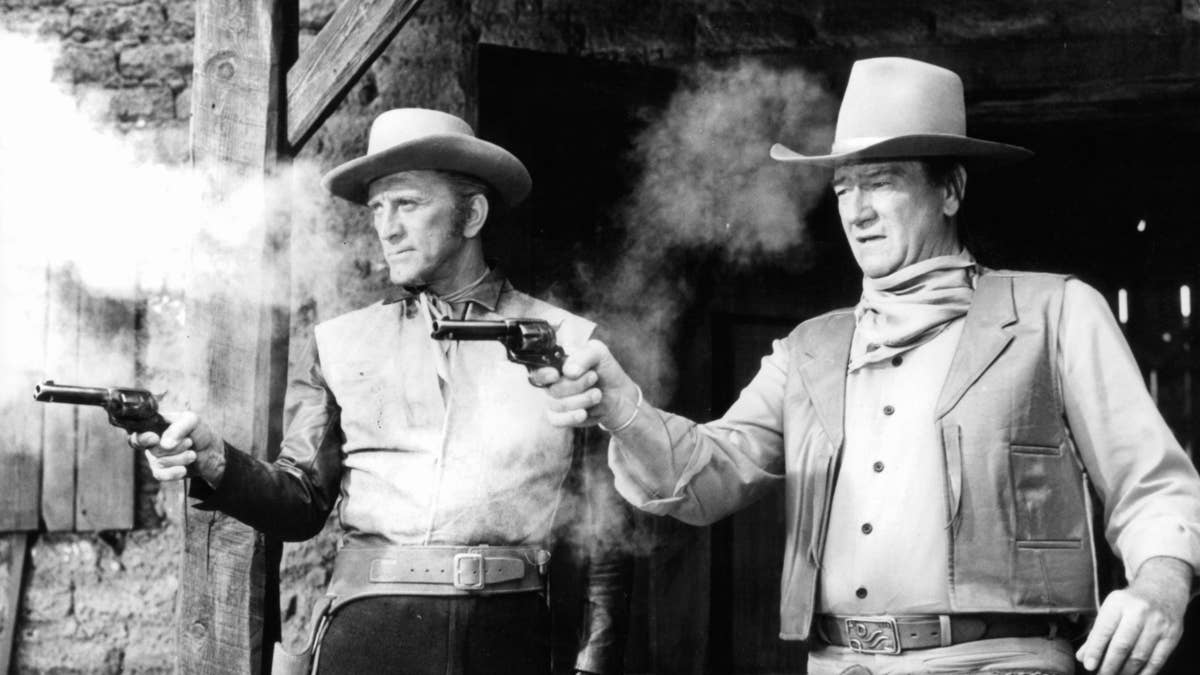
In 1967, Kirk Douglas, Robert Mitchum, and Richard Widmark teamed up for an ambitious Western built around one of the toughest journeys in American history.
Directed by Andrew V. McLaglen, The Way West follows a wagon train traveling from Missouri to Oregon in 1843. Douglas stars as former Sen. William J. Tadlock, the group's determined and increasingly rigid leader. Mitchum plays experienced trail scout Dick Summers, while Widmark takes on the role of farmer Lije Evans, who gradually finds himself at odds with Tadlock as the journey becomes more dangerous.
And dangerous is putting it lightly.
The settlers face deaths, internal conflict, a hanging, a stampede, and a string of difficult decisions as the trip west begins to wear them down. Rather than treating the Oregon Trail like a grand adventure, the film leans into how exhausting, unforgiving, and unpredictable the journey could be.
The movie also came with some serious literary pedigree.
The Way West was adapted from A.B. Guthrie Jr.'s 1949 novel of the same name, which won the 1950 Pulitzer Prize for Fiction. Producer Harold Hecht acquired the rights to the book in 1953, but it would take more than a decade for the story to finally make it to the big screen.
When filming began in June 1966, the production headed to Oregon, where much of the movie was shot on location.
Near Eugene, crews recreated 1840s Independence, Missouri, and brought in 225 extras for a scene showing the wagon train crossing the McKenzie River. Production later moved into central Oregon, with filming taking place around Mount Bachelor, Fort Rock, the Christmas Valley Sand Dunes, Crooked River Ranch, and other locations.
Some of those spots had to stand in for landmarks hundreds of miles away. Fort Rock doubled for Wyoming's Independence Rock, while the Christmas Valley Sand Dunes were used to recreate the Great Basin.
Moving a production that large through Oregon was a major operation on its own. More than 70 vehicles were reportedly used each day to transport cast members, crew, equipment, wagons, buses, trucks, and other supplies between locations.
One of the movie's biggest scenes required even more moving parts.
For a stampede sequence filmed outside Burns, the production used a herd of roughly 450 bison as the wagon train raced to escape.
The cast had a demanding schedule, too.
McLaglen required the roughly 30 principal actors to stay on set and in costume throughout filming, even when they were not needed for a particular shot. By the end of the production, that policy had contributed to exhaustion among members of the cast.
Still, filming wrapped on Aug. 25, 1966, two days ahead of schedule.
Douglas, Mitchum, and Widmark were far from the only recognizable names involved. The supporting cast included Lola Albright, Jack Elam, Harry Carey Jr., and Sally Field. The Way West is generally regarded as Field's first major feature-film role, coming just before her career took off on television and later in film.
There was also another future Western icon tucked much deeper into the production.
Men's Journal Newsletters
We'll keep you in the know on the hottest new gear, whiskey releases, TV shows and movies, and deals everyone's talking about. select all
Men's Journal: Breaking News
Men's Journal Gear Lab
Recommended by Men's Journal
Men's Journal Daily
Whiskey Wednesday
Men's Journal Blueprint (Fitness)
Email Address Sign up
or sign in with
Google
Facebook
Microsoft
Apple By signing up I agree to the Terms of Use and acknowledge that I have read the Privacy Policy . You may unsubscribe from email communication at anytime.
Sam Elliott appeared uncredited as a Missouri townsman while he was still attending the University of Oregon. Decades later, Elliott recalled earning $35 for the job and described it as his first movie paycheck.
For all the talent and scale involved, though, The Way West did not become the major critical success its pedigree might have suggested.
The film received negative reviews from several major critics when it opened, and Douglas later expressed disappointment with the finished movie. Plans for a Northwest premiere in Eugene were also canceled after the movie's early reception.
Still, that rough response is part of what makes the film interesting nearly 60 years later.
The Way West brought together three major screen stars, a Pulitzer Prize-winning story, hundreds of extras, hundreds of bison, and an enormous location shoot across Oregon. Even if the finished film never became one of the era's most celebrated Westerns, the scale of what went into making it is hard to ignore.
About the author Annmarie Gajdos
A note on cookies
Newshunt uses essential cookies to keep you signed in and to remember your language and country, so the site works the way you expect. With your permission, we'd also like to use analytics cookies to understand how people use Newshunt and improve it over time.
Accepting only affects analytics. To learn more, view our Privacy Policy or Terms & Conditions.
(0)Comments