


Iran Refuses Nuclear Site Access Amid US-Israel Pressure on IAEA
Category: Politics
Share
Archive
Like
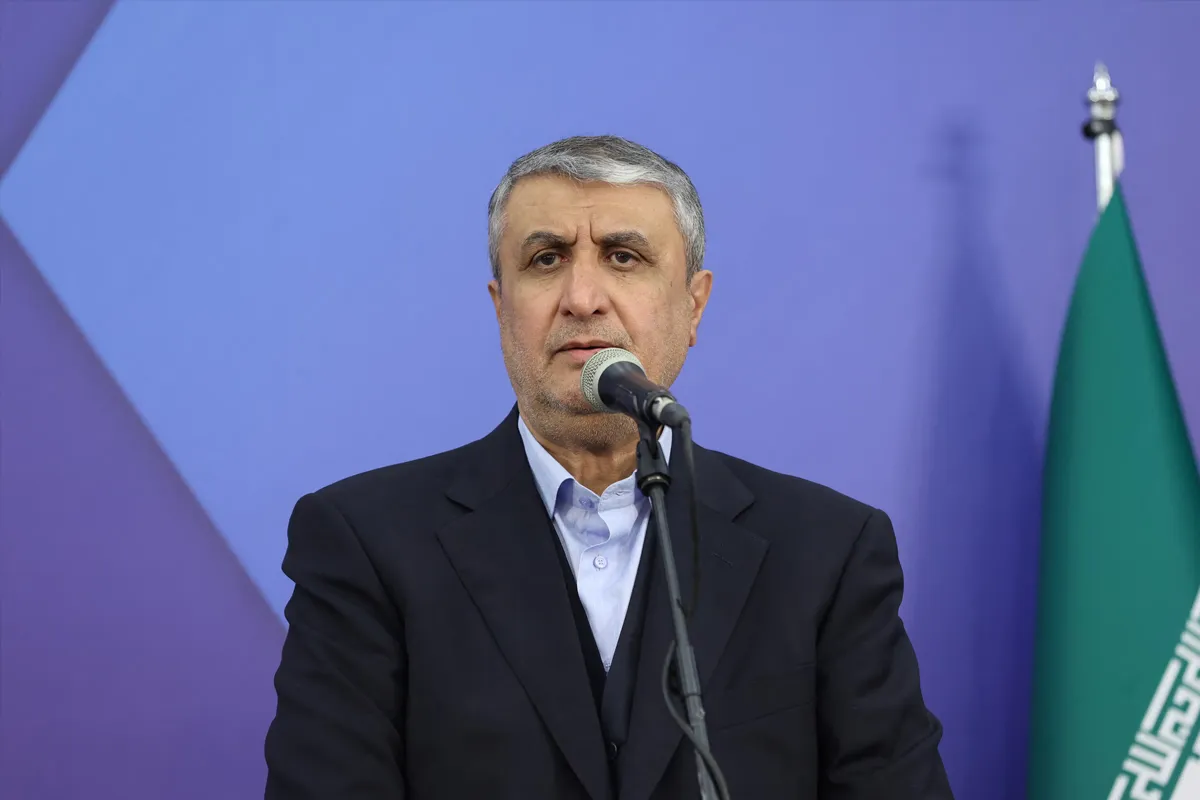
Iran's nuclear chief repeated a position this week he's now stated in nearly identical terms since December: the UN's atomic watchdog has no right to inspect Iran's bombed nuclear facilities, because — in Tehran's view — no rulebook exists for inspecting a site after someone has bombed it.
Mohammad Eslami, head of Iran's Atomic Energy Organization, said the International Atomic Energy Agency is under direct pressure from the US and Israel to inspect facilities damaged in June's strikes, telling state media 'it is only the United States and Israel that are applying pressure for the Agency to go to the damaged sites and inspect them,' because 'they want to see what happened to these sites as a result of the military operations they carried out.' He said Iran's interactions with the IAEA are now governed by a law passed by Iran's parliament after the war, which the agency has already been notified of, and that inspections of struck facilities remain off the table 'until the regulations and inspection protocols for sites that have been subjected to military attacks are drafted, approved, and communicated.'
What makes this week's statement less a fresh development than a restatement is the paper trail behind it. Eslami made essentially the same argument in mid-December, saying then that 'there must be a protocol in place for inspections of nuclear sites that have been attacked before permission can be given,' and criticizing the IAEA for failing to condemn the June strikes on Natanz, Fordow and Isfahan — facilities that were, notably, under active IAEA safeguards and inspection at the time they were hit. Iran expelled IAEA inspectors from the country after those strikes, and the agency's Board of Governors subsequently passed a resolution demanding immediate access to the damaged sites, a demand Tehran has consistently rejected since.
The dispute's underlying stakes go beyond bureaucratic process. Eslami has argued Iran holds the IAEA partly responsible for the war itself, pointing to a board report issued shortly before the June strikes that found Iran wasn't meeting its nuclear reporting obligations and was enriching uranium well beyond civilian-use levels — a finding Tehran says helped justify Israel's 'preemptive' case for attacking IAEA-monitored sites in the first place. That grievance is what turns a technical access dispute into a genuine standoff: Iran views the agency as having enabled an attack on facilities it was supposed to be protecting through oversight, while Washington and Israel want inspections precisely to assess what that attack actually destroyed.
The practical consequence is that six months after the strikes, the actual condition of Iran's most sensitive nuclear infrastructure remains officially unknown to independent verifiers. Eslami has confirmed IAEA inspectors continue routine visits to facilities that weren't targeted, meaning the access freeze is specific to the damaged sites rather than a total rupture with the agency — a distinction that keeps some cooperation alive even as the core dispute remains unresolved.
Whether Iran's parliamentary law and protocol demand represents a genuine legal position or an indefinite stalling tactic is likely to remain contested for as long as neither side blinks — the IAEA has shown no sign of accepting Iran's precondition, and Iran has shown no sign of allowing access without it, leaving the world's clearest picture of Iran's post-war nuclear capability effectively frozen at whatever it was the day the strikes landed.
A note on cookies
Newshunt uses essential cookies to keep you signed in and to remember your language and country, so the site works the way you expect. With your permission, we'd also like to use analytics cookies to understand how people use Newshunt and improve it over time.
Accepting only affects analytics. To learn more, view our Privacy Policy or Terms & Conditions.
(0)Comments