


Agriculture: Making home vegetable gardening work
Category: Financial
Share
Archive
Like
Two weeks ago, in Punjab — known for its fertile land and abundant water resources — retail prices of tomatoes and cucumbers touched Rs500 and Rs300 per kg, respectively. Such exceptionally high vegetable prices came as a price shock to ordinary households, already struggling with soaring utility bills, higher taxes, and sluggish economic growth.
As purchasing power declines and food prices rise, millions of poor and lower-middle-income families — who make up a large share of the population — are being forced to cut back on food consumption to meet other essential expenses such as utility bills, medicines, and school fees. Many Pakistanis are consequently eating less than they did a few years ago.
This worrying trend is reflected in the findings of the latest Household Integrated Economic Survey (HIES) 2024–25. Compared with the HIES 2018–19, per capita consumption of wheat and wheat flour, rice and rice flour, pulses, milk, cooking oil, meat, eggs, sugar, onions, and tea has declined.
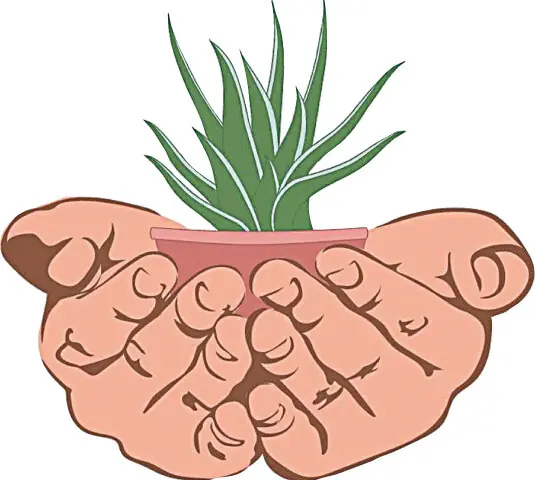
Under such difficult economic conditions, when almost every household is tightening its belt to cope with rising living costs, the time has come for Pakistan to encourage a broader societal shift towards growing vegetables at home. Households, whether in rural or urban areas, should make use of every available space— however small — including rooftops, balconies, front and back yards, and terraces.
A self-sustaining, market-driven home gardening model could improve access to vegetables
Beyond the financial benefits of growing their own vegetables, households can also benefit from improved food safety. Commercial farmers often use pesticides excessively, sometimes even a few days before harvesting. As a result, pesticide residues may remain on produce at the time of consumption. However, home vegetable gardening can reduce this risk while also providing a healthy and productive activity for family members.
It is worth noting that Pakistan's federal and provincial governments have long recognised the importance of home vegetable gardening. The Punjab Agriculture Department (Extension Wing) has promoted kitchen gardening through annual campaigns for decades. Several national and international development organisations have also implemented targeted projects and specific interventions to promote household vegetable production in both rural and urban areas.
Yet, these efforts have generally failed to achieve the desired results or attain meaningful outreach. Most initiatives appear to have been based solely on the assumption that vegetable growing is a simple task, and that providing a few days of training and distributing seeds among households would, by themselves, lead to widespread and sustained adoption of home vegetable gardening. Furthermore, sustainability, scalability, institutionalisation, and behavioural change were not adequately incorporated into the design of such initiatives.
Recently, departing from the decades-old philosophy of social mobilisation to bring about societal change, the Punjab government has adopted a command-and-control approach to promoting vegetable gardening. Under the recent Saanjhi Sabzi (shared vegetables) initiative, district administrations are making efforts to expand vegetable cultivation on available government lands, including the premises of public buildings.
In rural areas, lambardars (village headmen), who were allotted government land, have also been tasked with cultivating vegetables on at least one acre and distributing the produce free of cost among village households. Interestingly enough, the village patwari will oversee the entire process.
The objective — improving low-income households' access to vegetables at their doorstep — is commendable. However, its long-term sustainability remains questionable. Experience suggests that such initiatives, when dependent on administrative arrangements rather than well-designed systems, often lose momentum when their initiators and promoters are transferred or replaced.
What Pakistan needs, therefore, is a self-sustaining, market-driven home gardening ecosystem and business models that can survive beyond government programmes or donor funding.
Based on the experiences of many people who have tried home vegetable gardening, the most challenging phase involves preparing growing media, sowing seeds, and caring for fragile plants — tasks that demand specific knowledge, skills, and timely attention. Failure at this stage often discourages first-time gardeners and leads them to abandon the effort altogether.
To lower barriers to adoption, a more practical approach would be to supply households with established young plants in reusable pots, containers, or grow bags. This would bypass the initial hurdles and enable households to harvest most vegetables within 30 to 50 days with minimal effort and care. A small starter package containing appropriate fertiliser, a safe, ready-to-use pesticide, and a simple hand sprayer would further simplify the process for beginners.
This is where the private sector can play a crucial role. Nurseries are already operating, even in small towns, selling ornamental and fruit plants. They have the space, facilities and technical expertise to add vegetable plants to their product range and serve as local suppliers of ready-to-grow vegetable plants and related inputs.
The growing popularity of home delivery offers another opportunity. Consumers increasingly value convenience and doorstep services for a wide range of products. Nurseries could tap into this trend by offering seasonal vegetable plants, fertiliser and basic plant-protection products, with home delivery and perhaps periodic technical advice included.
In conclusion, developing an enabling ecosystem requires empowering nurseries to establish vegetable product lines and home-delivery services. Government and development organisations could direct part of their programme funds towards facilitating this expanded role for nurseries. Such a commercially viable model offers far greater potential for scale, sustainability, and long-term impact than repeated free seed distribution and short-term training.
Khalid Wattoo is a development professional and a
farmer. Sara Mehmood is a researcher and
development practitioner in the fields of climate
change, environmental sciences, and forestry.
Published in Dawn, The Business and Finance Weekly, August 17th, 2026
A note on cookies
Newshunt uses essential cookies to keep you signed in and to remember your language and country, so the site works the way you expect. With your permission, we'd also like to use analytics cookies to understand how people use Newshunt and improve it over time.
Accepting only affects analytics. To learn more, view our Privacy Policy or Terms & Conditions.
(0)Comments