


Drink coffee, wear the husk: City lab turns coffee waste into leather-like material
Category: Business
Share
Archive
Like
Chennai:
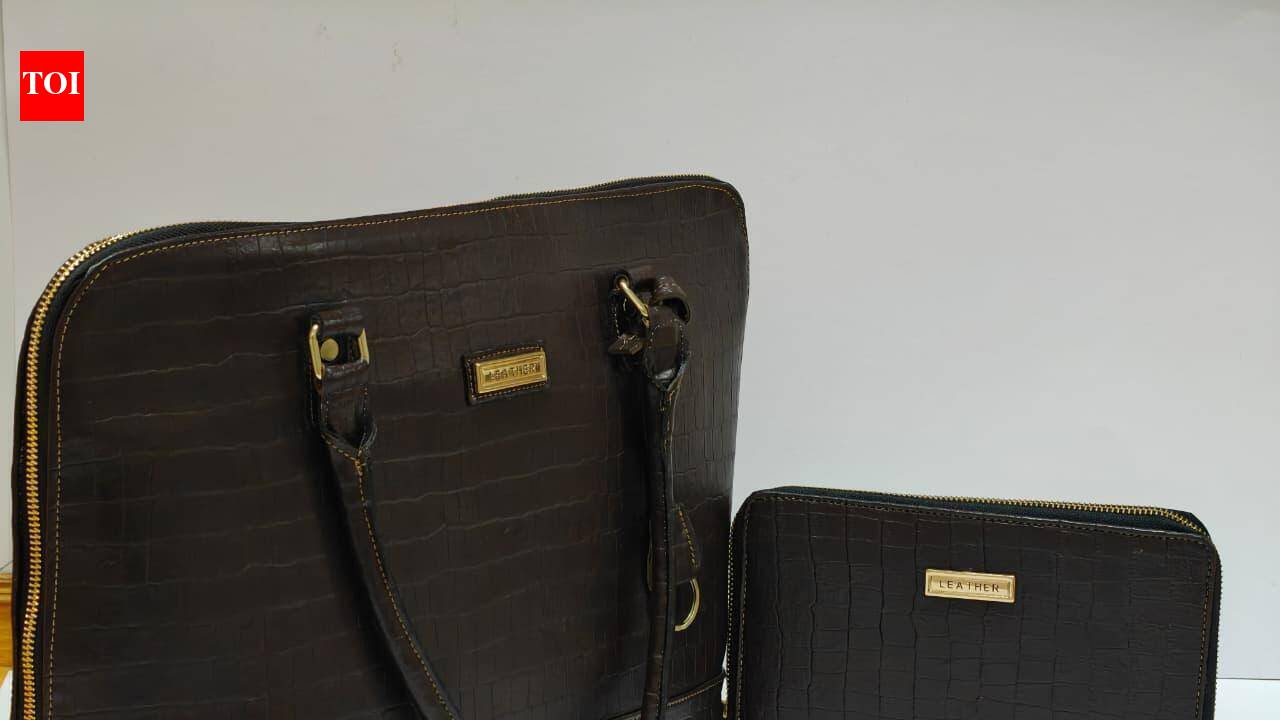
That morning cup of coffee could soon leave behind more than a caffeine buzz — its discarded husk could get a second life in your wardrobe. Scientists at CSIR-Central Leather Research Institute (CLRI), Chennai, have developed a leather-like material from coffee husk, the agricultural residue left after coffee processing.
It was then used to develop lifestyle products, including bags, wallets, footwear and notebook covers.
CLRI recently transferred the patented technology to a Bengaluru-based company that approached the institute seeking a solution for the large quantities of husk generated during coffee processing. India produces around 3.5 lakh tonnes of coffee annually, leading to one lakh tonnes of coffee husk waste.
Scientist Rajesh C M of the Shoe & Product Design and Development Centre, CSIR-CLRI, said they developed a multi-stage process that converts the husk into a matrix using plant-derived materials.
The matrix is then coloured, coated, and embossed to give it different textures and a leather-like finish. The process has been designed around a zero-liquid and zero-solid-waste discharge concept.
'This material cannot be an alternative to real leather. We see it as an alternative to petroleum-based synthetics such as PU (polyurethane) and PVC (polyvinyl chloride), and its strength is comparable to these materials,' Rajesh said.
The coffee-husk innovation is part of CLRI's larger effort to turn agricultural and industrial waste into useful materials. Scientists began with mango, rice straw, and wheat straw and have since developed technologies with around 24 varieties of waste materials.
In 2023, CLRI developed a leather-like material containing 50% mango pulp, which was combined with an environmentally friendly biopolymer and processed into sheets.
Bags and laptop sleeves made from the material passed durability tests, while development for footwear was underway.
'In all cases, our clients approached us with a problem of solving the waste generated in an industry and we developed technology. In some cases, our clients used our technology,' Rajesh said.
Commercialisation, however, comes at a cost. Manufacturers may need to invest in new machinery and pay technology fees, while the bio-based material could be priced higher than synthetic alternatives, with the additional cost potentially passed on to customers.
'As of now, we have tried fashion products. We are working to improve the materials to match the high performance expected from materials used for upholstery,' he said.
You Can Also Check:
Gold Rate in Chennai
|
Silver Rate in Chennai
|
Bank Holidays in Chennai
|
Public Holidays in Chennai
|
Chennai AQI
|
Weather in Chennai
|
Petrol Price in Chennai
|
Diesel Price in Chennai
|
CNG Price in Chennai
|
LPG Price in Chennai
Stay updated with the latest Chennai news. Download the TOI App.
A note on cookies
Newshunt uses essential cookies to keep you signed in and to remember your language and country, so the site works the way you expect. With your permission, we'd also like to use analytics cookies to understand how people use Newshunt and improve it over time.
Accepting only affects analytics. To learn more, view our Privacy Policy or Terms & Conditions.
(0)Comments