


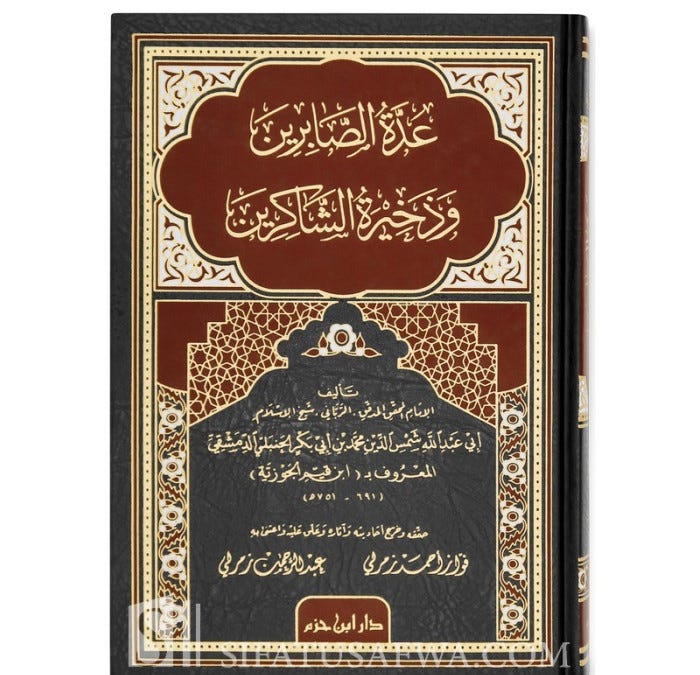
Book Summary - 'Provision for the Patient and a Treasure for the Grateful'
Category: Entertainment
Share
Archive
Like
Provision for the Patient and a Treasure for the Grateful by Ibn al-Qayyim
This post provides a book summary of Ibn al-Qayyim'sProvision for the Patient and a Treasure for the Grateful(عدة الصابرين وذخيرة الشاكرين), exploring how patience and gratitude shape our relationship with Allah through hardship, comfort, and everyday choices. It brings together the book's key insights on handling pain, resisting temptation, using blessings well, and understanding why our response to wealth or poverty matters more than the circumstances themselves.
This summary draws on the Arabic text and groups its main arguments by theme. The original contains twenty-six chapters, covering patience, gratitude, grief, temptation, wealth, poverty, and the believer's relationship with Allah.
1. Why patience and gratitude belong together
We usually think about patience when something goes wrong and gratitude when something goes well. Ibn al-Qayyim begins with a broader understanding: both are essential to the whole of religious life. We need patience to remain obedient, resist wrongdoing, and endure hardship. We need gratitude to recognize Allah's generosity and respond to it properly.
He develops the idea that faith has two halves: patience and gratitude. This describes how belief becomes action. A person recognizes what Allah commands, acts upon it, and restrains whatever pulls them away.
The book therefore addresses comfortable people as much as distressed people. Having fewer problems does not remove our need for spiritual discipline. It changes where that discipline is required. Whatever our circumstances, there is something to remain faithful to, something to resist, and something for which to thank Allah. (Chapter 19.)
2. What patience actually means
Ibn al-Qayyim begins his explanation of sabr with the idea of restraint. Patience involves holding ourselves back from responses that are spiritually harmful: uncontrolled resentment, objection to Allah's decree, and prohibited expressions of grief.
A note on cookies
Newshunt uses essential cookies to keep you signed in and to remember your language and country, so the site works the way you expect. With your permission, we'd also like to use analytics cookies to understand how people use Newshunt and improve it over time.
Accepting only affects analytics. To learn more, view our Privacy Policy or Terms & Conditions.
(0)Comments