


Governor’s Annual Report FY26: SBP remains vigilant in monitoring risks to the economy
Category: Blend
Share
Archive
Like
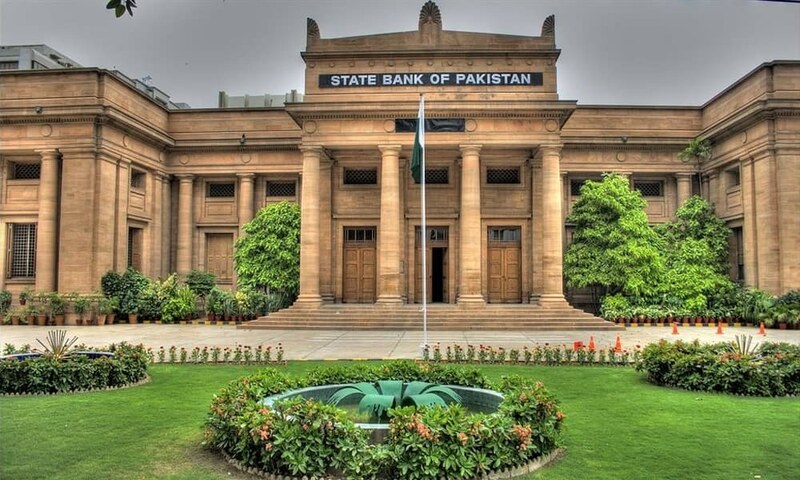
KARACHI: The State Bank of Pakistan (SBP) has cautioned that evolving external and domestic risks, particularly a prolonged conflict in the Middle East and extreme weather events associated with El Niño, could pose challenges to the country’s macroeconomic outlook and affect projected economic outcomes.
However, the SBP said it remains vigilant in monitoring these risks and their potential implications for the economy. “We remain on guard to counter any threat to price and financial stability, which are instrumental to sustain economic growth over the medium to long term,” the SBP added.
According to the Governor’s Annual Report (GAR) for FY26 of the State Bank of Pakistan (SBP) released on Tuesday Pakistan’s macroeconomic indicators continued to show resilience during FY26. Average national CPI (NCPI) inflation remained close to the upper bound of the medium-term target range despite global energy price shock; foreign exchange reserves exceeded the year-end target amid a marginal current account deficit, and real GDP recorded higher growth.
READ ALSO: Inflation to remain above medium-term target range: SBP
GAR is published under Section 39 (1) of the SBP Act, 1956 (as amended up to January 2022). The provision mandates the Governor to submit an annual report to the Majlis-e-Shoora (Parliament) regarding the Bank’s objectives, the conduct of monetary policy, and the state of the economy and the financial system.
The combination of a prudent and data-dependent monetary policy stance and continued fiscal consolidation, strengthened the country’s economic resilience against successive shocks during the year. These shocks included monsoon floods and heightened uncertainty surrounding US trade tariffs at the start of the year, and the Middle East (ME) conflict since the end of February 2026 that triggered sharp increases in global commodity prices. The financial system also remained resilient as financial depth improved amid an expansion in banks’ credit to private sector.
According to the Report, average NCPI inflation was 5.5 percent for the period Jul-Feb 2026. However, a significant rise in global oil prices following the onset of the ME conflict pushed the headline inflation into double digits from April 2026 onward.
The Report notes that the contribution of energy inflation to NCPI inflation increased markedly during Mar-Jun FY26 compared to Jul-Feb FY26. Food inflation also increased, driven by a sharp rise in prices of wheat and related products reflecting supply constraints.
Core inflation continued to moderate during most of FY26; however, it remained elevated and rose slightly after the surge in energy prices started to reflect in the costs of production and transport services.
The Report highlights that in consideration of the evolving developments during H1-FY26, the Monetary Policy Committee (MPC) kept the policy rate unchanged until December 2025, when it reduced the rate by 50 basis points (bps).
The rate cut was in view of the subdued headline inflation, anchored inflation expectations, softening global commodity prices, and a stronger external account position that improved the inflation outlook and provided room to support economic activity, the Report added.
However, the outbreak of the ME conflict led to a deterioration in inflation and external outlooks, prompting a 100-bps increase in the policy rate in April 2026 to contain second-round effects and support macroeconomic stability.
A similar policy response was observed globally, where most central banks in advanced and emerging and developing economies paused their rate cuts, while some raised their policy rates, the Report said.
The GAR FY26 also points out the strengthening of SBP’s FX reserves, which exceeded the USD 18.0 billion target for end-June 2026.
During the year, SBP made net FX purchases of USD 8.1 billion, and reduced its forward/swap liabilities by USD 1.6 billion, reflecting a qualitative improvement in the country’s FX reserve position. This build-up in FX reserves was achieved despite a current account deficit, which remained moderate as higher remittances and ICT exports offset the widening merchandise trade deficit.
The overall balance of payments improved amid ample multilateral and bilateral flows and successful bond issuances. The stronger reserve position coupled with sustained fiscal consolidation and the successful completion of reviews under the IMF’s Extended Fund Facility and Resilience and Sustainability Facility helped improve the country’s sovereign ratings, restore investor confidence, and support exchange-rate stability, the Report said.
Regarding the SBP’s objective of maintaining the stability of the financial system, the Report highlights that the asset quality of banks and DFIs improved, with a notable decline in the ratio of non-performing loans (NPLs) to total loans, whereas the ratio in the case of MFBs increased slightly but its impact remained contained due to adequate loan-loss coverage.
The banks and DFIs remained well-capitalised, with their capital adequacy ratio (CAR) remaining significantly above the minimum regulatory requirement. The Report added that Islamic banking continued its strong expansion during FY26, catalysed by a favourable regulatory environment that facilitated banks to shift towards Shariah-compliant banking and branch expansion and a growing demand for Shariah-compliant products. In addition, SBP introduced: (a) a comprehensive recovery-planning framework to strengthen banks’ preparedness for financial distress; (b) issued regulatory instructions to facilitate banking relationships with licensed virtual asset service providers; and (c) implemented a phased adoption of the Basel III through revised credit-risk standards, the Report said.
The GAR FY26 highlights several measures taken by SBP as part of its tertiary objective to support the government’s economic policy objectives. From the perspective of financial inclusion, SBP undertook a variety of measures under the National Financial Inclusion Strategy 2024–28, with efforts to expand financial access aimed at underserved segments and greater use of digital channels. These included the establishment of 12 Digital Model Villages; the launch of the country’s first end-to-end digital agriculture lending platform “Zarkhez-e” – Asaan Digital Zarai Qarza; the introduction of framework allowing teenagers to independently own and operate bank accounts and digital wallets; the development and publication of the Pakistan Financial Inclusion Index, which captures different dimensions of financial inclusion; and the launch of Pakistan Green Taxonomy in collaboration with the government.
SBP remains vigilant about the evolving nature of prevailing risks, particularly the risks of a prolonged ME conflict and El-Nino related extreme weather shocks, which may impact the projected macroeconomic outcomes. We remain on guard to counter any threat to price and financial stability, which are instrumental to sustain economic growth over the medium to long term.
A note on cookies
Newshunt uses essential cookies to keep you signed in and to remember your language and country, so the site works the way you expect. With your permission, we'd also like to use analytics cookies to understand how people use Newshunt and improve it over time.
Accepting only affects analytics. To learn more, view our Privacy Policy or Terms & Conditions.
(0)Comments