


Sexy is dead and conservatism killed it
Category: Entertainment
Share
Archive
Like
Fashion doesn't exist in a vacuum; it's always a reflection of a broader cultural context. Our clothing choices are potentially the most obvious form of self-expression and visually communication of our identities. Right now, it's holding up a mirror to a world in which we seek neutrality and are less inclined to take risks.
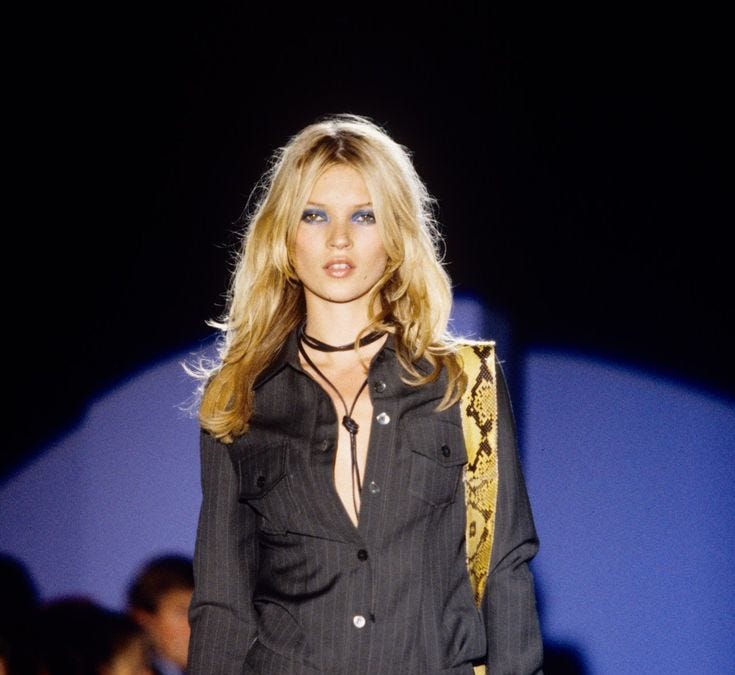
The golden age of 'sexy' fashion was probably the 90s, with moments like Tom Ford's Gucci ad campaigns or Versace's bondage dress leading the way. Of course, sexy is subjective and there is no rigid definition, but this moment helped to create a visual language for sexy. One characterised by a sort of glamourous jumble of smudged eyeliner and slinky dresses, of messy hair and revealing cut outs, or dark lips and sheer fabrics. Beyond the revealing clothes and bodies on show, it's an essence and intention defined by how fashion works with the body to create a confidence and appeal. By nature, sexy is imbued with a sense of rebellion and misbehaving as it speaks to unapologetic desire.
It only takes a scroll to see trad-wife influencers being hailed as fashion icons, and a sludge of beige and grey garments with longer hemlines and higher necklines. 'Old money' and 'quiet luxury' montages are peppered throughout feeds and there is an obvious romanticisation of all things traditional and domestic, whilst eerily being repackaged and sold as aspirational.
These types of reductive aesthetics are the outcome of a society in which self-expression feels almost dangerous.
Alongside this, our rights and freedoms feel as though they are being chipped away at, and our clothing choices seem to become equally restricted. Why would we strive to be sexy in a world when reproductive rights are being stripped back? This all coincides with a wave of sexual conservatism which aims to make it unsafe to have any kind of sex which is not heterosexual, married and potentially procreative. Unlike the recent few decades, the topic of sex once again seems to be somewhat taboo and this is reflected in the realm of fashion.
The impact of this cultural shift is only heightened by digital platforms. As social media increases the feeling of surveillance and a constant visibility, we are becoming more hyperaware of how we are perceived and retreating away from the disconcerting potential for risk and shame. Culture is becoming more cautious and our clothing choices are following.
In light of these circumstances, it is no wonder that we are losing the risqué nature of the 90s.
Notably, a counter trend of less polished aesthetics has begun to emerge online. Moments such as 'heroine chic' have seen a revival, hailing figures such as Kate Moss and the grungy aesthetics of old Calvin Klein ads. But the distinction needs to be clear: this is not sexy. This aesthetic is rooted in a preference for certain body types and a weird fetishization of looking rundown, almost sickly. Although its dark tones and subversion of glossy refinement coincides with ideas of sexy, it lacks the confidence and devotion to the body that is essential to the cause.
Of course, all hope is not lost and as fashion proves time and time again, there is always the chance for revival. In fact, as I'm writing this Madonna has just realised her videoCONFESSIONS II - The Filmand she is certainly not shying away from raunchiness. There is nothing subtle about its suggestiveness and as expected, this has not gone down well with a more conservative audience. As some react with judgement or even pure disgust, this act of hedonism is resonating with others and sending a message loud and clear: the people want sex! Fashion has always presented the chance for rebellion, and now is no exception: sexy will most definitely be back, perhaps more unapologetic than ever.
we are supported by readers like you, subscribe today <3
A note on cookies
Newshunt uses essential cookies to keep you signed in and to remember your language and country, so the site works the way you expect. With your permission, we'd also like to use analytics cookies to understand how people use Newshunt and improve it over time.
Accepting only affects analytics. To learn more, view our Privacy Policy or Terms & Conditions.
(0)Comments