


China Moves Humanoid Robots From Commercial Dominance Toward Military Trials on the Battlefield
Category: SciTech
Share
Archive
Like
China's humanoid robots spent last month entertaining crowds with backflips and boxing matches. Just two days after the
World Humanoid Robot Games
closed in Beijing, the People's Liberation Army's official newspaper called for the same technology to be moved from laboratories onto military training grounds.
That shift, from spectacle to strategy, sits at the centre of a Reuters investigation published on Monday.
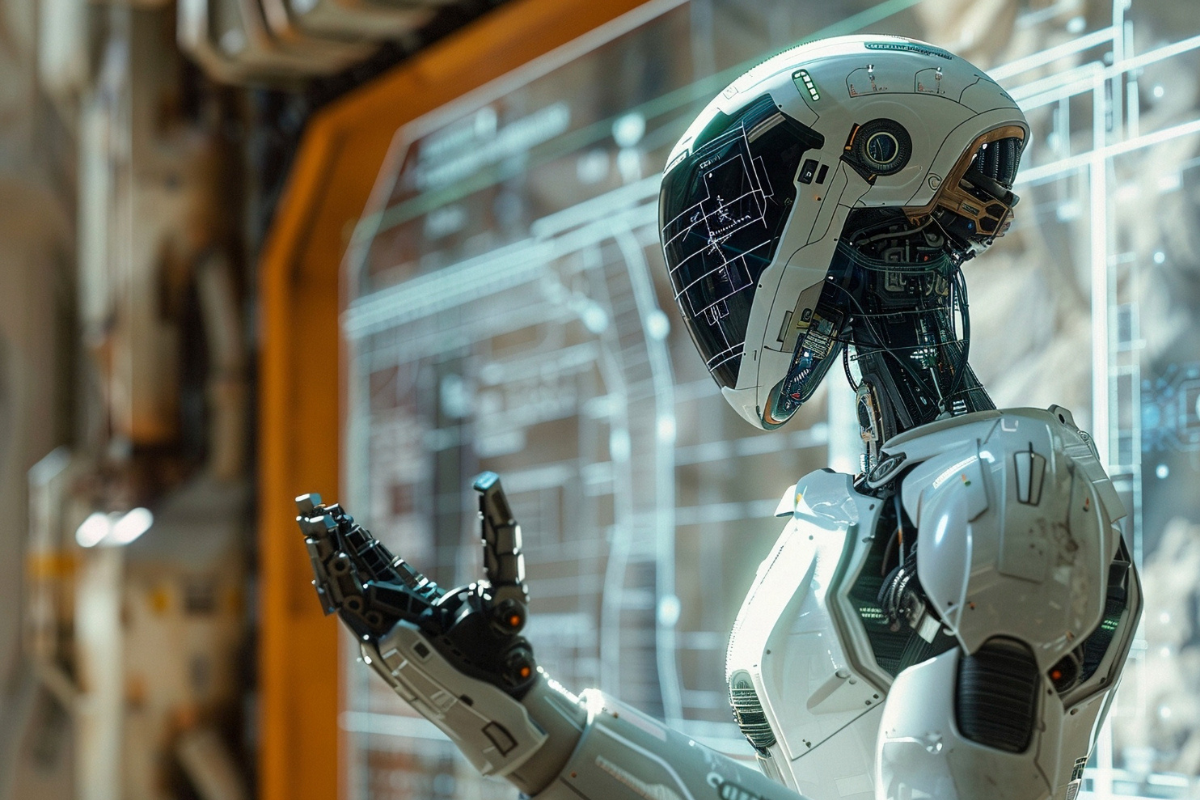
Reporters reviewed more than 100 Chinese military procurement notices, patents, academic studies, government records and defence-company materials, finding that China's armed forces are actively testing humanoid robots against battlefield requirements and studying how they might work alongside troops.
The contrast was stark. At the National Speed Skating Oval, robots ran, danced and even recorded times faster than Usain Bolt's 100-metre world record, drawing cheers for their skill and their stumbles alike.
Days later, PLA Daily urged researchers to accelerate humanoid technology into training for robotic 'combatants'. China's defence ministry and NUDT did not respond to requests for comment.
One of the clearest signs of intent came from an August 2025 paper by NUDT researchers in Xi'an. It modelled an urban assault force in which six 'combat robots', a mix of humanoids,
robot dogs
and unmanned vehicles, would be split across two teams and tasked with clearing an enemy-occupied building floor by floor alongside ground troops.
The study did not specify what weapons the robots would carry or how they would handle civilians, and Reuters noted it envisioned equipment that might not exist for five to 10 years.
Juo-Min Chou, a researcher at Taiwan's Institute for National Defense and Security Research, told Reuters that improving balance and endurance could make humanoids useful in buildings, tunnels and ship interiors, since 'their two hands and two feet could, in theory, combine mobility, climbing and manipulation'.
Chinese interest is no longer limited to building better robot chassis.
In June this year, the PLA budgeted roughly $300,000 (£237,000) for a system to collect and label camera, radar and
motion data to help humanoids learn to navigate different terrain
, according to another military procurement document. State-owned defence manufacturer Norinco has already brought a product to market.
Its Fuxi humanoid, detailed in company materials published in August, is pitched for sentry duty, all-weather reconnaissance and patrol work, and can be paired with a teleoperation system that lets a human operator control it remotely.
The system addresses the autonomy challenge that many robotics experts say remains one of the biggest hurdles for humanoids. Norinco did not respond to a Reuters request for comment.
'China's defense establishment is accelerating research into humanoids' military uses and planning for their eventual wartime deployment, according to a Reuters review of more than 100 Chinese military procurement notices'
https://t.co/OsGGFuufgg
China is not working in isolation.
The US Army's xTechHumanoid competition is offering up to $490,000 (£388,000) in prizes and $1.25 million (£991,000) in follow-on contracts to finalists testing systems for reconnaissance, security and hazardous operations, according to its programme page.
Yet while the US is investing heavily, the robotics sector there trails China in developing two- and four-legged machines, with Chinese manufacturers accounting for roughly 95 per cent of global humanoid shipments in 2025, according to estimates from BofA Global Research.
Malcolm Davis of the Australian Strategic Policy Institute told Reuters he does not see humanoids as practical battlefield systems today, 'but in five to 10 years, they could very well be'.
None of this means armed humanoids are patrolling a battlefield yet.
There is no evidence that China has deployed one with an operational PLA unit, and experts quoted in the investigation say the robots remain energy-intensive and unreliable outside controlled demonstrations.
What the documents do show is direction of travel. As China's commercial lead in humanoid manufacturing feeds a parallel military research effort, unresolved questions, such as how autonomous systems would distinguish combatants from civilians or recognise a surrendering fighter, are becoming urgent rather than theoretical.
The International Committee of the Red Cross has cautioned that autonomous weapons may struggle to interpret signs of surrender reliably, a warning that will only grow louder the closer humanoid robots get to the front line.
A note on cookies
Newshunt uses essential cookies to keep you signed in and to remember your language and country, so the site works the way you expect. With your permission, we'd also like to use analytics cookies to understand how people use Newshunt and improve it over time.
Accepting only affects analytics. To learn more, view our Privacy Policy or Terms & Conditions.
(0)Comments