


Racketeering Trial for Chinese Telecom Giant Huawei Begins in New York
Category: Politics
Share
Archive
Like
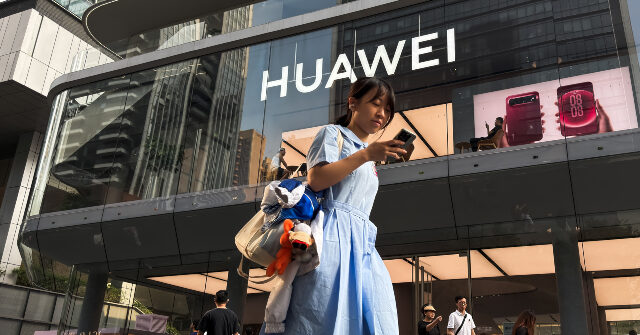
Jury selection began on Tuesday for a criminal racketeering trial in New York against Chinese telecom giant Huawei. The company stands accused of stealing technology, committing wire and bank fraud, and evading sanctions against North Korea and Iran.
Some of the charges against Huawei date back to 2009, when the company was accused of supplying the Iranian regime with surveillance equipment to assist with its crackdown on protesters after a rigged election.
The charges of bank and wire fraud, allegedly committed during Huawei's efforts to evade U.S. sanctions against Iran, were filed by American prosecutors about eight years ago. The key figure in these charges was Huawei's chief financial officer, Meng Wanzhou, also a high-ranking figure in the Chinese Communist Party.
Meng was arrested by Canada at the airport in Vancouver in December 2018 at the request of the U.S. government, sparking a major diplomatic crisis between Canada and China. China took several Canadian citizens hostage as part of its ultimately successful pressure campaign to get Meng released from Canadian house arrest in 2021.
The U.S. Department of Justice (DOJ) under President Joe Biden dropped its charges against Meng, but as part of the deal for getting the charges dropped, Meng admitted that she had indeed made false statements about Huawei's control of a shell company called Skycom that it was using to evade Iran sanctions.
A superseding indictment filed by federal prosecutors in Brooklyn in February 2020 added charges of racketeering and conspiracy to steal trade secrets against Huawei. Prosecutors accused the company of poaching employees from American firms and persuading them to smuggle intellectual property from their previous employers. They also accused Huawei of offering bonuses to its employees for bringing in stolen information.
Huawei has denied all of the charges leveled against it, and the Chinese Communist government claims the legal cases were ginned up by the United States as an exercise of 'economic bullying' to thwart China's technological progress.
Huawei made several attempts to scuttle the trial, including a motion to dismiss 13 of the counts on the basis of insufficient evidence and lack of American jurisdiction over international transactions. A judge rejected almost every argument advanced by Huawei, and later rejected Huawei's attempt to ban Meng Wanzhou's admission of wrongdoing from the trial.
The New York trial, which is expected to last about three months, will be closely watched as a benchmark for U.S. efforts to enforce international sanctions and prevent technology theft. One of the key legal concepts to be tested during the trial is the contention by U.S. prosecutors that transactions between foreign entities that are settled with American dollars can be subjected to American sanctions and racketeering laws.
The stakes of the case are incredibly high for Huawei, because the fines could consume most of the corporate profit the company has made over the past 15 years, and Huawei would probably need to pull most of its assets out of the United States to avoid having them seized. Also, conviction on the bank and wire fraud charges could make it very difficult for Huawei to do business with American and international banks.
The trial will also be closely watched for its political ramifications, as it will be well under way when Chinese dictator Xi Jinping visits the United States for meetings with President Donald Trump in late September. During his first administration, President Trump said the Huawei case could become part of a trade deal with China, although he also said he would continue to regard the company as 'very dangerous' to U.S. national security.
'I would not assume Trump intervenes, but I would not assume the courtroom stays insulated from the negotiating table either,' Craig Singleton of the Foundation for Defense of Democracies (FDD) told the Financial Times (FT) on Tuesday.
'Huawei sits at the intersection of technology competition, Iran sanctions and US-China diplomacy, which makes this an unusually consequential case,' Singleton noted.
A note on cookies
Newshunt uses essential cookies to keep you signed in and to remember your language and country, so the site works the way you expect. With your permission, we'd also like to use analytics cookies to understand how people use Newshunt and improve it over time.
Accepting only affects analytics. To learn more, view our Privacy Policy or Terms & Conditions.
(0)Comments