


Murad vows to strengthen specialised healthcare
Category: Health
Share
Archive
Like
By
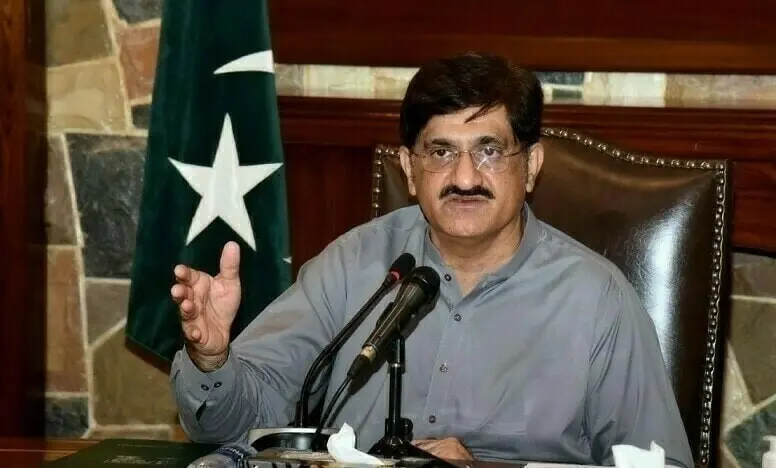
KARACHI: Sindh Chief Minister Syed Murad Ali Shah on Saturday reaffirmed the provincial government's commitment to strengthening specialised healthcare, medical research, and advanced cancer treatment while addressing the inaugural session of the 7th Annual Neuro-Oncology Symposium (7ANOS) at the Jinnah Postgraduate Medical Centre (JPMC), Karachi.
Highlighting the remarkable transformation of JPMC since its transfer to the Sindh government in 2011, the CM said the institution had evolved into one of Pakistan's leading centres of excellence in healthcare, medical education, and research.
He emphasised that the government's investments in JPMC, NICVD, NICH and other specialised institutions were aimed at ensuring that quality healthcare remained accessible to all citizens regardless of their financial means.
The symposium, organised by the Pakistan Society of Neuro-Oncology (PASNO) and the Pakistan Academy of Neurological Surgery (PANS) in collaboration with JPMC, Aga Khan University (AKU), the Brain Tumour Foundation of Pakistan (BTFPAK) and the Society of Medical Oncology Pakistan (SMOP), brought together renowned national and international experts, clinicians, researchers, healthcare professionals, trainees and patient advocates under the theme 'Neuro-Oncology in the Real World: Challenges, Innovations, and Impact.'
The event was attended by Karachi Mayor Barrister Murtaza Wahab, PASNO and PANS President Prof Syed Ather Enam, Executive Director JPMC Prof Dr Khalid Sher, Professor Emeritus Dr Tariq Mahmood, Organising and Scientific Chair Dr Shumaila Arooj, Chairman Patient Aid Foundation-JPMC Mushtaq Chhapra, senior doctors, researchers and medical students.
The CM noted that global collaboration was essential for advancing medical science and improving patient outcomes. He noted that behind every diagnosis was a patient and a family seeking hope, and it was the collective responsibility of healthcare professionals, researchers and policymakers to ensure that scientific progress translated into better treatment and improved quality of life.
Recalling the transfer of JPMC to the Sindh government in 2011, Shah said the Sindh government had since continued investing heavily in public healthcare, enabling JPMC to expand its services and infrastructure significantly.
Speaking about specialised healthcare services, he noted that Sindh's institutions had achieved national and international recognition. Referring to the National Institute of Cardiovascular Diseases (NICVD), he said it was widely acknowledged for performing one of the largest numbers of primary angioplasty procedures under one roof anywhere in the world.
The CM also highlighted Sindh's ongoing efforts to strengthen neurological and cancer care. He announced that the government was supporting the establishment of a dedicated institute for neurological diseases and thanked the provincial cabinet for approving the allocation of land free of cost for the project. He expressed confidence that in the coming years the proposed facility would emerge as a major centre for neurological treatment, research and academic exchange.
He also underscored the importance of locally driven medical research, stating that Pakistan's healthcare challenges required solutions informed by indigenous evidence and regional experience. He urged universities, teaching hospitals and research institutions to strengthen clinical research, generate meaningful data and promote innovation that directly benefits patients.
Addressing the gathering, Mayor Karachi Barrister Murtaza Wahab praised the Sindh government's efforts in strengthening the healthcare sector and acknowledged the leadership of Chief Minister Syed Murad Ali Shah and PPP Chairman Bilawal Bhutto Zardari in expanding access to quality medical services.
A note on cookies
Newshunt uses essential cookies to keep you signed in and to remember your language and country, so the site works the way you expect. With your permission, we'd also like to use analytics cookies to understand how people use Newshunt and improve it over time.
Accepting only affects analytics. To learn more, view our Privacy Policy or Terms & Conditions.
(0)Comments