


Ford Mustang Mach-E and Hyundai Ioniq 5 Owners Told Us Elon Musk Pushed Them Away From Tesla, but Cox Data Shows Tesla Just Climbed to 55% of the U.S. EV Market
Category: Business
Share
Archive
Like
We ran two polls in two places where we expected the answers to line up. One went into a Hyundai Ioniq 5 owners group. The other went into a Ford Mustang Mach-E owners group. In both, we asked people who had already skipped the Tesla Model Y and bought a direct competitor a simple question. 'Did a dislike of Elon Musk, or of Tesla the company, steer them toward the vehicle they now own?'
In the Ioniq 5 group, 59% chose the most emphatic option on the list. Their dislike of Elon, they said, strongly pushed them away from Tesla. Under an Electrek story about a poll showing most Americans would not consider a Tesla, one reader put the same feeling in plainer terms.
I've been wanting an electric car for a while and almost purchased a Tesla about six months ago before all this happened. Now I'm still gonna buy an electric vehicle, but I will be staying away from Tesla.
That is the loud, vocal minority voice of this story shouting at the moon, but it is real. The quiet half is Tesla's sales ledger, which shows the brand is actually gaining market share in America's rapidly evaporating EV segment.
Despite the anecdotal answers from the runners-up in the Model Y's segment, Tesla factually tightened its grip on the American EV market by increasing its Model Y share. Both things are true at once, and we love conflicting data points.
Ioniq 5 Buyers Were the Most Emphatic Group We Polled
The Ioniq 5 numbers were lopsided. Alongside the 59% who said Elon strongly pushed them away from Tesla, another 6% called him a minor factor, and 9% cited a general dislike of Tesla the brand.
Just 11% said they were fine with Musk and would buy a Tesla if they wanted one, and only 5% said they simply liked the Ioniq 5 more on its merits. Roughly two-thirds of the respondents pointed at Elon specifically, and quite negatively.
We want to be careful about what that figure is worth and not overstate its scientific importance. This is an informal poll inside an enthusiast owners group, not a weighted, representative survey, and the sample self-selects the answer to a large degree. Everyone answering had already bought the alternative. The poll measured the stated motivations of people who have already made a choice, not the temperature of the broader shopping public. Inside that narrow scenario, the anti-Elon sentiment was overwhelming.
Advertising
Mustang Mach-E Buyers Split Almost Down the Middle
The Ford Mustang Mach-E group refused to cooperate with the tidy narrative. A 37% plurality said Elon and the Tesla brand played no role at all in their decision to buy a Mustang Mach-E. Another 19% said they actually like Musk and would buy a Tesla if they wanted one.
"Only" 31% picked the strong-aversion option, with a further 7% calling it a small factor. Still, imagine if two-thirds of shoppers who bought a Toyota said they did so because they disliked Honda's CEO. Heck, imagine if they even knew the name of Honda's CEO.
Put the other way, most of the people in this group who bought a direct Model Y competitor said Musk did not drive them there, but a whole lot of folks did say that. Elon Musk is a name that would, at first appearances, be hurting Tesla, even though the brand is making what could be called 'gains.'
The Comments Run Hotter Than the Polls
If the polls are mixed, the comment sections on stories about this topic are not. The anger is easy to find and easy to quote. Under that same Electrek piece, one reader was blunt about vehicles already in the driveway.
I currently (regrettably) own two Teslas. I will never spend another dime on a Tesla vehicle. I will dissuade anyone I know from ever buying one also.
Comments like that are genuine, powerful, and there are a lot of them. They are also nothing more than proof by anecdote. Comment threads and stories like this very one reward the strongest opinions. One thing that opinions are not is metrics. A pledge to dissuade everyone you know is a statement of intent, not a receipt. Intent and behavior are different measurements, which is exactly where the numbers turn.
Cox Automotive's July Numbers Tell the Opposite Story
For the month these owners were posting, the market data points in the opposite direction. In the Cox Automotive EV Market Monitor published August 17, Tesla remained the American EV volume leader with 42,435 units sold, ahead of Ford, Hyundai, Toyota, and GM by a country mile. Rivian, Lucid, Slate, and Scout, which garner a lot of EV press, are not even in the mix when it comes to deliveries.
Tesla's share of total EV sales rose to roughly 55% as of the most recent data, with its sales up 4.9% month over month. The Model Y alone accounted for about 37% of all new EV sales, more volume than the entire EV lineup of any other single manufacturer.
That is not the delivery report of a company being boycotted out of the market. It also fits a pattern we have reported on in the past. The Tesla Takedown movement produced a lot of noise, which the media, like NPR, did its best to amplify and give validity to, but the (falsely?) reported anger and the dubious news made very little dent in the deliveries.
Advertising
How extreme did the media's amplification of the left's falling out of love with Elon Musk get? Consider this headline by Jalopnik.
94 Percent Of Germans Say They Won't Buy A Tesla Because Elon Musk Is A Dangerous, Far-Right Loser
Informal Polls Are Not the Only Look At This Subject
You may think that the only real look at this subject is polls in social media clubs and those by publications, but you'd be mistaken. The publication Nature has a peer-reviewed scientific study on how politics impact EV deliveries. Another scientific report described Musk's actions in its very title as "partisan" and "polarizing."
One reality check here. Total new EV sales in July were down 41.5% year over year, pressured by the expiration of the federal EV tax credit and a solid, measurable shift toward hybrids, so part of Tesla's rising EV market share reflects the EV market shrinking around it. Tesla is not only winning EV buyers. It is also the last brand standing tall in a rapidly disintegrating field.
How Both Things Can Be True at the Same Time
So how do 59% of one owners group and furious Electrek commenters coexist with a 55% Tesla share? Three ways. The people answering polls are a self-selected slice, loudest and boldest in the comments section under any post, poll, or story. Even among competitor buyers, the Mach-E group shows a plurality who left for reasons other than Musk. And the U.S. EV market is small and getting smaller, which lets Tesla's two big sellers tower over a long list of low-volume rivals. A poll captures who is willing to raise a hand. Market share captures who signed the paperwork and wrote a check.
The Bottom Line
The polls asking how Elon Musk influences buying decisions in 2026 capture something authentic. A meaningful group of Ioniq 5 and Mach-E owners chose their cars in part because they despise Elon Musk. But a poll like this measures conviction more than volume, and the conviction of the people who left does not offset the far larger number of people still buying Model Ys who saw the poll and kept scrolling
In July, a handful of folks with the loudest opinions ran against Tesla while the bulk of EV buyers ran to buy a Tesla. Until those two lines cross on a monthly EV delivery report, any anti-Musk boycott is a footnote, not a market change. Tesla's U.S. EV-market dominance never declined because the 'Tesla takedown' campaign proved impotent.
Did you shop for an EV this year and skip the Model Y? Tell us in the comments whether Elon Musk factored into your decision, or when it came time to sign on the dotted line, it really came down to the product.
About the Author:
John Goreham is a 14-year veteran of Torque News. An accomplished writer and a long-time expert in vehicle testing, Goreham also serves as the Vice President of the New England Motor Press Association and has a growing social media presence. He's also a 10-year staff writer and community moderator for Car Talk. Goreham holds a B.S. in Mechanical Engineering and an undergraduate Certificate in Marketing. In addition to vehicle and tire content, he offers deep dives into market trends and opinion pieces. You can follow John Goreham on X and TikTok, and connect with him on LinkedIn. He can be reached at [email protected]
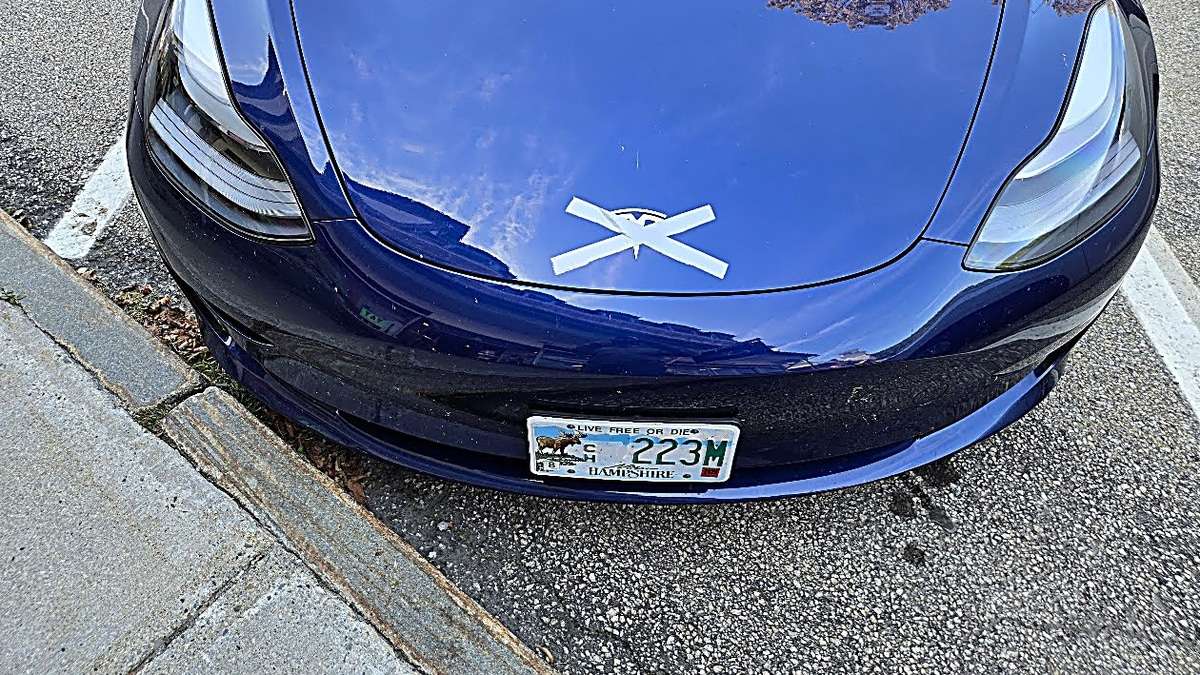
Top of page image by John Goreham. Poll screenshots courtesy of Facebook. Both have been slightly edited for privacy reasons.
A note on cookies
Newshunt uses essential cookies to keep you signed in and to remember your language and country, so the site works the way you expect. With your permission, we'd also like to use analytics cookies to understand how people use Newshunt and improve it over time.
Accepting only affects analytics. To learn more, view our Privacy Policy or Terms & Conditions.
(0)Comments