


Pakistan can't break free from IMF without reforms: S Akbar Zaidi
Category: Financial
Share
Archive
Like
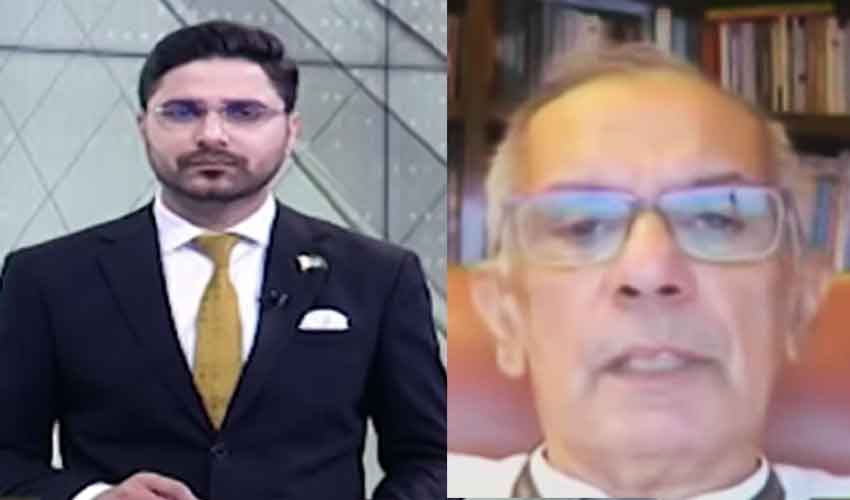
Renowned political economist S. Akbar Zaidi has warned that getting rid of the International Monetary Fund (IMF) is impossible unless Pakistan stands on its own feet and implements deep, structural economic reforms.
Speaking on the Samaa TV program Economy Matters, Zaidi noted that while IMF demands are being acted upon with more vigor this time, the government has failed to present any real reforms of its own to the international lending organization.
Zaidi pointed out that Pakistan currently lacks economic independence from the IMF, with both parties currently on the same platform and page out of necessity. He emphasized that while Pakistan and the IMF will continue to go hand in hand for now, the country does not inherently need the IMF if it can create a viable strategy to operate independently -- a task he acknowledged will be difficult.
According to Zaidi, the government lacks a comprehensive policy or road map to move the economy forward. Rather than introducing independent structural reforms, the country routinely accepts conditions dictating policy whenever the IMF issues directive demands, he remarked.
He stressed that a comprehensive policy must be put forward on how to achieve actual economic growth, as the economy currently remains stuck in stagnation rather than growing.
Debt repayment trap, interest rates, banking sector profits
Highlighting the country's fiscal strain, Zaidi stated that the majority of national income is currently directed toward debt repayment. Borrowing money is not inherently bad if loans are utilized properly for productive economic growth; however, Pakistan's current loans are merely being taken to pay off previous debt commitments, he added.
Zaidi also criticized the current monetary framework, noting that with interest rates sitting between 10.5 and 11%, commercial banks are benefiting the most while productive sectors suffer. Furthermore, he highlighted the impact of fuel pricing on citizens, pointing out that Pakistan currently has the highest petrol prices in the entire region.
Expanding tax net, addressing systemic inequities
On fiscal policy, Zaidi stated that it is essential to widen the tax net and bring non-taxpayers into the system. While acknowledging that the government has done a good job by imposing taxes on retailers, he stressed that nothing in the economy remains hidden and that those who are already paying taxes are simply being trapped further.
To fix the tax structure, Zaidi advocated for:
Taxing high incomes: Collecting taxes directly from individuals and sectors generating substantial income.
Agricultural income tax: Increasing taxes on agricultural income to ensure equitable contribution across all sectors.
Provincial autonomy, circular debt, solarisation surge
Turning to governance, Zaidi highlighted that federal orders should not simply be imposed from above; the opinion and input of the provinces are necessary for sustainable policymaking. He observed that following the 18th Amendment and the National Finance Commission (NFC) award, the financial condition of the provinces has improved relative to the center.
Addressing the energy sector, Zaidi identified circular debt as a very serious problem that continues to cripple the economy. As electricity tariffs continue to rise, consumers and businesses are rapidly switching to solar energy, driving a swift global-scale transition toward solarization across Pakistan.
A note on cookies
Newshunt uses essential cookies to keep you signed in and to remember your language and country, so the site works the way you expect. With your permission, we'd also like to use analytics cookies to understand how people use Newshunt and improve it over time.
Accepting only affects analytics. To learn more, view our Privacy Policy or Terms & Conditions.
(0)Comments