


Leader of Spanish enclave in North Africa urges EU to act on mass migrant crossings, urges special status
Category: Politics
Share
Archive
Like
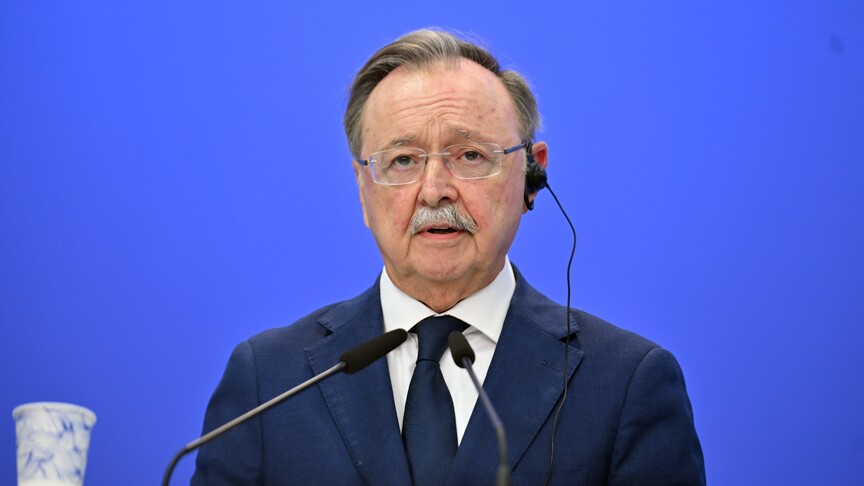
The president of Spain's North African enclave of Ceuta, Juan Jesus Vivas, has urged the EU to take stronger action to protect the territory's borders and help it recover from a mass influx of migrants, urging a special EU status for Ceuta and neighboring Melilla.
Vivas, speaking alongside Javier Zarzalejos, chair of the European Parliament's Committee on Civil Liberties, Justice and Home Affairs (LIBE), said the scale of migrant arrivals placed unprecedented pressure on Ceuta's public services, economy and social cohesion.
"Ceuta is currently a pressure cooker which can explode at any minute," said Vivas, describing the situation as "unsustainable."
He urged the EU to increase its presence at the Spanish-Moroccan border through the European border agency, or Frontex, and the European Union Agency for Asylum.
Vivas also wants European institutions to provide funding for infrastructure needed to reinforce the border and support Ceuta in dealing with the consequences of the mass crossings.
Vivas said Ceuta and Melilla face circumstances unlike those of other EU territories because they constitute the bloc's only land borders with Africa.
He argued that Brussels should explicitly recognize their particular circumstances and introduce a specific framework providing greater access to EU funding, state-aid flexibility and other forms of support.
"Special treatment which can be a lever to ensure stability, security, and the prosperity of Ceuta and Melilla," he said.
Vivas accused Morocco of using migration pressure to place political and economic pressure on Ceuta and Melilla.
"This event, from our point of view, was possible due to the complicity of Morocco or the consent of Morocco, one or the other, and I think it's a very serious situation because this means that their behavior is entirely unacceptable, and it is a lack of respect to Ceuta, to Spain, and to the European Union," said Vivas.
He alleged that Moroccan authorities either knew about or were complicit in the organization of the mass crossings, citing the scale of the movement, Spanish police reports and previous incidents involving the border.
"Could that be done without Morocco knowing about it?" Vivas asked, referring to the mobilization of tens of thousands of people. "And if they knew about it, why didn't they issue a warning?"
He also pointed to reports alleging that Moroccan security personnel helped direct migrants toward the border.
The Spanish government, however, has taken a more cautious position on Morocco's alleged role.
Prime Minister Pedro Sanchez has said there is no solid evidence that Rabat orchestrated the mass arrival, while Spanish intelligence assessments had not established Moroccan involvement at that stage. Sanchez said Madrid would respond firmly if evidence of deliberate involvement emerged.
The mass crossings resulted in tens of thousands of people entering Ceuta from Morocco from July 30 to 31, according to Spanish government estimates.
Spanish authorities estimated that several thousand migrants remained in Ceuta after the initial crossings, although Vivas acknowledged that authorities still lacked a precise figure for the number who entered and those who remained.
A note on cookies
Newshunt uses essential cookies to keep you signed in and to remember your language and country, so the site works the way you expect. With your permission, we'd also like to use analytics cookies to understand how people use Newshunt and improve it over time.
Accepting only affects analytics. To learn more, view our Privacy Policy or Terms & Conditions.
(0)Comments