


From TK to childcare, what California families need next
Category: Financial
Share
Archive
Like
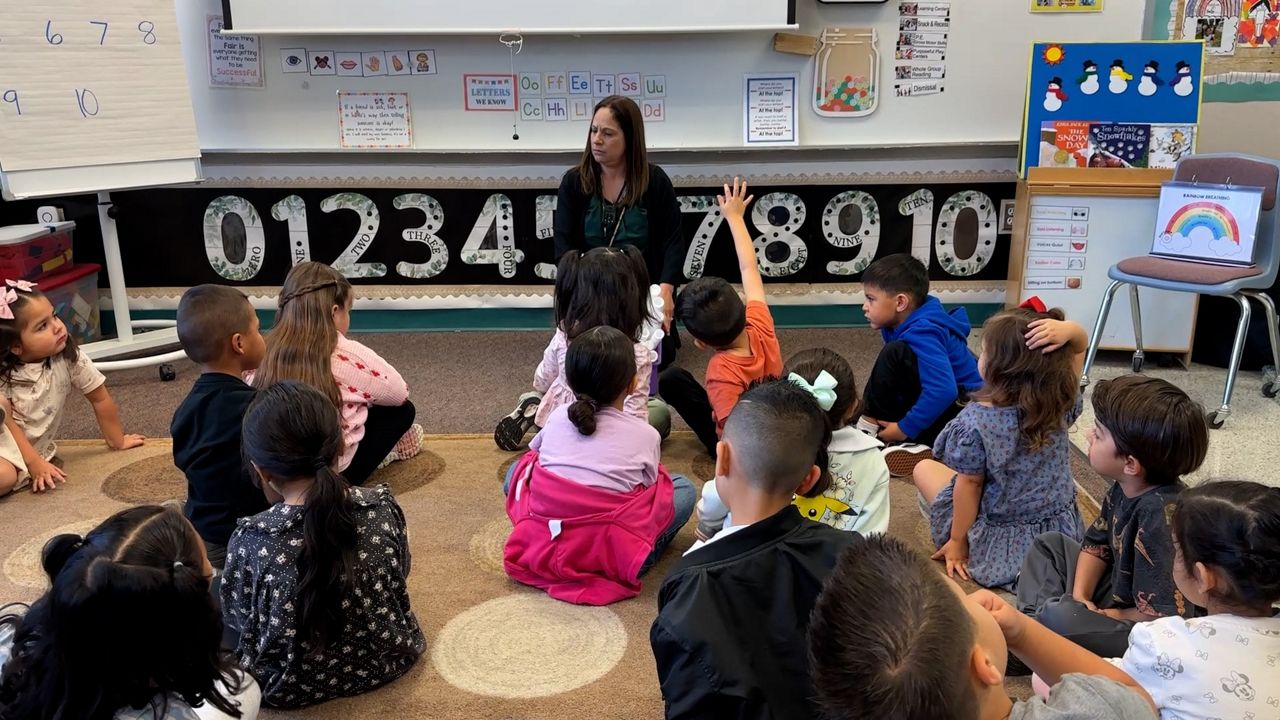
LOS ANGELES — California has reached a major milestone in its early childhood education system by offering free transitional kindergarten, or TK, to all 4-year-olds in the state. It's an endeavor that began back in 2022 and has slowly rolled out until reaching full implementation in August.
According to state reports, the move saves California families an average of nearly $14,000 per child.
But state leaders, early childhood advocates and researchers say universal TK is only one piece of a much larger childcare puzzle.
Universal childcare was a focus area of the recent First 5 California summit in Anaheim. The state agency funds early education and developmental programs for children up to age 5.
Among other topics, policymakers and advocates discussed what it would take to make high-quality childcare more affordable and accessible for families across the state.
For attendee Esbeidy Ramirez, the conversation is personal.
The mother of two children, ages 5 and 1, said she attended the summit both as a parent and as someone who works in family support services with infants and toddlers.
"We all have children. We all struggle to find somebody that's reliable, where we know that our children will be safe," Ramirez said. "And just in this economy, two working parents is definitely needed. You know, our single moms are single parents, or single dads definitely need that same support, if not more."
However, sometimes even two working parents is not enough to cover childcare and all other expenses, says economist and policy fellow Chloe Gibbs, author of the policy brief "The economics of the market for early childhood care and education in California," at the Stanford Institute for Economic Policy Research.
"We see that the cost of child care, the average cost in California, can be as much as 80% of a household income for those lower-income families," Gibbs said.
The January report found that fewer than half of California children ages 0 to 5 have regular childcare arrangements, with two of the biggest factors being the high cost of care and the lack of available slots.
It's why universal TK is a step in the right direction, said Shanna Hazan, vice chair of First 5 California.
"That means all 4-year-olds have access to high-quality care in their local elementary school. And we know that's been transformative. It means that parents can work and not worry about the care of their children, and they don't have to pay a thing," Hazan said.
But points out that the state is still missing childcare for the 0-to-3 age range, which is often the most challenging to find and the most expensive. The report also estimates the state has a gap of more than 600,000 licensed childcare slots compared with potential demand. The issue leaves parents with tough decisions to make.
"When families are navigating this child care market, one of the decisions they make is, is it worth it for us to work and pay these higher costs? And what we see is that it tends to be mothers who are on the margin for potentially exiting the labor market and not seeking that formal childcare for their children," Gibbs said.
The decision has a ripple effect in the greater economy
"Potential workers who are not in the labor market are not earning that additional source of income, which families would use then to spend money in the economy," Gibbs said. "And so it might mean that families are sort of trapped at lower income levels than they would like to be because they don't have access to a functioning childcare market that would support their own employment. So we really think of like the child care market as the kind of foundation for all of the other, you know, industries and and the rest of the economy."
California also faces a shortage of childcare workers. The Stanford report found that early childhood education workers earn less than comparable workers and experience significantly higher turnover than workers across the state's economy.
That creates a difficult balancing act between making care affordable to stay open while also paying workers enough to keep them in the field.
The Stanford researchers estimate that a publicly supported program for infants and toddlers could cost billions of dollars each year, depending on how many families participate and who qualifies. But they also argue that the investment could produce broader economic benefits, including increased workforce participation among parents.
For Ramirez, universal childcare in those early years would mean she and the parents around her feeling supported.
"There was a point where I did have to work overnight so that I can wake up and care for my daughter with two hours of sleep," she said. "Thankfully, I was blessed with my job that is now flexible, and I could be a more involved mother that's rested and not grumpy. I do have a 1-year-old and, like I said, I have a really great village. But I would love for some of my mom friends who don't have a great village to not struggle."
A note on cookies
Newshunt uses essential cookies to keep you signed in and to remember your language and country, so the site works the way you expect. With your permission, we'd also like to use analytics cookies to understand how people use Newshunt and improve it over time.
Accepting only affects analytics. To learn more, view our Privacy Policy or Terms & Conditions.
(0)Comments