


Hoff: 9/11/01+25 is a time for retrospective and recommendations
Category: Politics
Share
Archive
Like
OPINION
Posted
Tuesday,
September 8, 2026
12:30 pm
For sure, there are some lessons and laments pertaining to the terrorist actions of 9/11 and the response to same.'
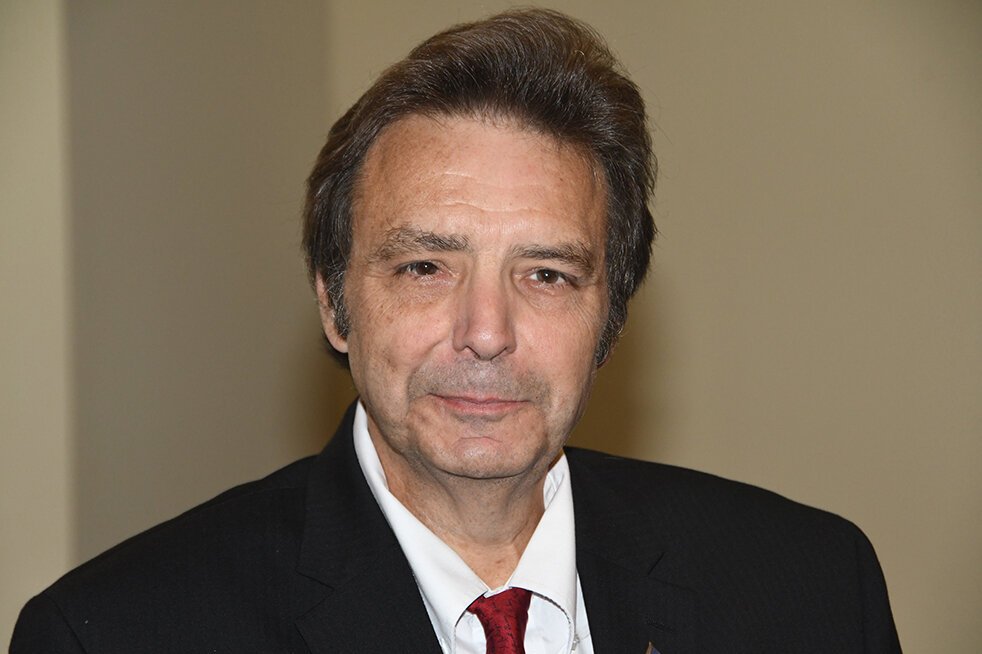
Dr. Samuel B. Hoff is a George Washington Distinguished Professor Emeritus at Delaware State University. He served as its ROTC director from 1993-99 and is a recipient of several military and national security fellowships.
Truthfully, it is an anniversary the country would rather not have to commemorate. But we need the reminder of the evil that wrought its human and physical damage on that crisp September morning in 2001, just as the nation and its citizens need to be vigilant against future threats. For sure, there are some lessons and laments pertaining to the terrorist actions of 9/11 and the response to same.
We don't have to look far for the cause of 9/11: the terrorists themselves, led by Osama bin Laden, who once fought in conjunction with U.S. forces against the Soviets in Afghanistan. While he also identified various American operations in the 1990s as incentive for the 9/11 assault, a main reason he cited was Saudi Arabia's alliance with the U.S. during the first Gulf War. Promises of al-Qaida revenge were either ignored or not connected, for which U.S. intelligence agencies were blamed. If anything, there was a lack of vision in failing to contemplate the type of attack conducted in 2001; yet a scene in the movie 'The Delta Force' 15 years earlier depicted a then-terrorist warning hostages that he would fly a plane into the White House.
There is no telling the 9/11 story without the bravery of the passengers who fought back on the four flights, as well as that of the first responders on the ground, whether at the World Trade Center, the Pentagon or in the field in Shanksville, Pennsylvania. Too, there were selfless civilians who assisted others everywhere. The memory of those killed has been kept alive by the families and by the annual rites of 9/11 remembrance. Since the new millennium, thousands of American service personnel have perished in service to the nation, many who volunteered in the wake of the 9/11 strikes. Too, many military members from other nations who supported American aims paid the ultimate price.
It is uncanny how the response to the Sept. 11, 2001, attacks — as heinous and unexpected as they were — mirrored elements of the movie 'The Siege,' released three years earlier. The George W. Bush administration justifiably took admirable initial action to combat what happened, by going after the culprits in Afghanistan. However, that focused goal became a nation-building nightmare. Further, it overreached by invading Iraq, which turned into a quagmire. Additionally, allegations of torture against designated terrorists at several sites led to congressional investigations and court rulings, with trials of several principal 9/11 planners still pending. At home, some religious and ethnic groups faced discrimination and violence.
While the immediate aftermath of 9/11 saw a common objective, that consensus dissipated into partisan disagreements on the path to fighting terrorism generally. Actually, the partisan nature of terrorism policies has existed in some form since the George H.W. Bush administration, as the ensuing period has seen revolving party leadership in the White House and divided party control of Congress in most cases. Only the 1881-1901 period in American history witnessed such sustained party change in control of the presidency, with similar alterations in foreign policy priorities.
The United States was a proud organizer of the United Nations in 1945. Our nation has always relied on the moral high ground to gain support and confront dangerous world situations. But, like toxic partisanship, statements and policies that contradict the mission of the U.N. or its affiliates have become a regular part of America's 'war on terrorism.' That includes ignoring criticism of U.S. treatment of detainees, the drone-based campaign to kill persons identified as terrorists and the military campaign to kill those suspected of drug running, which have transpired during various presidential administrations. The United States has shunned membership in the International Criminal Court, fearing that its tactics will be subject to more than scrutiny.
The consequences of the aforementioned conditions have been borne out across the last quarter-century. First, there have been inconsistent national security objectives promulgated, from primarily counterterrorism to a Russia reset to a pivot to China and now a Mideast emphasis. Worse, the United States has hypocritically let the most recent nuclear agreement with Russia expire, while starting a war against Iran, ostensibly to prevent the spread of nukes. Second, the United States' go-it-alone orientation has alienated traditional allies, some of whom fought alongside America after 9/11. Third, the country's proclivity to solve dilemmas militarily has led to a concomitant diminution of peaceful methods, as the federal government recently gutted financial aid to foreign nations, stropped friendly propaganda and sidelined diplomacy and congressional consultation in favor of a White-House-only agenda. In that manner, the United States has abandoned trying to forestall the fomentation of terrorism in the first place.
From various sources, it is estimated that America and its coalition partners have been responsible for killing about 160,000 persons designated as al-Qaida, ISIS, Taliban or as belonging to some other terrorist group since 2001. We know that opposing those committing wanton violence for political aims can be a dirty business. But losing our moral compass and diplomatic guidepost is not the way to honor the victims of terrorism. Nor is shunning friends, while rewarding competitors, respectful to those Americans and others who perished to protect civilization from those bent on destroying it.
Going forward, America can renew an effective and legally defensible anti-terrorism campaign. It starts with repositioning the U.S. intelligence network so as to emphasize the primacy of the CIA. Second, the nation's overall national security strategy must integrate anti-terrorism actions as a part of it, rather than the other way around. Third, constant communication between the White House and Congress in this area will not only increase trust but will significantly improve accountability. Fourth, recognizing friend from foe will guarantee backing when it is needed. Finally, the United States government should have enough confidence in itself, in its personnel and in its position in any dispute to utilize all international bodies to gain legal standing and support for its moves.
9/11/01+25: A silver jubilee celebration it is not. Things change, but reverence, remembrance and resilience for that day and its victims remain heartening. Americans are less fearful and more hardened now. Good thing, because terrorists don't acknowledge anniversaries.
Reader reactions, pro or con, are welcomed at civiltalk@iniusa.org.
A note on cookies
Newshunt uses essential cookies to keep you signed in and to remember your language and country, so the site works the way you expect. With your permission, we'd also like to use analytics cookies to understand how people use Newshunt and improve it over time.
Accepting only affects analytics. To learn more, view our Privacy Policy or Terms & Conditions.
(0)Comments