


How U.S. Schools Teach 9/11: A State-by-State Breakdown of Curriculum -
Category: Politics
Share
Archive
Like
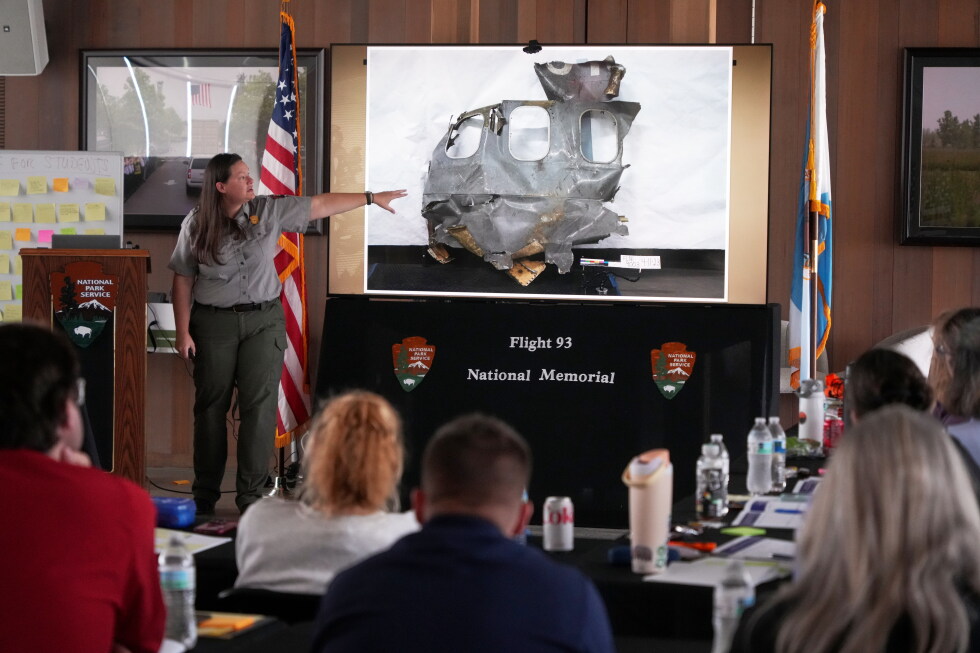
POLICY WIRE — Shanksville, Pa. — Educators recently gathered at the Flight 93 National Memorial in western Pennsylvania to navigate the complexities of teaching the September 11 attacks to a generation born long after the tragedy occurred.
Gordon Felt, who lost his brother Edward on United Airlines Flight 93, emphasized to the attending teachers that the most significant danger lies in omitting the story entirely rather than struggling with the appropriate language to describe it.
With roughly one-third of the American population born after the 2001 attacks, the urgency of classroom instruction has grown. An investigation by The Associated Press reveals that at least 40 states now expect or suggest that public schools address 9/11, though the depth and framing of these lessons differ significantly across the country.
University of Wisconsin professor Jeremy Stoddard noted that while many states previously ignored the event, there has been a shift toward treating it as a settled historical milestone. Currently, 25 states mandate instruction on the attacks, while 13 others offer optional guidance, and several more require school observances.
State approaches vary from Alabama's focus on military involvement to Texas's framing of the event as a study in radical Islamic terrorism. Meanwhile, states like New Mexico and Colorado encourage broader discussions regarding civil liberties, detention centers, and the geopolitical aftermath of the attacks.
Political leanings do not always dictate curriculum, as states like California and Florida both emphasize the balance between national security and civil rights. However, conservative-led initiatives, such as a 2023 Florida law requiring 45 minutes of instruction, have increasingly prioritized the subject.
In Arizona, legislation was adjusted to focus on seventh through 12th grades to protect younger children from the graphic nature of the events. State Sen. John Kavanagh, who sponsored the measure, stated that the goal is to ensure older students never forget the horror of that day.
For educators, the challenge remains bridging the gap between their own traumatic memories and the perspective of students who view 2001 as distant history. Megan Jones, education chief at the National Sept. 11 Memorial & Museum, noted that the institution has raised over $25 million this year to support teacher training and student field trips.
Teachers like Martha Runzer, a former flight attendant, use personal connections to bring the history to life for their students. Others, like 28-year-old John Boston Bradley, are finding new ways to convey the human and emotional weight of the tragedy to students who have no personal recollection of the day.
Reporting by Policy-Wire (PW)
A note on cookies
Newshunt uses essential cookies to keep you signed in and to remember your language and country, so the site works the way you expect. With your permission, we'd also like to use analytics cookies to understand how people use Newshunt and improve it over time.
Accepting only affects analytics. To learn more, view our Privacy Policy or Terms & Conditions.
(0)Comments