


Saudi foreign policy is built on stability, security and justice, expert says
Category: Politics
Share
Archive
Like
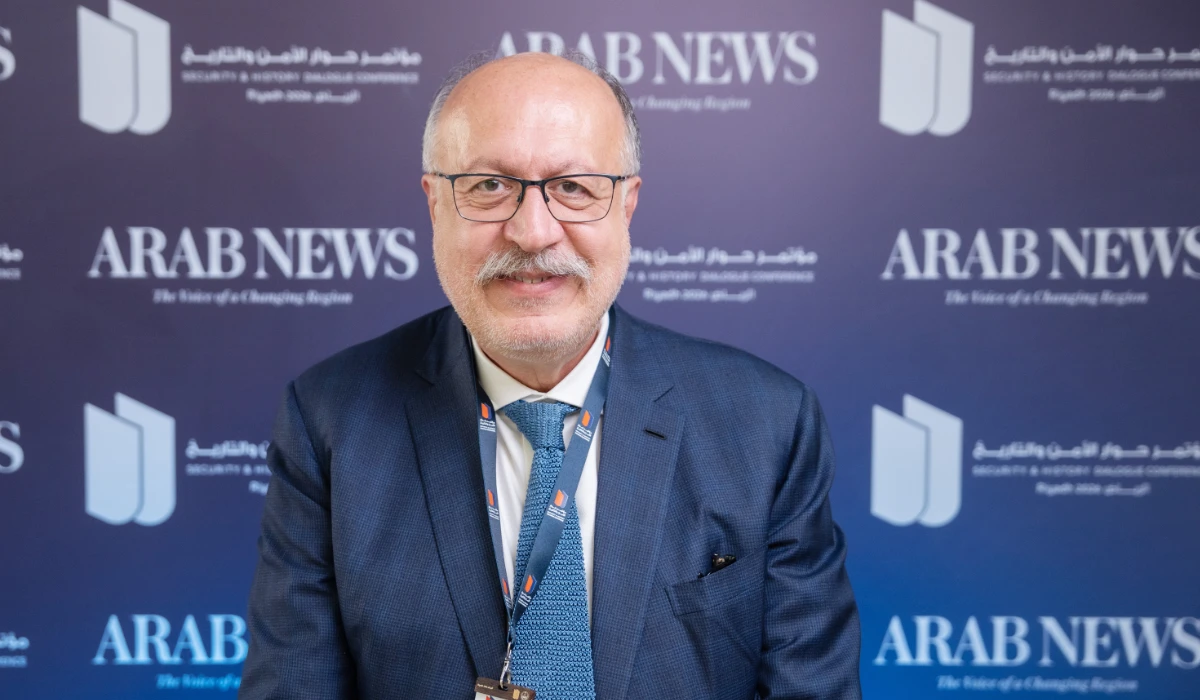
RIYADH: Rapidly developing human capital at home and flexible diplomacy abroad are driving Saudi Arabia's national trajectory, according to international relations expert Joseph A. Kechichian. Speaking at the Security and History Dialogue Conference in Riyadh, the senior fellow at the King Faisal Center emphasized that while global alliances shift with time, Saudi Arabia's century-old focus on regional stability remains constant. Addressing a panel titled 'Saudi Arabia and International Partnerships for Security and Development,' Kechichian explained that Saudi foreign policy rests on three enduring pillars — stability, security, and justice — even as strategic interests and global alliances adapt to changing circumstances. 'Foreign policy changes all the time. It can never stay stale and static,' Kechichian said. 'Principles don't change. The most important objective of every leader in Saudi Arabia for the past several hundred years has always been stability.' He noted that maintaining national security is essential to preserving that stability, while justice forms the indispensable third pillar. 'Without justice, there cannot be security,' he said, adding that shifting global dynamics naturally dictate changes in international alignment. 'Foreign policy, at the end of the day, you do what's in your best interests, and those interests change over the course of time. Principles don't change; interests do.' During the session, Kechichian traced this strategic flexibility, from the Kingdom's historic security ties with the US and UK to its expanding modern relationships across China, Russia, and the Global South. 'Saudi foreign policy can often be described as combining continuity with flexibility,' he told delegates. 'That continuity, based on safeguarding fundamental security interests, has evolved into a pragmatic strategy that, when necessary, seeks to broaden the scope of strategic alliances and partnerships.' Alongside international diplomacy, Kechichian highlighted the domestic transformation driving the Kingdom's economic momentum, pointing to social development as Saudi Arabia's primary asset. 'Saudi Arabia has three things going for it, which is remarkable,' he said. 'The most important one is not oil; it is the dynamic society that this country has. Young people in this country are amazing. They are really changing. Human resources in this country are developing at a pace that is unheard of in many societies.' Having observed the region over several decades, Kechichian noted that the depth of societal change is especially obvious through a historical lens. 'This was a very different country from what it is today,' he said. 'Most Saudis don't realize this, of course, but you have to have the vision of an outsider actually to see the difference between the past and the present.' Linking human capital development directly to regional stability, Kechichian emphasized that domestic capability and global cooperation must advance together in an interconnected global economy. 'Nowadays we live in a globalized society, and no country can function alone any more,' he said. 'We are all tied with each other, whether people like it or not. And we either swim together or we sink together.' He added that lasting stability relied on consistent leadership values that enabled social progress. 'Long-term objectives always require a person who is leading a country to make sure that their principles are stable, that their ambitions are limitless, and that they allow the liberty for their societies to flourish,' Kechichian said. 'If those three things happen together, then you will have security, and you will have justice.'
A note on cookies
Newshunt uses essential cookies to keep you signed in and to remember your language and country, so the site works the way you expect. With your permission, we'd also like to use analytics cookies to understand how people use Newshunt and improve it over time.
Accepting only affects analytics. To learn more, view our Privacy Policy or Terms & Conditions.
(0)Comments