


UN Expert Says Taliban Cross Global Red Lines Without Facing Consequences
Category: Politics
Share
Archive
Like
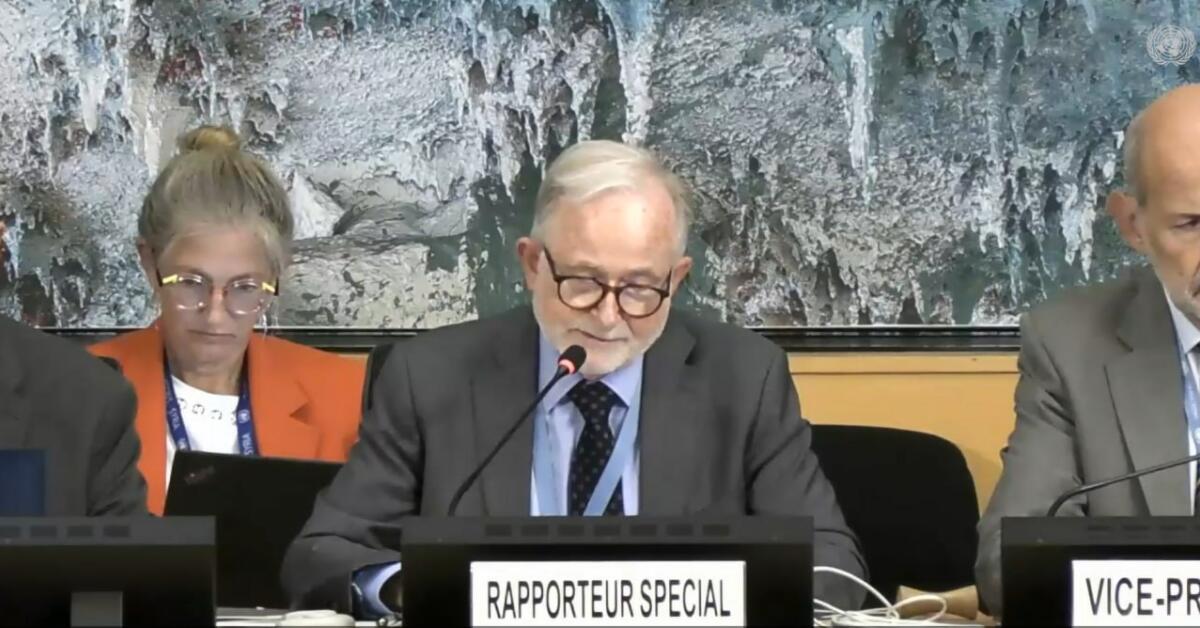
KABUL, AFGHANISTAN – Richard Bennett, the United Nations special rapporteur on human rights in Afghanistan, said on Monday that the Taliban have learned that international condemnation carries little cost and can cross red lines without consequences.
Speaking at the 63rd session of the U.N. Human Rights Council, which began on Monday, Bennett said that after five years in power, the Taliban is consistently testing the limits of what the international community would tolerate.
'Every time we protest in words but continue to act as before we send the same message: this is acceptable,' Bennett said.
He said he remained shocked by what Afghans have told him about physical and psychological abuse by Taliban officials, sometimes compounded by abuse from their own families. He also cited increasingly dehumanizing statements by leading Taliban figures, including those denying women's equal humanity.
Bennett highlighted recent Taliban decrees that appear to recognize marriages involving children. The measures treat any girl who has reached puberty as eligible for marriage and interpret her silence as consent, he said.
He expressed deep concern over rising pressure on minority and ethnic communities. Afghans' rights to practice their religion are being steadily constrained, he noted, pointing to widespread restrictions on the Shia community and the closure of Ismaili places of worship in Badakhshan province. Minority groups, particularly the Hazara community, have also been targeted on ethnic grounds through land appropriation and forced eviction, Bennett told the council.
Bennett said he remains committed to defending the rights of the people of Afghanistan, particularly women and girls. He urged members of the U.N. Human Rights Council to defend those rights not only through words but through action, and called on U.N. member states to urgently support every available accountability mechanism while standing with the people of Afghanistan.
Bennett submitted his latest report on the human rights situation in Afghanistan, covering developments since November 2025 and separately examining the situation of children. The report documents widespread human rights violations under Taliban rule, with particular focus on restrictions imposed on women and girls, which Bennett has described as 'gender apartheid,' as well as rising child malnutrition, child labor and child marriage.
Since returning to power, the Taliban have imposed sweeping restrictions on the rights and freedoms of people in Afghanistan, particularly women and girls. The group has banned them from education and most forms of employment and placed broad limits on their participation in public life, including access to healthcare services.
U.N. experts and international rights groups have described the Taliban's policies against Afghan women as crimes against humanity that could also amount to gender apartheid. The international community has repeatedly called on the Taliban to lift the restrictions, including the bans on education and employment, but the group has continued to enforce them.
A note on cookies
Newshunt uses essential cookies to keep you signed in and to remember your language and country, so the site works the way you expect. With your permission, we'd also like to use analytics cookies to understand how people use Newshunt and improve it over time.
Accepting only affects analytics. To learn more, view our Privacy Policy or Terms & Conditions.
(0)Comments