


Pakistan expands digital infrastructure for AI push
Category: SciTech
Share
Archive
Like
.
Pakistan expands digital infrastructure for AI push
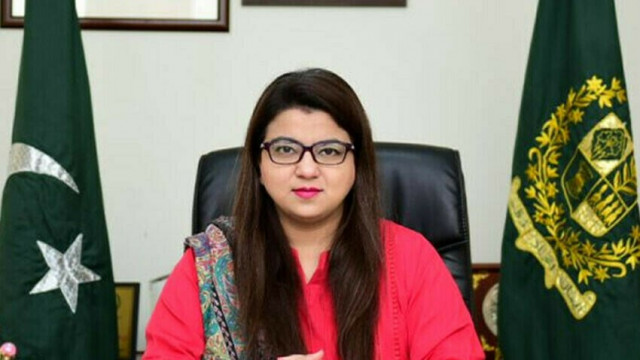
Information Technology Minister Shaza Fatima Khawaja said on Tuesday that Pakistan had significantly expanded its digital infrastructure through a major spectrum auction, 5G deployment and nationwide fibre-optic connectivity to meet rising demand for digital services.
Addressing a high-level panel at the Global Digital and AI Summit in Seoul, South Korea, she said Pakistan viewed artificial intelligence (AI) primarily as a network challenge under Prime Minister Shehbaz Sharif's Digital Nation Pakistan vision.
Khawaja said Pakistan conducted its largest-ever spectrum auction in March 2026, acquiring 480 MHz of spectrum for $509 million and increasing telecom operators' combined holdings from 274 MHz to 754 MHz. Within six months, 5G services had been launched at more than 1,700 sites across 24 major cities, delivering average speeds of 130 Mbps.
She added that download speeds had risen by 68.1% over two years, while more than 234,000 kilometres of optical fibre cable had been deployed nationwide. The government had abolished right-of-way charges to reduce costs and accelerate fibre expansion.
Pakistan was connected to international networks through six submarine cables with combined capacity exceeding 17 terabits per second, she said, adding that the country was developing the Central Asia Regional Economic Cooperation (CAREC) Digital Corridor to connect Central Asia with the wider world.
Highlighting connectivity in remote areas, Khawaja said regulators were finalising a framework for satellite communications and licensing to facilitate direct-to-device services. Satellite technology would complement, rather than replace, terrestrial networks. New frameworks for mobile virtual network operators and infrastructure sharing had also been introduced to attract investment.
On digital inclusion, she said the Universal Service Fund had provided connectivity to more than 38 million people across 22,100 settlements in over 110 districts. Pakistan had assembled 17.6 million smartphones locally in 2025, while instalment plans were being introduced. The gender gap in mobile connectivity had narrowed from 25% to 8%, she added, citing World Bank reports.
Khawaja also said Pakistan's ranking in the International Telecommunication Union's ICT Development Index 2026 had improved by 27 places. She described universal connectivity as an unfinished promise, urging stakeholders to share investment risks and make connectivity the foundation for AI-driven growth.
A note on cookies
Newshunt uses essential cookies to keep you signed in and to remember your language and country, so the site works the way you expect. With your permission, we'd also like to use analytics cookies to understand how people use Newshunt and improve it over time.
Accepting only affects analytics. To learn more, view our Privacy Policy or Terms & Conditions.
(0)Comments