


Millions flock to Spain, Iceland for rare total solar eclipse
Category: Tourism
Share
Archive
Like
Summary As a result, millions across northern Spain, Zaragoza and the Balearic Islands will witness a dramatic 'sunset eclipse'.
This will mark the first total solar eclipse visible from mainland Spain in more than a century.
The path of totality will stretch across western Iceland and eastern Greenland, offering viewers a dramatic backdrop of rugged fjords under late-afternoon Arctic light.
AI Generated Summary
A total solar eclipse is set to darken skies across parts of Europe on August 12, drawing millions of travellers to witness the rare event. Spain and Iceland have emerged as the top destinations for eclipse chasers this week.
This marks the first time the path of totality has crossed mainland Europe since August 1999. The rarity of a total eclipse passing over such densely populated regions has sparked massive international interest.
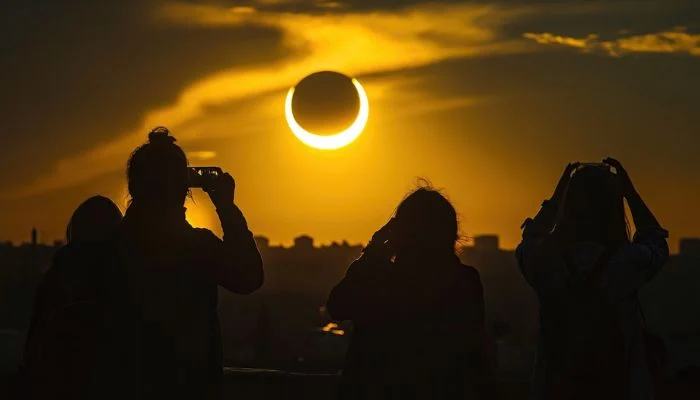
Hundreds of thousands of visitors have been flocking to Spain to experience the celestial event alongside local residents. What makes Spain's viewing especially unique is that totality will occur just before sunset, with the Sun hanging low on the western horizon.
As a result, millions across northern Spain, Zaragoza and the Balearic Islands will witness a dramatic 'sunset eclipse'. This will mark the first total solar eclipse visible from mainland Spain in more than a century.
Spain's Secretary of State for Science, Juan Cruz, expressed excitement over the milestone. He said he hopes the event inspires a new generation of astrophysicists, calling it a genuinely special moment for the country.
Spanish authorities are preparing for roughly six million visitors travelling across the eclipse's path. The scale of anticipated tourism reflects just how rare and significant this celestial event is considered.
Iceland has also been swept up in the excitement, expecting around 80,000 visitors for the occasion. The path of totality will stretch across western Iceland and eastern Greenland, offering viewers a dramatic backdrop of rugged fjords under late-afternoon Arctic light.
Visitors along Iceland's westernmost coast will experience totality at 5:44 pm local time, as the Moon's shadow moves steadily eastward. Those in the far western regions will see totality last up to two minutes and 13 seconds, while other areas will experience a shorter period of darkness.
NASA is also playing a role in the event, deploying a high-altitude WB-57 aircraft from Iceland to track the Moon's shadow. Additional NASA-funded teams will launch specialised weather balloons to study how the sudden darkness and cooling affects the lower atmosphere.
With millions gathered across two very different landscapes, this eclipse is shaping up to be one of the most significant astronomical events of the decade.
A note on cookies
Newshunt uses essential cookies to keep you signed in and to remember your language and country, so the site works the way you expect. With your permission, we'd also like to use analytics cookies to understand how people use Newshunt and improve it over time.
Accepting only affects analytics. To learn more, view our Privacy Policy or Terms & Conditions.
(0)Comments