


The Amazon faces a radioactive future
Category: SciTech
Share
Archive
Like
Rush for strategic minerals could turn the Brazilian Amazon into a radioactive sacrifice zone.
The worlds largest rainforest region could face a bleak and radioactive futuredriven by new mining projects to extract strategic minerals essential for the global energy transition, the high-tech industry, artificial intelligence, and new weapons systems. Some of these mineralssuch as niobium, tin, and rare earth elementsare found in deposits alongside radioactive uranium, thorium, and their radioactive decay products, all of which ultimately end up as mining waste called tailings.
By Norbert Suchanek
The Amazon region is threatened by an unprecedented mining boom, in the name of sustainability and climate protection. It is at the center of a global race for strategic minerals considered essential for the global energy transition and decarbonization. These include, above all, niobium, copper, cobalt, lithium, nickel, tin and the 17 rare earth elements. They are also necessary for high-tech products like smartphones, war drones, missiles and AI Data centers. Brazils mining authority has already received thousands of applications for prospection and exploration in the Amazon, many of which are located near or within forest reserves and indigenous territories.
According to InfoAmazonia, a news organization that combines data, maps and geolocated reporting to tell stories about the planets largest continuous tropical forest, there are 5,046 mining applications to exploit essential substances for the energy transition in the Brazilian Amazon Biome.1,205 of these applications are related to areas that impact Indigenous Lands and 1,207 overlap Conservation Units.
In 2025, an exclusive survey by Brazilian investigative news outlet "Reprter Brasil" identified 1,827 mining requests for copper, lithium, rare earth elements, and 13 other minerals less than 40 kilometer from isolated indigenous groups.
In its official Guide for Foreign Investors 2026 the Brazilian Ministry of Mines and Energy (MME) expects a strong increase of Brazil's mineral reserves from the expansion of geological knowledge and the success of ongoing exploration projects.
According to geological studies potential rare earth deposits can be found in the Amazonian states of Amazonas, Rondonia, Roraima, Par, and Tocantins. One of the largest reserves identified in Brazil is the Morro dos Seis Lagos deposite at So Gabriel da Cachoeira in the Amazonas state.
However, the mining and processing of rare earths and other critical minerals are a dirty business that can have serious consequences for the environment, workers and local populations. Mining, especially open-pit mining requires clearing large areas of land to access mineral deposits. Rainforest has also to be cleared for the necessary workers' settlements and access roads. These new highways, in particular, attract landless settlers, land speculators, and illegal loggers who deforest further areas along the routes as observed throughout the Amazon region for decades. But that's just the tip of the "dirty" iceberg of rare earths and critical mineral production.
High risk of radioactive contamination
There is a threat of widespread contamination of soil, air, and water with toxic substances, heavy metals, and even radioactive elements. This is because some of the critical or strategic minerals such as niobium, tin and rare earth elements occur in the soil in association with radioactive uranium, thorium and their radioactive decay products.
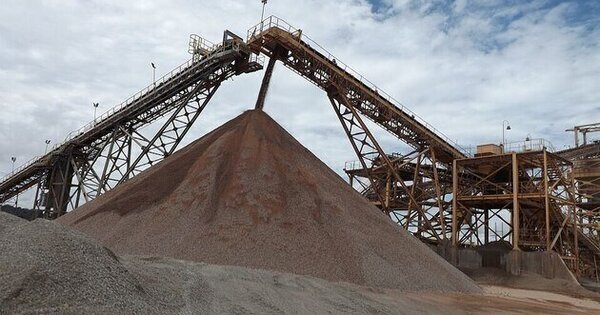
The contamination starts with the first blast. Radioactive and toxic dust caused by the explosions spreads over the mining area. The more rock that has to be blasted and removed, the more dust is generated. The amount of dust can be reduced by irrigation systems. However, that creates sewage containing radioactive substances and heavy metals that can enter soil and water resources. The highly hazardous tailings, which are mixtures of crushed rocks and processing fluids from mills and concentrators have to be stored in artificial lakes or ponds for a long time. Studies show, every tonne of rare earths mined generates up to2,000 tonnesof toxic and radioactive waste.
In addition the beneficiation process and refining of rare earths need a huge amount of energy and chemicals. Flotation tailings, up to 40 tons per ton of produced rare earth oxide, that include radioactive elements, are also discharged into the open tailings ponds which poses toxicity risks to water, soil, and air through leakage, dust formation, and rain erosion. In addition refining processes generate also huge amounts of dangerous gas. Each ton of rare earth elements produced in China releases 9,600 to 12,000 cubic meters of toxic gas containing flue dust concentrate, hydrofluoric acid, sulfur dioxide, and sulfuric acid, according to the Massachusetts Institute of Technology factsheet "Mission 2016 - The Future of Strategic Natural Resources.
A team of German scientists from the Forschungszentrum Jlich studied the Environmental impacts of rare earth production in several countries including China, Myanmar and Australia. They concluded in their 2022 published study: The life cycle assessments have highlighted the main problems, such as large quantities of chemicals needed to process Rare Earth Elements and the large quantities of tailings generated during beneficiation, extraction and separation that contain the naturally occurring radionuclides Thorium and Uranium and their decay products. These radioactive elements can enter the environment through air, wastewater and rain leaching.
It should also be noted that rare earth elements are toxic to humans and animals. Recent toxicological studies show that rare earths can enter the human body through various pathways such as inhalation, ingestion and dermal contact. They accumulate in different tissues or organs and ultimately posing a serious threat to human health. A 2024 published study considers exposure to Rare Earth Elements as a public health issue of global importance. Possible consequences include lung diseases, neurological damage, cardiovascular dysfunction, reproductive harm, and increased risks of cancer and genetic damage.
Dams can and do break
After all, one of the major risks to the Amazon basin is the enormous amount of tailings from the mining operations, which are stored in huge ponds secured by artificial dams. To avoid radioactive leakage they must be monitored, and permanently managed for a very long time. However, dams can break, as has happened in the past in various countries around the world. Regions with naturally occurring heavy rainfall, such as the Amazon and the Atlantic Rainforest in Brazil, are particularly vulnerable to dam breaches.
In Brazil, there have already been dozens tailings dam failures in mining areas that led to severe environmental disasters. The two worst dam collapses in Brazil to date occurred in Mariana in 2015 and in Brumadinho in 2019, both located in the Atlantic Rainforest region of the southeastern state of Minas Gerais.
Case studies on radioactive contamination from rare earth production
Radioactive contamination resulting from the extraction of rare earths and strategic minerals is neither an unfounded hypothesis nor science fiction. It has already occurredfor instance, in Malaysia during the 1980s: Radioactive waste from the rare earth processing plant of Asian Rare Earth and the Mitsubishi Chemical Corporation poisoned the local population of Bukit Merah. When the Mitsubishi joint venture plant opened over 1982, the villagers soon began complaining of the factorys stinging smoke and bad smell which made them choke and cry. Worse was to come. Their health began failing, indicated not only by frequent bouts of coughs and colds, but a sharp rise in the incidence of leukemia, infant deaths, congenital disease and lead poisoning, remembers the Consumers Association of Penang (CAP). The affected population protested and went to court. Finally, in 1994, the Bukit Merah plant closed. The rare earth company left behind its radioactive waste, stored in 80,000 drums of 200 liters each in a dump site just three kilometers outside from Bukit Merah.
Another dirty rare earth mining hotspot is Myanmar, also in Southeast Asia. This country is one of the largest rare earth exploiters in the world serving the Chinese industry for years with dear consequences. The mines along the Myanmar-China border generate radioactive waste and chemical contaminants that seep into waterways, degrading local ecosystems and disproportionately impacting indigenous populations.
A research by Thailands Naresuan University found that water samples taken from areas of extraction in Kachin State were severely contaminated with radioactive elements, toxic heavy metals and other harmful substances. In 2025, the policy brief Kachin, a Sacrifice Zone for the Green Transition of the EarthRights organization in Washington DC brought to light the environmental destruction and human rights violations resulting from the mining of heavy rare earth elements in Myanmar: Mining in Kachin is leaving creeks and rivers dangerously contaminated with heavy metals and radioactive elements. Worse: These rivers are tributaries of the great Mekong, one of the most fish-biodiverse rivers in the world and a food source for millions of people.
Toxic runoff from these (Rare Earth) mines is polluting transboundary rivers that run from Myanmar into Thailand and then into the Mekong mainstream. People living in the affected areas cannot use the rivers for fishing, their agricultural products are shunned at markets in Thailand, and they fear their bodies are being exposed to toxins, wrote the Stimson Center, a nonprofit, nonpartisan think tank based in Washington, D.C., in its 2025 published field note Toxic Rare Earth Mining is Ruining Mekong Tributaries in the Golden Triangle.
Even in the Amazon basin, mining activities have already led to radioactive contamination on at least one occasion.
In 1993, a tailings dam at the Pitinga open pit mine in the state of Amazonas at Presidente Figueiredo municipality, roughly 130 kilometers north of Manaus collapsed, contaminating the Tiaraju River of the Waimiri Atroari indigenous territory with heavy metals and radioactive elements. Pitinga was established in 1981 during the military dictatorship by the mining company "Minerao Taboca" and has produced mainly tin ore and niobium since 1982. However, the polymetallic deposit also contains other strategic minerals such as tantalum, rare earth elements and the radionuclides thorium and uranium, which are eventually found in the tailings and processing residues.
The dam collapse at the Pitinga mine is serious and should concern the entire community, as there is evidence that the company released radioactive minerals that could cause irreversible environmental damage, warned the Indigenist Missionary Council (CIMI) at the time. The Waimiri Atroari reported cases of tooth loss, hair loss, and leukemia: typical symptoms and consequences of radiation exposure or radioactive contamination.
Egydio Schwade, a co-founder of the Indigenous Missionary Council (Cimi) and resident of Presidente Figueiredo, witnessed already in 1985 the discharging of Pitingas mining waste into the Tiaraju Stream, a tributary of the Alala River, which serves as the lifeblood of the Waimiri-Atroari Reserve and flows into the Rio Negro. Conditions worsened significantly in the years that followed 1987, 1989, 1990, 1991, and 1992 due to the successive failure of containment dams, he remembers in his 2016 published report Criminal Mining: A Testimony.
Another accusation comes from the indigenist Porfrio Carvalho of Brazil's Indigenous affairs agency (FUNAI). In 1987, he denounced the collapse of nine dams of the Pitinga mine, which polluted the Riaraju, Alala, and Jauaperi rivers and threatened the fauna and flora of the Amazon. Although he did not mention radioactive contamination due to a lack of technical analysis, he described it as a large-scale ecological disaster in the region. Carvalho has been accompanying the Waimiri Atroari since the late 1960s. He died in 2017 from cancer, aged 70.
The mining company Minerao Taboca, which operates the Pitinga Mine in Amazonas, was sold in November 2024 to the Chinese state-owned company CNMC (China Nonferrous Metal Mining Company) for US$340 million. The Chinese company aims to quadruple production at Pitinga. In addition it plans to exploit the mines rare earth minerals. Pitinga is considered a potential hotspot for large-scale rare earth mining in the Amazon. These elements are present not only in the primary ore body of Pitinga but also in the more than 6,000 hectares of tailings ponds that contain more than 100 million tonnes of waste rock.
According to the Global Environmental Justice Atlas (EJAtlas) the Pitinga mining complex is emblematic for Brazils historical injustice against indigenous peoples and the systematic downplaying of environmental pollution and the risks associated with tailings dams.
Norbert Suchanek is an experienced journalist based in Rio de Janeiro Born in Germany in 1963, Norbert Suchanek has been researching and writing about environmental and human rights issues since 1988. In 2025, he received the Nuclear-Free Future Award in the Education category in New York City. He is also co-founder of the International Uranium Film Festival.
Sources
Minerao Taboca projeta quadruplicar produo em Pitinga at 2035
https://revistaminerios.com.br/mineracao-taboca-quadruplicar-producao-pitinga-203/
Pitinga cassiterite mine and potential hotspot for large-scale REE extraction in the Amazon, Brazil
https://ejatlas.org/print/pitinga-mine-amazonas-brazil
RADIOACTIVE WASTE BURIED IN BRAZILIAN AMAZON
https://www.abyayalanews.org/document/1484
O Minrio Radioativo do Amazonas e as Usinas Atomicas Japonesas
https://urubui.blogspot.com/2011/03/o-minerio-radioativo-do-amazonas-e-as_28.html
Fear of river contamination by a mining company returns to haunt indigenous people in Amazonas, four decades after first accusations.
https://reporterbrasil.org.br/2026/03/fear-of-river-contamination-by-a-mining-company-returns-to-haunt-indigenous-people-in-amazonas-four-decades-after-first-accusations/
Medo de contaminao de rio por mineradora volta a assombrar indgenas no AM, 40 anos aps primeiras denncias
https://pulitzercenter.org/pt-br/stories/medo-de-contaminacao-de-rio-por-mineradora-volta-assombrar-indigenas-no-am-40-anos-apos
Minerao Criminosa. Um depoimento
https://ihu.unisinos.br/78-noticias/552029-mineracao-criminosa-um-depoimento
Minerao Taboca anuncia investimento de US$ 100 milhes para dobrar produo no AM
https://g1.globo.com/am/amazonas/noticia/2026/01/28/mineracao-taboca-anuncia-investimento-de-us-100-mi-para-dobrar-producao-no-am.ghtml
REE Project, Summarized Presentation, November 2023
https://www.gov.br/cetem/pt-br/assuntos/VI-Seminario-Brasileiro-de-Terras-Raras/Apresentao_Projeto_Terras_Raras_Atualizado.pdf
Industrial minerals in the Pan Amazon
https://news.mongabay.com/2024/07/more-industrial-minerals-on-brazils-borders-with-ecuador-venezuela-and-colombia/
DENNCIA: POVO WAIMIRI-ATROARI E RIO ALALA PEDEM SOCORRO DIANTE DE VAZAMENTO DE MINERADORA
https://cptnacional.org.br/2025/09/29/denuncia-waimiri-atroari-mineracao/
Malaysian Town Recalls Rare Earth Mining Woes
https://www.voanews.com/a/malaysian-town-recalls-rare-earth-mining-woes-133330653/147816.htm
A stubborn dreamer who fought to save Amazons Waimiri-Atroari passes
https://news.mongabay.com/2017/05/a-stubborn-dreamer-who-fought-to-save-amazons-waimiri-atroari-passes/
FIELD NOTE: Toxic Rare Earth Mining is Ruining Mekong Tributaries in the Golden Triangle
https://www.stimson.org/2025/toxic-rare-earth-mining-is-ruining-mekong-tributaries-in-the-golden-triangle/#elementor-toc__heading-anchor-2
Policy Brief: Widespread Environmental and Human Rights Damages from Rare Earth Mining in Kachin State, Myanmar, Linked to Green Energy Industry
https://earthrights.org/media_release/policy-brief-widespread-environmental-and-human-rights-damages-from-rare-earth-mining-in-kachin-state-myanmar-linked-to-green-energy-industry/
Mining company investigated for Amazon contamination reached Toyota and Teslas supply chain
https://reporterbrasil.org.br/2026/04/mining-company-investigated-for-amazon-contamination-reached-toyota-and-teslas-supply-chain/
Niobium: A radioactive sword of Damocles hangs over Brazils northern Amazon.https://www.patagonjournal.com/index.php?option=com_content&view=article&id=4563%3Aniobio-una-espada-de-damocles-radiactiva-pende-sobre-la-amazonia-norte-de-brasil&catid=187%3Aguest-blog&Itemid=340⟨=en
Minerais crticos: corrida global por energia limpa pode expor Amazonia a novo ciclo de explorao. Artigo de Robert Muggah
https://www.ihu.unisinos.br/espiritualidade/78-noticias/652665-minerais-criticos-corrida-global-por-energia-limpa-pode-expor-amazonia-a-novo-ciclo-de-exploracao-artido-de-robert-muggah
Transio energtica baseada em minerais verdes um paradoxo ecolgico uma soluo que se autodestri. Entrevista especial com Robert Muggah
https://www.ihu.unisinos.br/categorias/159-entrevistas/653062-transicao-energetica-baseada-em-minerais-verdes-e-um-paradoxo-ecologico-uma-solucao-que-se-autodestroi-entrevista-especial-com-robert-muggah
ATL 2026: relatrio denuncia lobby trilionrio para minerao em Terras Indgenas
https://ihu.unisinos.br/categorias/664575-atl-2026-relatorio-denuncia-lobby-trilionario-para-mineracao-em-terras-indigenas
Minerao sustentvel. Essa a nossa frente.
https://mineracaosustentavel.org.br/
O futuro das terras raras e o desafio amazonico
https://amazoniareal.com.br/o-futuro-das-terras-raras-e-o-desafio-amazonico/
EDITORIAL Na fila desde 2013: a cincia brasileira e o tempo perdido nas terras raras
https://portal.sbpcnet.org.br/noticias/editorial-na-fila-desde-2013-a-ciencia-brasileira-e-o-tempo-perdido-nas-terras-raras/
Seltene Erden Brasiliens Potenzial
https://www.deutsche-rohstoffagentur.de/DERA/SharedDocs/Downloads/CTN/76_SE_Brasilien.pdf?__blob=publicationFile&v=2
Minerals for energy transition in the Amazon
https://infoamazonia.org/en/storymap/minerios-para-transicao-energetica-na-amazonia/
Amazon seeks to enter the global rare earths market
https://www.liberalamazon.com/mining/news/amazon-seeks-to-enter-the-global-rare-earths-market
Brazil's Critical Minerals: A Guide for Foreign Investors 2026
https://www.gov.br/mme/pt-br/assuntos/secretarias/geologia-mineracao-e-transformacao-mineral/guia-investidor-minerais-criticos/guia-investidor-estrangeiro-em-minerais-criticos/2026/investors-guide-en-us-defeso.pdf
Critical minerals drive legalization of mining on Amazon Indigenous lands
https://news.mongabay.com/2025/11/critical-minerals-drive-legalization-of-mining-on-amazon-indigenous-lands/
Toxic Effects of Rare Earth Elements on Human Health
Toxics. 2024 Apr 26
https://pmc.ncbi.nlm.nih.gov/articles/PMC11125915/
https://www.mdpi.com/2305-6304/12/5/317
The rare earths race risks environmental disaster
https://www.chathamhouse.org/2026/03/rare-earths-race-risks-environmental-disaster
Environmental impacts of rare earth production
https://pmc.ncbi.nlm.nih.gov/articles/PMC8929459/
Chronology of events in the Bukit Merah Asian Rare Earth development
https://consumer.org.my/chronology-of-events-in-the-bukit-merah-asian-rare-earth-development/
The Radioactive Rare Metal Mineralization in the World-Class Sn-Nb-Ta-U-Th-REE-Deposit Madeira (Pitinga, Amazonas State, Brazil): With Special Reference to the Complex Alteration of Pyrochlore-Group Minerals
https://www.mdpi.com/2075-163X/14/9/895
The hidden cost of Myanmars rare earth mines
https://restofworld.org/2026/myanmar-china-rare-earths-damage/
Environmental Forensics and Preliminary Impact Assessment of Water and Soil Contamination from Rare Earth Mining in Myanmar
https://www.eng.nu.ac.th/eng2022/News-Detail.php?Postid=2506⟪=th+
Environmental Forensics and Preliminary Impact Assessment of Water and Soil Contamination from Rare Earth Mining in Myanmar, Assoc. Prof. Dr. Tanapon Phenrat, Faculty of Engineering, Naresuan University, April 2025
https://www.eng.nu.ac.th/eng2022/files/20250428_16122639.pdf
Geopolitics and mine waste: An overview and future research directions, 2025
https://www.sciencedirect.com/science/article/pii/S030147972501521X
Rare earth mining in Myanmar: an environmental health crisis
hidden by conflict, 2026
https://www.thelancet.com/action/showPdf?pii=S2772-3682(26)00070-3
Laos, Heavy Rare Earths, and the Mekong's Quiet Emergency
Mar 13, 2026
https://rareearthexchanges.com/news/laos-heavy-rare-earths-and-the-mekongs-quiet-emergency/
KACHIN. A SACRIFICE ZONE FOR THE GREEN TRANSITION
https://earthrights.org/wp-content/uploads/2025/05/Rare-Earth-Report-April-2025.pdf
Policy Brief: Widespread Environmental and Human Rights Damages from Rare Earth Mining in Kachin State, Myanmar, Linked to Green Energy Industry, May 2, 2025
https://earthrights.org/media_release/policy-brief-widespread-environmental-and-human-rights-damages-from-rare-earth-mining-in-kachin-state-myanmar-linked-to-green-energy-industry/
Environmental Risks of Mining
https://web.mit.edu/12.000/www/m2016/finalwebsite/problems/mining.html
RARE EARTH ELEMENTS or REEs
https://www.dmt-group.com.br/en/rare-earth-elements-or-rees/
Niobium mining in Brazilian Amazon would cause significant forest loss: Study
https://news.mongabay.com/2020/07/niobium-mining-in-brazilian-amazon-would-cause-significant-forest-loss-study/
https://www.gov.br/mme/pt-br/assuntos/secretarias/geologia-mineracao-e-transformacao-mineral/guia-investidor-minerais-criticos/guia-investidor-estrangeiro-em-minerais-criticos/2026/investors-guide-en-us-defeso.pdf
The Exploration of Rare Earth Minerals: Preservation of the Brazilian Amazon Rainforest
https://revista.drclas.harvard.edu/the-exploration-of-rare-earth-minerals-preservation-of-the-brazilian-amazon-rainforest/
Neocolonialism in the name of the green transition. Rare Earths Mining in Madagascar
https://eurmc.org/publication/neocolonialism-in-the-name-of-the-green-transition-rare-earths-mining-in-madagascar/
Rare earths mining takes a heavy toll.
https://andthewest.stanford.edu/2026/rare-earths-mining-takes-a-heavy-toll-is-it-worth-moving-mountains-for-a-domestic-supply/
BLACK HILLS CLEAN WATER ALLIANCE
PROTECTING BLACK HILLS WATER FROM RADIOACTIVE & DESTRUCTIVE MINING.
https://bhcleanwateralliance.org/rare-earths/
Waste materials in highway applications: An overview on generation and utilization implications on sustainability
https://www.sciencedirect.com/topics/engineering/mine-tailing
Pressenza New York
A note on cookies
Newshunt uses essential cookies to keep you signed in and to remember your language and country, so the site works the way you expect. With your permission, we'd also like to use analytics cookies to understand how people use Newshunt and improve it over time.
Accepting only affects analytics. To learn more, view our Privacy Policy or Terms & Conditions.
(0)Comments