


The Canucks' abundance of cap space should mean frequent and varied call-ups from Abbotsford in 2026-27
Category: Sports
Share
Archive
Like
The Canucks' abundance of cap space should mean frequent and varied call-ups from Abbotsford in 2026-27
Now, as we've talked about plenty in the past, being any amount below the salary cap – and especially being this far below the salary cap – leads to something called accrual, in which the longer cap space goes unspent, the more can be spent, thanks to the pro-rated nature of NHL contracts and their daily accounting. As of now, PuckPedia estimates that the Canucks would be able to add a whopping $82 million of annual cap hits to their roster by Trade Deadline 2027 if all held steady from here.
In the past, if the Canucks ever had anything like this amount of cap space lying around, we would have talked about the potential for major acquisitions throughout the year. But the 2026-27 Canucks aren't really in a position to be making major acquisitions, unless those acquisitions come in the form of picks and prospects, which don't take up much cap space.
There could be some scenarios in which the Canucks look to take on some salary dumps within the year in order to pick up some assets, but with cap space in great abundance throughout most of the league, this isn't all that likely anymore.
The most direct answer is 'nothing.' Some of this money just isn't going to be spent. The Canucks are reportedly on an internal budget of sorts during these early stages of the rebuild, and so we can expect the team to ultimately spend less than it is allowed to during the 2026-27 season, even on player salaries themselves.
But with that being said, there are still some ways in which an abundance of cap space can help a rebuilding team, and the primary way is through ease of call-ups and demotions.
The Canucks have run into this issue plenty in previous seasons. When a team wants to call a player up to its NHL roster from its AHL affiliate, it needs a roster spot and enough available cap space. The roster spot can be gained by placing an injured player on the Injured Reserve. But just placing a player on IR gains a team no additional cap space. They still need the space available under the cap to accommodate the called-up player's own cap hit.
Teams can gain temporary additional cap space at times by placing players on Long-Term Injured Reserve, which essentially allows a team to go over the cap space by the amount of the LTIRed player's cap hit for as long as they're out. But LTIR can get messy and comes with a bunch of restrictions, including blocking all cap accrual while it is occurring and a requirement that a player stay out of the lineup for a minimum of ten games and 24 calendar days. LTIR should be avoided unless it's truly necessary to maintain a full roster, and the Canucks realistically shouldn't use it at all in 2026-27.
The process of just placing players on regular IR and calling up a replacement for them for as long as is needed is a much simpler and cleaner process, so long as the cap space for all those replacements is available.
And for the Canucks, with more than $17 million in initial cap space, set to accrue to as much as $82 million by the Trade Deadline, the cap space is always going to be available.
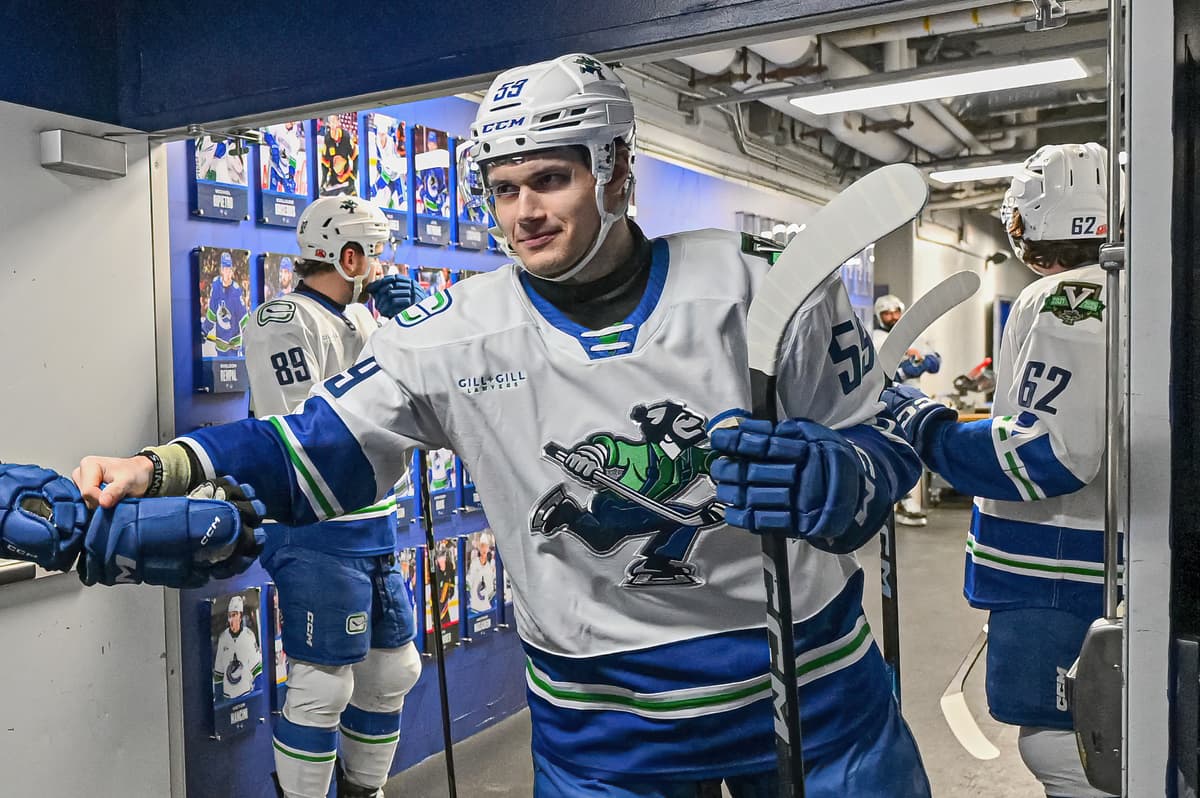
What that means for the Canucks is that, in 2026-27, there will be almost no reason to have players play through even the most minor of injuries. Each and every time a Canuck on the active roster gets ill or suffers an injury, it should be seen as an opportunity to get someone from Abbotsford up for a cameo, even if only for a game or two.
For those players with no waiver-related restrictions, this should mean a fairly steady up-and-down process between Vancouver and Abbotsford all season long. And the list of players who don't require waivers is pretty long , including Braeden Cootes, Jonathan Lekkerimäki, Victor Mancini, Kirill Kudryavtsev, Riley Pattersson, Ilya Safonov, Ty Mueller, Vilmer Alriksson, Anri Ravinskis, Gabe Chiarot, Chase Wouters, Sawyer Mynio, Ty Young, and Aku Koskenvuo.
Given the sheer number of injuries the Canucks typically experience on a yearly basis, it's fair to assume that, if they want, the team should be able to give the majority of these players some NHL time this year. And for a rebuilding team that is trying to determine which of its prospects have a chance to become long-term NHL talents, that's an opportunity that can't be passed up.
It's an ease of access that should be appreciated by this fanbase after years of having to deal with LTIR. We're less than two years separated from the Canucks having to LTIR Filip Hronek mid-year just to have enough cap space to fill out the roster in his absence. The Canucks are now a long ways away from that reality.
Instead, they're now free to call up and send down players as freely as roster space will allow it. Got a player with some flu-like symptoms? Give them the weekend off, place them on IR, and call up someone for a cameo. Need to give Thatcher Demko a break? Put him on IR, call up a goalie to cover him for a bit. That latest injury replacement just not working out? Send him back down to Abbotsford, and call up someone else with no muss and no fuss. Want to send someone like Lekkerimäki or Mancini down for a week or two of additional seasoning? A replacement will be readily available.
In the end, all that extra cap space isn't going to do much for the Canucks. But it will, at the very least, give them total freedom to access the majority of players they have stashed down in Abbotsford, and that can't help but benefit the rebuild in the long term. Especially when some of those call-ups take the opportunity to establish themselves as NHLers and run with it.
Sponsored by bet365
A note on cookies
Newshunt uses essential cookies to keep you signed in and to remember your language and country, so the site works the way you expect. With your permission, we'd also like to use analytics cookies to understand how people use Newshunt and improve it over time.
Accepting only affects analytics. To learn more, view our Privacy Policy or Terms & Conditions.
(0)Comments