


You're a woman. You hit a certain age and then your social media feed completely changes
Category: Health
Share
Archive
Like
Advertisement
LifestyleLife & relationshipsFertility You're a woman. You hit a certain age and then your social media feed completely changes Lauren Ironmonger
September 8, 2026 — 5:00am
Save
You have reached your maximum number of saved items.
Remove items from your saved list to add more.
Share
A A A
Most of us are familiar with our social media algorithms' uncanny ability to reflect what we think, or at least what they think we want.
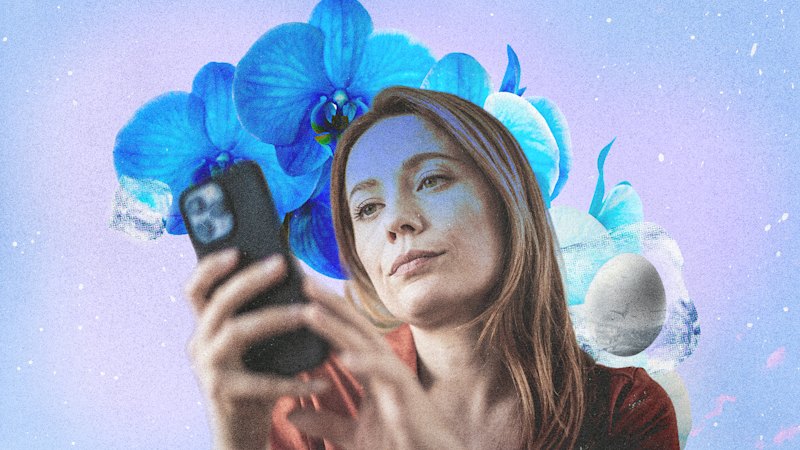
For women like myself in their late 20s, this often manifests as baby, pregnancy and fertility content – even if we're not looking for it.
Social media algorithms, while murky, are informed in part by gender, age and activity on other platforms. There are other elements of the 'black box' social media algorithm that tech companies do not disclose.
The internet abounds with first-person accounts of social media pushing motherhood and egg freezing or even predicting pregnancy. In June, Australian fertility providers were found to have been unlawfully tracking website visitors and feeding their data to social media giants to chase them with advertising, while IVF clinics have been criticised for paying influencers to promote their services.
Photo:
Aresna Villanueva
Advertisement
With this in mind, I decided to start a little experiment, putting myself in the shoes of a woman trying to conceive in Australia.
I started a new Instagram account, setting my age to 30 – just a year before the median age of motherhood in Australia, and chose a range of popular accounts to follow – from Cristian Ronaldo to Kylie Jenner (two of the most followed people on the planet), as well as three of Australia's fertility clinics with the biggest social media footprints, including Genea, Westmead and Adora.
Then, I started scrolling.
I made a point of lingering on some of the videos and posts from said fertility clinics, to start to give the algorithm a little nudge.
Then, I ventured over to my For You page (recommendations from Instagram based on one's algorithm), which is where things really started to get interesting.
Advertisement
Editor's pick Fertility 'Social egg-freezing' is on the rise, but at what cost?
At first, the content shown was pretty broad – a vague smorgasbord of music, art and travel. But pretty soon, the baby content started rolling in – the picture-perfect, pristine Instagram families that are so far from reality. I clicked on and liked a few, and the next thing I knew, my entire For You page was awash with pastel baby clothes and placid toddlers.
Over the next few days, I continued to scroll, like, watch and share – showing a definite interest in fertility content, but also paying attention to other kinds of content like fashion and travel, to even things out a bit.
On one particular evening, scrolling Instagram Reels, I started being bombarded with wellness content focused on 'fertilitymaxxing' – videos of influencers, most of whom were not qualified health professionals – talking about the best foods and supplements to eat and exercises to do (or avoid) to maximise one's chances of conception. 'Gave room for guilt to grow'
Advertisement
It's an experience that Queensland mother Brittany Matsen knows first-hand.
When she was aged 22, Matsen started trying to get pregnant. Two years later, she and her husband embarked on a long and painful journey with in vitro fertilisation due to complications related to endometriosis, polyendocrine metabolic ovarian syndrome and low sperm count.
The couple's first child, Lennox, was born prematurely and died. She went on to conceive their next two children, Cove and Waverley, also through IVF. Through the process, Matsen experienced postnatal depression and anxiety and used social media on and off – which she says brought positive and negative feelings.
One type of content she recalls seeing was around 'optimising conception' through eating certain foods (there is no evidence for improving egg quality through lifestyle changes).
'At the start, it felt really positive and informative, but as the journey kind of dragged on and the more I was seeing, it then started to feel like, 'OK, well maybe I'm not doing everything I could be, which gave room for guilt to grow',' Matsen, who now has two children, says.
Advertisement
'It was relentless and I specifically remember having moments where I had to delete social media for a while just so I could breathe.'
Matsen, pictured here with her daughter Waverley, went through a long and difficult journey with IVF for all three of her pregnancies.
On the other hand, Matsen says positive quotes around navigating fertility 'gave me something to resonate with and ease that loneliness at times.'
In parallel, Matsen's husband was seeing little of the sort on his own social media.
'I don't ever recall him speaking about the topics that were coming up on mine, coming up on his. [His feed] stayed very orientated around sport and his interests, where the algorithm did just pump me full of everything related to motherhood,' she says.
Advertisement
A 'gendered, individual responsibility'
Dr Giselle Newton, a digital health sociologist at the University of Queensland, recently completed a study as part of the Australian Ad Observatory project, which invites Australians to provide visibility into the targeted advertising of harmful products to particular groups.
Due to the personalised, ephemeral nature of social media advertising, no two feeds look the same.
'There's no observability – so civil society, governments, nobody really knows what kind of advertising is out there in the digital space, making it really difficult to monitor and regulate,' says Newton of the project's aims.
Newton and her team focused on fertility content, using a bespoke mobile app to screen record and identify advertising on 457 male and female participants' social media feeds.
Advertisement
Editor's pick Fertility Comforting or cashing in? Inside the complex world of IVF influencers
From this, they pinpointed four recurring themes in which fertility ads: 'Constructed fertility planning as a gendered, individual responsibility required well before intended pregnancy.' 'Promoted individually tailored and customisable treatments and tests.' 'Constructed infertility as solvable to increase the speed and chance of, and optimise, conception.' And promoted services and products to finance fertility.
Newton says much of this advertising contained misinformation or misrepresented the evidence behind it – like the so-called 'fertility' or AMH test, or overstating the success rates of IVF or egg-freezing.
Many experienced this as an 'intense burst', says Newton, with one participant seeing nine fertility ads within four minutes.
Advertisement
'So it's not just about one ad per se, but how this combination of ads shapes the information and messaging that people are receiving, the kinds of questions they're asking themselves about what's expected of them, the decisions they should make and their reproductive intentions.'
The assisted reproductive industry, of course, is a billion-dollar, for-profit one that today extends beyond IVF clinics to fertility coaches, influencers, supplement brands and more.
Increasingly, it's priming women from early adulthood to enter what Newton refers to as the 'infertility pipeline' – helped by the fact that for users in their 30s or 40s, tech companies have decades of data to work with.
'It's the idea that women of all ages, from 18 up, can be encouraged to use a different kind of fertility treatment depending on their life stage,' she says.
For someone not yet ready to conceive, this might be promoting egg-freezing as an 'insurance policy', whereas for someone navigating infertility it might be promoting supplements or encouraging them to switch fertility clinics.
Advertisement
Meta, owner of Instagram, does allow users to report advertising or personalise ad preferences – including content relating to parenting – though Newton says this doesn't always work.
A spokesperson for the Australian Competition and Consumer Commission said 'all businesses must comply with the Australian Consumer Law (ACL), which requires that businesses do not engage in misleading or deceptive conduct or make false or misleading representations'.
Loading
Take an approach of balance
Social media can both support and hinder the journey of those trying to conceive, says Dr Erin Steele, clinical psychologist and director of clinical services at Gidget Foundation Australia, so it's not necessarily about forgoing it entirely.
Advertisement
'It can be really important to hear peer stories, particularly when you're struggling ... it can give people a sense of 'I'm not alone in my journey',' she says.
But it can also come at a vulnerable time when one might be 'more susceptible to negative messages and intrusive thoughts, and may be less resilient to be able to manage this difficult information,' says Steele. Editor's pick Fertility Behind the rise of the 'fertility test' – and why doctors say it's misleading women
'It is a period of increased worry, particularly where infertility does not always have a single or clear underlying cause. It can send people down a bit of a rabbit hole trying to work out what's happening, because as human beings we're driven to find a reason for things.'
Steele suggests taking breaks and relying on support networks, following credible sources where possible, and, when in doubt, checking information with a trusted health professional who is familiar with your history.
Make the most of your health, relationships, fitness and nutrition with our Live Well newsletter. Get it in your inbox every Monday.
From our partners
A note on cookies
Newshunt uses essential cookies to keep you signed in and to remember your language and country, so the site works the way you expect. With your permission, we'd also like to use analytics cookies to understand how people use Newshunt and improve it over time.
Accepting only affects analytics. To learn more, view our Privacy Policy or Terms & Conditions.
(0)Comments