


Tariq Ali On Islam, Empire And The Cultural Imagination
Category: Blend
Share
Archive
Like
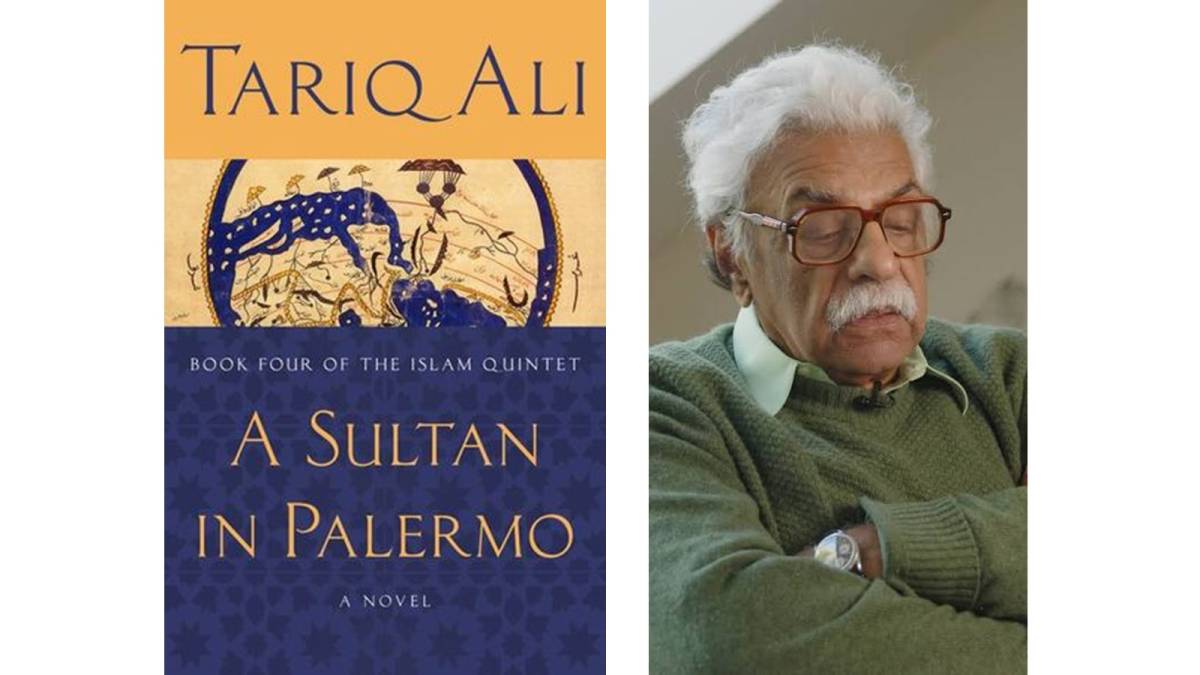
Every student in Lahore knew the name Tariq Ali. Rather fewer of us had read him. He had gone up to Oxford in 1963, after the agitation against Ayub Khan made Pakistan too warm for him, and within five years he was the most conspicuous radical in Britain: Grosvenor Square, the Vietnam Solidarity Campaign, the editorship of Black Dwarf, and the handwritten lyrics of ‘Street Fighting Man’ posted to that paper by Mick Jagger. For a generation of Pakistani students, he was proof of something we badly wanted to believe: that a boy from Lahore could go out into the world and argue with it on equal terms. I met him once, years later, as a student in London. I did not meet him again until the other evening, in New York. He was in New York for the launch of The Neck and the Sword, the book he has written with Rashid Khalidi. This was not that event. The Centro Primo Levi had invited him simply to talk, with no book to sell and no subject announced, which left him free to begin eight centuries away from Gaza and arrive there anyway. The centre is known as a custodian of Italian Jewish history, but that undersells it. It belongs to a shrinking category of institutions that treat intellectual history as a live argument rather than a vitrine—places that exist to keep certain questions in circulation, and that assume an audience capable of sitting with them for two hours. There is an aptness in such a room which nobody remarked upon. An institution built around the preservation of one minority’s intellectual inheritance was hosting an evening whose first half would be spent in a Sicily where Arabic was the language of learning and Jewish officials rose high in the administration of a Christian king. The argument was latent in the room before anyone had spoken. It was a small room: a round table, a scattering of chairs, perhaps twenty of us, many of them students, and I found myself sitting almost beside him. He is eighty-three now and looks it—the hair white, the frame narrower than in the photographs from Grosvenor Square. Then he starts to speak and the arithmetic stops mattering. He talks in paragraphs, without notes, moving from a twelfth-century chancery to last night’s news without changing gear, and with a conviction that half a century of being told he is wrong has not sanded down. There is flair in it, and no performance. The species is close to extinct. The conversation was chaired by Faiz Azfar, a young scholar attached to the centre, who had the good sense to ask short questions and then get out of the way. Much of the conversation concerned the Islam Quintet, the five novels Ali published between 1992 and 2010: Shadows of the Pomegranate Tree, The Book of Saladin, The Stone Woman, A Sultan in Palermo, and Night of the Golden Butterfly. They are not a sequence in the ordinary sense. Each takes a different moment at which Muslim societies and Europe were entangled rather than opposed—Granada after the Reconquista, Saladin’s Jerusalem, the dying Ottoman world, Norman Sicily, and finally the present, scattered across Lahore, London, and Beijing. The project began, Ali said, with Edward Said’s encouragement. Said told him to continue with the bloody story. One suspects the adjective was doing double duty. It was Sicily that held the room, and I should declare an interest. I have been there, and it is one of the few places that has rearranged my sense of what Europe is. In Ortigia, the small island at the heart of Syracuse, stands a cathedral that began as a Doric temple to Athena in the sixth century before Christ. In the seventh century of our era, it became a Christian church. In 878, when the Arabs took the city, it became a mosque. In 1086, the Normans turned it back into a church. After the earthquake of 1693, it acquired the Baroque front it wears today. And the columns of the original temple are still there, swallowed into the walls and plainly visible inside and out: twenty-six centuries of conquest and conversion that never managed to remove the building underneath. It is beautiful, and it is a record of tumult, and the two are not separable. You stand in front of it and the categories you arrived with quietly come apart. A Sultan in Palermo is set in the court of Roger II, the Norman king who ruled an island that had been under Muslim government for more than two centuries and whose Arab population remained substantial. Ali described the difficulty of reconstructing that world, whose monuments have been absorbed into later histories or quietly lost, and whose bookshops, he noted drily, are not conspicuously well stocked with works on the island’s Muslims. The scholarship exists. Michele Amari, a Sicilian nationalist who learned Arabic in Parisian exile, spent the nineteenth century assembling the Storia dei Musulmani di Sicilia and the Biblioteca arabo-sicula, an act of recovery that was also an act of patriotism: he was arguing that Sicily’s greatness predated and exceeded the mainland’s. Both groups require a civilisation that is single-minded, but Tariq Ali’s novels are populated instead by people, which is the most subversive thing a historical novelist can do What interested Ali was not merely that Muslims had been present in medieval Europe, a fact nobody disputes, but how far Arab culture persisted under Christian rule and how deeply it shaped the rulers themselves. The Normans who took the island were educated into the civilisation they had conquered. They employed Arab tutors, wore Arab dress, kept Arab physicians and astronomers, and maintained a chancery working in Arabic, Greek, and Latin. Roger’s coronation mantle carries an Arabic inscription. The muqarnas ceiling of the Cappella Palatina was painted by Muslim craftsmen inside a Christian chapel. A generation later, the Andalusian traveller Ibn Jubayr, passing through on his way home from Mecca, found Roger’s grandson William II reading and writing Arabic and keeping Muslim servants, and recorded both his admiration and his unease at a court so comfortable with what it had subdued. The most celebrated figure of that court was al-Idrisi, the geographer who completed for Roger in 1154 the Nuzhat al-mushtaq—the Book of Roger—together with a planisphere of silver, the most accurate map of the world then in existence. A Muslim scholar drawing the earth for a Norman king in a Latin kingdom: it is an image that refuses every category we have been issued. Ali told, with relish, a story about Roger’s resistance to Rome. A cardinal arrived to press the king on the Second Crusade and on the question of his Muslim subjects, and the king’s reply was both flatulent and verbal: half his population, he observed, was of that faith. Whether the Vatican’s archives would support the account is another matter, and Ali did not pretend otherwise. It is the kind of anecdote that survives because it compresses something true into a form that can be carried. A Christian monarchy could be politically Latin and culturally Arab. Religious identity mattered enormously and determined much less than we now assume. This is precisely what the historical novel is for, and it is worth saying why. In The Historical Novel, written in 1937, Georg Lukács argued that Walter Scott’s achievement was to place an unremarkable protagonist at the point where great historical forces collide, so that history is experienced rather than narrated. Ali is working in that tradition, though with a polemical edge Lukács would have recognised and approved. The Quintet belongs beside Amin Maalouf’s Leo Africanus and Samarkand, novels that recover the Mediterranean as a single contested space rather than a frontier. And it stands in instructive contrast to the other great Sicilian novel, Lampedusa’s The Leopard, whose aristocratic fatalism—everything must change so that everything can stay the same—is the exact opposite of Ali’s conviction that things were once genuinely otherwise, and could be again. The conversation widened. Ali spoke of an Egyptian scholar who, having translated a thirteen-volume history, sent him notes that fed directly into the fiction. He recalled complaints from readers in Senegal, who wanted to know why West Africa had been left out. The objection lands. Even histories written against Eurocentrism tend to orbit the Arab Middle East, Persia, the Ottomans, and South Asia, leaving the Sahel as a footnote. Ali invoked Timbuktu and its manuscript libraries, and Ibn Battuta, who reached Mali in the 1350s and was scandalised by how much freedom the women there enjoyed—a fourteenth-century Moroccan jurist discovering that Islam was already plural, and not liking it. The later novels took him to China, to Muslim communities crushed and scattered, and to refugees who made their way into India. Night of the Golden Butterfly, he said, began with a question from his daughter, for which he had to go and find a story. These stories, he observed, annoy two constituencies at once. There are the Islamophobes, who read Muslim history as an unbroken record of conquest and intolerance. And there are the Muslims for whom that history is theology and nothing else, who have no use for a past full of sceptics, drinkers, heretics, court intriguers, and women who would not behave. Both groups require a civilisation that is single-minded. Ali’s novels are populated instead by people, which is the most subversive thing a historical novelist can do. How, then, did an interconnected world come to be narrated as a permanent confrontation? Ali located the rupture in the First World War and its settlement. The Ottoman collapse, the Sykes–Picot lines, the mandates: a space that had been continuous was cut into administrable pieces by men with rulers. He recalled the story of the French general entering Damascus in 1920, going to Saladin’s tomb and announcing that they had returned—a remark historians doubt and nobody forgets, because eight centuries is a long time to nurse a defeat and the sentence says so exactly. From here, the evening turned to the present, and to the vocabulary of civilisations. Ali proposed a thought experiment. Put cameras in a café in Cairo or Damascus, and in two or three American cities, and compare what you hear: the poetry, the jokes at the expense of the rulers, the political argument conducted by people with no power whatsoever. You would not conclude that one civilisation was deficient. But civilisations, he said, are not ranked by what is said in their cafés. They are ranked by wealth and by force, and those rankings are produced by the people who hold both. It is, he added, as foolish to blame Islam for terrorism as it would be to blame Catholicism for the IRA—a comparison that has the useful property of being unanswerable. On Palestine, he was bleakest. He described a friend, a psychologist who had worked in Gaza, telling a London gathering what happened when he asked children what they wanted to be when they grew up. Too many of them, boys of seven and eight, answered that they wanted to be martyrs, because they wanted their country back and could not live as they were living. I report this as Ali reported it. He went on to say that when he had examined casualty figures under occupation years ago, what struck him was the concentration among young men—a pattern he read as a decision about who would be permitted to grow up. He was scathing about the BBC, which he said he no longer watches. And he noted, without satisfaction, that polling since the war began has shown majority Israeli support for the conduct of it, and that this is what a generation has been taught. The most illuminating exchange came when someone asked him to compare the present moment with 1968. Ali resisted the parallel. Those were different times, he said, because they contained hope of a specific kind: the Vietnamese were not merely resisting the United States; they were defeating it, and in April 1975 they completed the only serious military defeat an American empire has suffered. That fact electrified Europe. He remembered the argument in France, Italy, and Germany—if the Vietnamese can do this to the Americans, we can do it to our own governments—and recalled that in Portugal the revolution arrived through the army itself, carried home by conscripts returning from the African colonies. The Palestinian flag now functions differently. It is not the banner of an anticipated revolution; it is a statement about one’s own government. It says: you lied to us about this, we have seen what is happening, and we no longer believe you. That is why it appears in countries with no connection to Palestine at all. The European movements Ali sees are defensive rather than transformative—restore the health service, the free education, the things that were taken from us and handed to the rich. In Albania, he noted, people have been burning ministries over a corrupt land deal. Serbian students once dangled a finance minister over a river; he protested that he could not swim. These are not revolutionary programmes. They are the actions of people who have stopped trusting politics. The exception, in his view, is here: Zohran Mamdani’s election mattered because he was attacked over Palestine and declined to capitulate, and because what has grown around him may yet produce others. A final question asked whether world literature still exists, or whether globalisation has simply flattened it. Ali thought the energy had moved—to Iran, South Korea, China, where films and novels are still made that are critical of where their makers live. He retold, at length and with evident pleasure, the plot of Kamal Tabrizi’s The Lizard: a thief escapes prison disguised as a cleric, is mistaken by a border village for its new imam, and discovers that if he invites the congregation to ask him questions rather than merely preach at them, they will ask him everything. The film was pulled from Iranian cinemas after three weeks and circulated anyway. Hollywood, by contrast, he judged to be in decline, its financing concentrated in hands that have no interest in anything resembling the political cinema of the 1970s. I came away thinking about Palermo. The point of that court is not that it was tolerant, a word too small and too self-congratulatory for what was going on there. The point is that it was mixed, in its administration, its architecture, its science, and its household arrangements, and that everyone involved knew it and most of them got on with it. The categories we now treat as eternal were, for a century or so on one island, visibly provisional. Ali has spent thirty years writing that island back into view, which is a political act disguised as a pleasure. Reading a book and listening to the person who wrote it are not the same experience; the second sends you back to the first with your attention altered. I left the centre that evening having decided to return to Palermo, and to look harder this time. Said was right to tell him to continue. The story is bloody, and it is still being told badly almost everywhere else.
A note on cookies
Newshunt uses essential cookies to keep you signed in and to remember your language and country, so the site works the way you expect. With your permission, we'd also like to use analytics cookies to understand how people use Newshunt and improve it over time.
Accepting only affects analytics. To learn more, view our Privacy Policy or Terms & Conditions.
(0)Comments