


85 Years Ago Today My Grandfather Was Another Holocaust Victim
Category: Politics
Share
Archive
Like
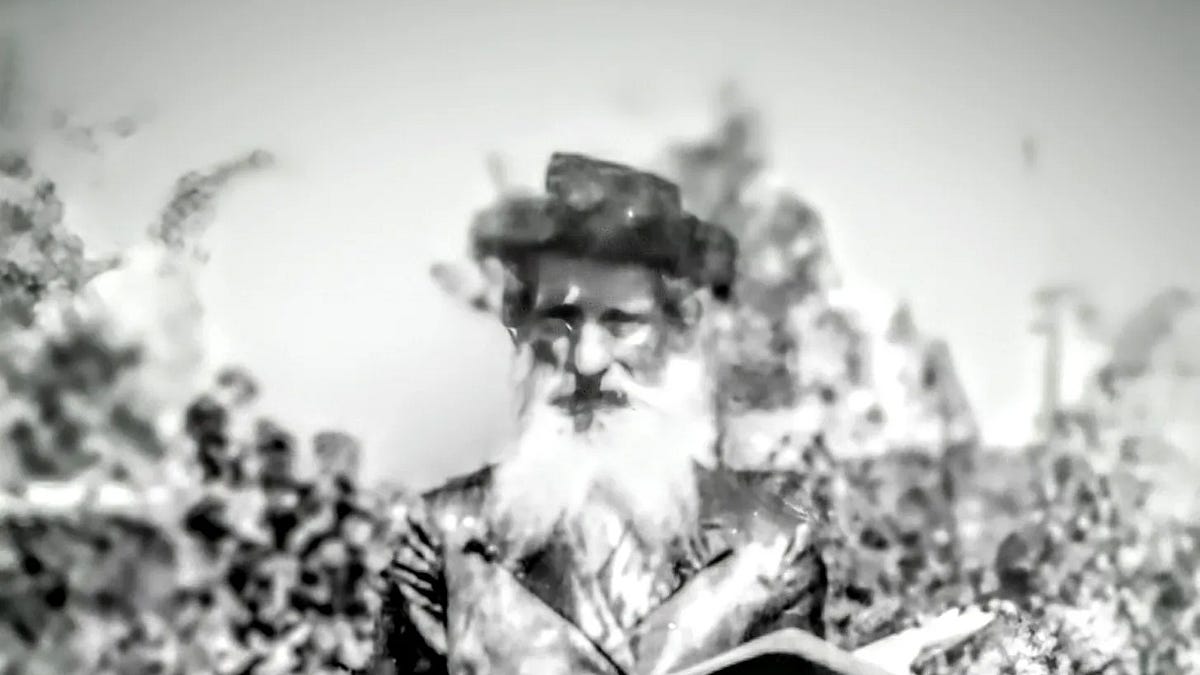
I was named after my maternal grandfather Wolf Zlozcower. We share the same Hebrew name (זְאֵב) and Yiddish name Velvel (װעלװעל). He died in typical tragic circumstances during the Holocaust on September 6, 1941.
My mother's family lived in Comanesti, a tiny village in Romania about 20 kilometers from Suceava. Everyone in the village called my grandfather by his Yiddish name Velvel. My grandfather operated a brandy distillery. The business mostly catered to the small Jewish community in Comanesti and the surrounding villages. The cherry brandy calledvishnikwas sold in barrels along with homemade wine. He did quite well, and the family lived comfortably until the 1930s when the Great Depression and rising antisemitism significantly impacted his business.
Subscribe now
My grandfather and the rest of the family were observant Orthodox Jews, although not Hassidic. I was surprised to learn that her small village of Comanesti with about 20 Jewish families had two synagogues. One was used by the Hassidic Jews, while the non-Hassidic Jews prayed at theAlte Shul[Old Synagogue], which was across the street from my mother's house. Theshul[synagogue] was managed by my grandfather who served as itsshamas[the person responsible for its day-to-day functioning].
One Friday evening in 1938, my mother heard voices outside their home. It was late in the evening, and she was the only person awake in the household. Flames appeared at the window and when she looked out she saw gentile villagers setting fire to their house. She leaped to her feet, shouting everyone awake, and they fled the house. The arsonists wouldn't allow them to extinguish the flames, but my grandfather got hold of the local priest with whom he had a good relationship. The priest convinced the villagers to put out the fire. There was only minimal damage to the exterior of the house, but the incident traumatized the family.
Just two years later on Friday evening August 2, 1940 as the Sabbath was beginning, a pogroms took place in Comanesti. Romanian soldiers and civilians destroyed all Jewish homes and attacked its residents. Fortunately, my mother and her family fled from their home and managed to hide in a nearby field. The home and all their possessions were destroyed.
The Jews in the villages were now homeless. They were ordered to move to Suceava where Jewish citizens were expected to house them. In Suceava, life became difficult. As was the case in other Nazi-occupied communities, there was a 6 p.m. to 8 a.m. curfew for Jews and a requirement that they wear a yellow Star of David on their clothing.
Share
In early 1941, the Romanian authorities initiated a policy of taking Jewish hostages. My mother avoided getting arrested, but her brother and sister were incarcerated. The practice of incarcerating Jews was employed to extract exorbitant ransom payments from the Jewish community. My grandfather attempted to get his children released. The family was most concerned about Uncle David who had several health conditions. Eventually David was released but the police beat my grandfather, and in September 6,1941, he died at the age of 78 from his injuries.
He was given a proper burial in Suceava's Jewish cemetery, and his gravestone still exists. This is why his date of death is known. He is the only family member who had an actual grave during the Holocaust.
More about my family can be found in my memoirOut From the Shadows.
Willie's Substack is a reader-supported publication. To receive new posts and support my work, consider becoming a free or paid subscriber.
A note on cookies
Newshunt uses essential cookies to keep you signed in and to remember your language and country, so the site works the way you expect. With your permission, we'd also like to use analytics cookies to understand how people use Newshunt and improve it over time.
Accepting only affects analytics. To learn more, view our Privacy Policy or Terms & Conditions.
(0)Comments