


Nature-Themed Picture Books in China Support Early Cognitive Growth
Category: SciTech
Share
Archive
Like
Picture books about nature are among the most widely used tools in early childhood classrooms, yet the way they actually look—and whether their visuals match the cognitive abilities of the children reading them—has rarely been examined systematically. A new study published in the International Journal of Early Childhood has now filled that gap for one of the world's largest children's book markets. Analyzing 47 award-winning nature-themed picture books published in China between 2015 and 2023, researchers Chao Sun, Norhuzailin Hussain, and Azmiah Abd Ghafar of Universiti Putra Malaysia found that the genre is dominated by realistic, full-color illustrations that favor clear visual cues and stable real-world references, while complex environmental topics such as pollution remain conspicuously underrepresented. Perhaps more strikingly, the study uncovered a measurable mismatch between the age labels printed on these books and the cognitive demands of their visual content.
The research, which appeared in the journal's volume 58 issue in 2026, employed a formal content analysis method in which every book in the sample was coded at the level of the whole work. Each title received one natural sub-theme assignment, one age label, and evaluations of three distinct visual elements: image form, image style, and color scheme. This coding scheme allowed the team to compare patterns of visual representation across different sub-themes and across different target age groups, producing what the authors describe as empirically testable evidence for how nature-themed picture books might be optimized in terms of theme, age labeling, and visual design.
The theoretical foundation of the study rests on well-established accounts of cognitive development, particularly the stages described by Jean Piaget, which hold that young children move from preoperational thinking—dependent on concrete, perceptually salient cues—toward more abstract and logical reasoning as they grow. Previous experimental work has shown that children's ability to learn and transfer biological information from picture books to real animals depends heavily on book features such as realism and specificity. Realistic depictions tend to support the transfer of knowledge from the page to the world, whereas fantastical or highly stylized imagery can interfere with it. This body of evidence provides a framework for judging whether a picture book's visual choices are developmentally appropriate for its stated audience.
Against that backdrop, the finding that realistic, full-color illustration is the overwhelming mainstream in Chinese nature-themed picture books is significant. The authors interpret this visual consensus as a deliberate emphasis on clear cues and stable referents: images that look like the things they depict, rendered in colors that correspond to natural appearances. From a cognitive standpoint, such imagery minimizes the interpretive burden placed on young readers, who do not need to map a stylized or abstract representation onto a real-world category before they can learn from it. In effect, the genre has converged on a visual formula that maximizes referential clarity, which is consistent with what the transfer literature suggests supports learning in early childhood.
Yet the study also reveals the limits of this convergence. When the researchers compared visual elements across natural sub-themes, they found that differentiation was insufficient—books about different aspects of nature tended to look remarkably similar in their visual treatment. A book focused on plant life cycles and a book focused on animal behavior, for example, did not exhibit meaningfully distinct image forms, styles, or color schemes. This homogeneity, the authors argue, represents a missed opportunity. Different sub-themes could benefit from different visual strategies: schematic diagrams and cross-sections for processes like the water cycle or photosynthesis, photographic or hyper-realistic imagery for species identification, and more expressive or stylized approaches for affective and aesthetic engagement with nature. The uniform reliance on one visual mode flattens these possibilities.
The thematic analysis produced a second important finding. The content of Chinese nature-themed picture books remains concentrated on fundamental natural laws and basic biological knowledge—seasons, growth, life cycles, animal characteristics—while complex environmental issues such as pollution receive relatively limited coverage. This matters because environmental education researchers have long argued that early childhood is a critical window for establishing the conceptual foundations of sustainability, and that picture books can serve as accessible entry points into topics that are otherwise difficult to broach with young children. By steering largely clear of pollution and related problems, the current corpus gives children a picture of nature that is largely harmonious and stable, potentially delaying their first structured encounters with environmental degradation until later schooling.
The most technically consequential result concerns the relationship between age labels and visual representation. The authors report a degree of cognitive misalignment: the visuals of some books do not correspond to the developmental characteristics of the age groups to which the books are assigned. In practical terms, this means a book labeled for a particular early childhood age band may present imagery whose interpretive demands are too high or too low for children at that stage. Younger children in the preoperational stage benefit most from unambiguous, referentially stable images, while older children approaching the concrete operational stage can handle graphical abstractions, sequences, and symbolic conventions that younger readers cannot reliably decode. When age labels and visual complexity drift apart, the label loses its diagnostic value for parents, teachers, and librarians selecting materials.
The methodological approach deserves attention for its rigor within the constraints of content analysis. By restricting the sample to award-winning titles—the researchers drew on recognized prizes in the Chinese children's book field, including the Dapeng Nature Children's Book Award—the study focused on books that have already passed through editorial and jury filters, meaning the observed patterns reflect the industry's recognized best output rather than its average output. The book-level unit of analysis, with single assignments of sub-theme and age label per title, avoids the noise of page-by-page coding but also means the findings describe each work holistically. The coding scheme's three visual dimensions—image form, distinguishing categories such as photographs versus drawings; image style, capturing the degree of realism; and color scheme, distinguishing full-color from limited or monochrome palettes—trace directly to the variables that prior experimental studies have linked to children's comprehension and transfer.
The broader context for these findings is the growing recognition that many children, particularly those in urban environments, have few direct experiences of nature, making mediated representations disproportionately influential in shaping their understanding of the natural world. When direct contact is rare, picture books become one of the primary windows through which young children encounter forests, wetlands, animals, and ecological processes. This elevates the stakes of visual design decisions that might otherwise seem merely aesthetic. A generation of readers whose mental image of nature is assembled largely from books will carry whatever biases, omissions, and simplifications those books contain into their later environmental attitudes and behaviors.
The authors are explicit about the practical implications of their results. They recommend that future picture book development enhance thematic differentiation, so that different natural sub-themes receive visually and conceptually distinct treatments rather than a one-size-fits-all realistic aesthetic. They also call for age labels to be aligned more explicitly with the cognitive characteristics of different age groups, which would require publishers to attend to developmental psychology when deciding what visual complexity to deploy for which audience. In addition, the underrepresentation of complex environmental issues suggests a need to expand coverage of topics such as pollution in ways that remain developmentally sensitive—difficult, but not impossible, given that visual media can convey cause-and-effect relationships and environmental change through concrete, observable imagery.
The study also contributes to a comparative picture of children's environmental literature internationally. Prior content analyses of award-winning picture books in Australia, depictions of sustainability in children's books, and studies of animal biodiversity and specificity in picture books published in other markets have documented similar patterns of selective attention to environmental themes. The Chinese findings add a major national publishing tradition to this literature and suggest that the tendency to favor foundational biological content over contested or distressing environmental issues is not unique to any single market. Whether this reflects publisher caution, authorial preference, assumptions about children's emotional readiness, or gaps in the market for environmental problem narratives remains an open question for future research.
For early childhood educators, the study offers a caution about trusting age labels at face value and an invitation to evaluate visual content directly when matching books to children's developmental stages. For publishers and illustrators, it provides a data-driven benchmark of the current visual landscape in China's nature-themed picture book sector and a concrete agenda for improvement. For researchers, it demonstrates that content analysis of visual elements, when grounded in cognitive development theory, can generate findings that are both descriptively precise and actionable. As nature-themed picture books continue to expand their role as vital media in early education settings, this analysis makes clear that how nature is drawn—and for whom—is not a peripheral design question but a central determinant of what young children come to know about the living world.
Subject of Research: Visual elements, natural sub-themes, and age labels in Chinese nature-themed picture books and their relationship to children's cognitive development in early education.
Subject of Research: Social Science
Article Title: Visual Elements and Cognitive Development in Early Education: A Content Analysis of Nature-Themed Picture Books in China
Article References: Sun, C., Hussain, N., & Abd Ghafar, A. (2026). Visual Elements and Cognitive Development in Early Education: A Content Analysis of Nature-Themed Picture Books in China. International Journal of Early Childhood, 58(2), 955-973. https://doi.org/10.1007/s13158-026-00511-2
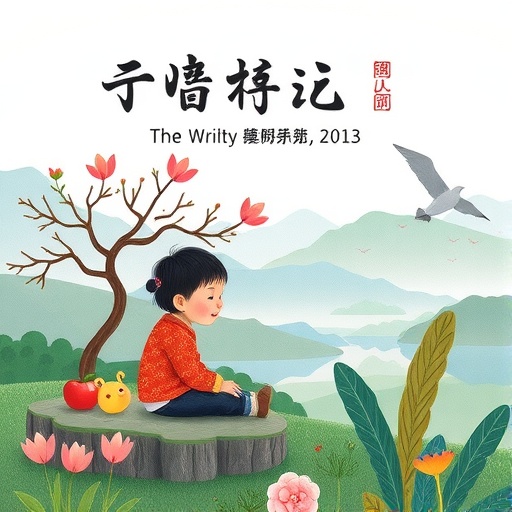
Image Credits: AI Generated
DOI: 10.1007/s13158-026-00511-2
Keywords: Nature-themed picture book, Visual element, Age label, Cognitive development, Early education, Content analysis, Environmental education, Illustration style, Children's literature
A note on cookies
Newshunt uses essential cookies to keep you signed in and to remember your language and country, so the site works the way you expect. With your permission, we'd also like to use analytics cookies to understand how people use Newshunt and improve it over time.
Accepting only affects analytics. To learn more, view our Privacy Policy or Terms & Conditions.
(0)Comments