


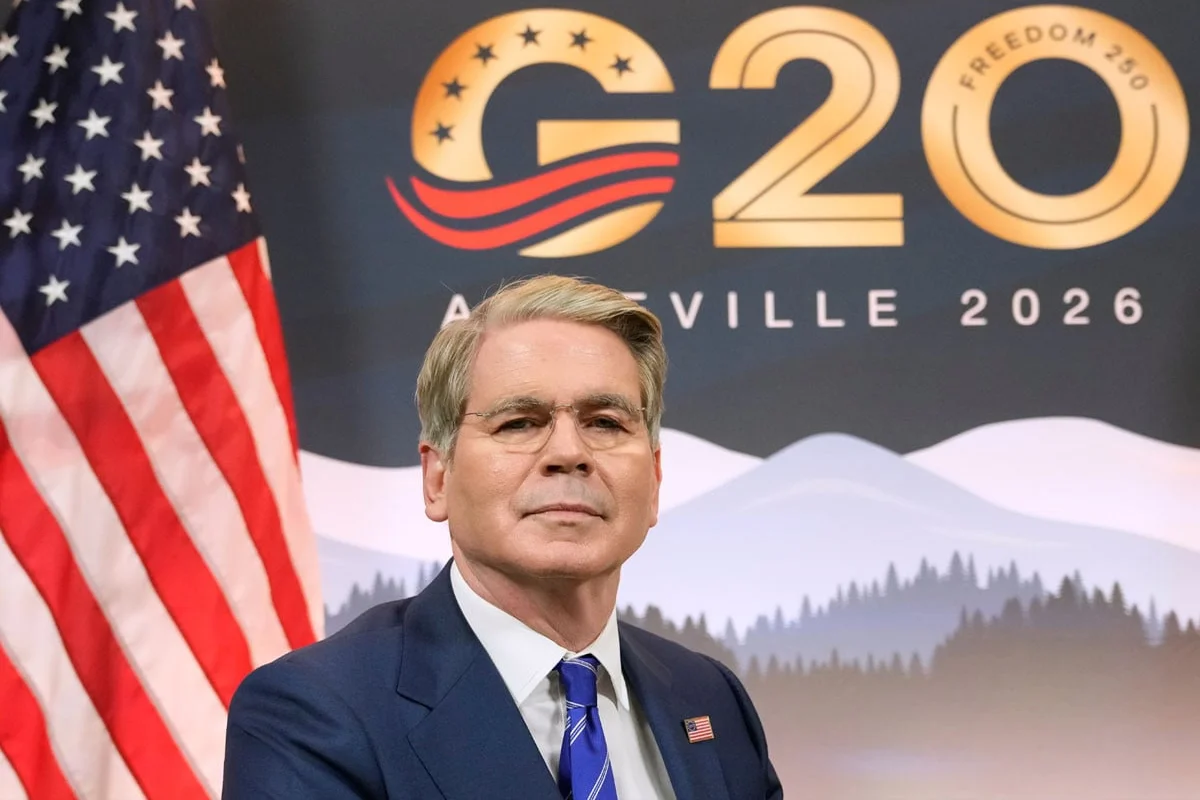
G20 Finance Meeting Begins in Asheville as Global Growth, Debt and Iran Pressure Top Agenda
Category: Financial
Share
Archive
Like
ASHEVILLE: A two-day meeting of G20 finance ministers and central bank governors has begun in Asheville, with global economic growth, rising debt, trade imbalances, the energy crisis and economic pressure on Iran among the key issues on the agenda.
According to international media reports, US Treasury Secretary Scott Bessent and Federal Reserve Chair Kevin Warsh called for stronger global economic growth in their opening remarks.
Global Economy Faces Debt Challenge
Bessent said the global economy had been growing below its potential for several years, arguing that faster economic growth was essential to addressing the mounting debt burden.
He said global debt had risen sharply following the financial crisis and the Covid-19 pandemic, reaching an estimated $353 trillion this year.
Bessent stressed that stronger economic activity would be necessary to create a sustainable path out of the growing debt burden.
Federal Reserve Chair Kevin Warsh also pointed to signs of increased investment in the global economy.
Warsh said the world was entering a period in which investment opportunities were expanding, potentially changing the pattern of excess global savings seen in previous years.
US Calls for Review of Trade Relations With China
Trade imbalances with China also featured prominently in Bessent's remarks.
The US Treasury secretary urged G20 countries to reconsider the terms of their trade relations with China and consider additional trade barriers where necessary.
Bessent said such measures could encourage China to rely more heavily on domestic consumption rather than exports.
He pointed to China's trade surplus of around $1.2 trillion, describing it as a major imbalance affecting the global economy.
He also called for greater international discussion of industrial subsidies and weak domestic demand.
Economic Pressure on Iran
The United States is also seeking greater support from its allies for economic measures against Iran during the G20 discussions.
Bessent has backed additional sanctions, action against Iranian banks and further efforts to restrict Iran's access to the international financial system.
The US Treasury secretary indicated that Washington intended to intensify economic pressure on Tehran, while acknowledging that the situation in the Strait of Hormuz and its potential impact on global oil prices would also need to be taken into consideration.
The discussions in Asheville are therefore expected to focus not only on broader global economic challenges but also on trade tensions, energy security and the potential economic consequences of continued pressure on Iran.
A note on cookies
Newshunt uses essential cookies to keep you signed in and to remember your language and country, so the site works the way you expect. With your permission, we'd also like to use analytics cookies to understand how people use Newshunt and improve it over time.
Accepting only affects analytics. To learn more, view our Privacy Policy or Terms & Conditions.
(0)Comments