


DOJ asks Supreme Court to let DHS use immigration database to purge state voter rolls
Category: Politics
Share
Archive
Like
The Department of Justice (DOJ) asked the Supreme Court Tuesday to lift a lower court order and allow the Trump administration to use a flawed federal immigration database to initiate voter registration purges.
The petition marks the department's latest rushed attempt to leapfrog an appellate court and get the Supreme Court's conservative-appointed majority to stay a lower ruling blocking President Donald Trump's attempt to increase the executive branch's control over elections.
The DOJ filed the request just days after the D.C. Circuit Court of Appeals denied the administration's motion to pause U.S. District Judge Sparkle Sooknanan's June order blocking its use of the Department of Homeland Security's (DHS) modified Systematic Alien Verification for Entitlements (SAVE) system.
SIGN UP TODAY Get updates straight to your inbox — for free
Join 350,000 readers who rely on our daily and weekly newsletters for the latest in voting, elections and democracy.
Originally designed to help states check the citizenship status of people applying for government benefits, the Trump administration has tried to turn the SAVE program into a new system to monitor state voter registration lists.
In her order, Sooknanan found that the endeavor violated several federal laws, 'haphazardly' threatened 'the sacred right to vote' and 'trampled on the privacy rights of American citizens.'
In his filing to the Supreme Court, Solicitor General D. John Sauer called Sooknanan's order 'indefensible' while claiming it 'threatens the integrity of upcoming elections by vacating the federal government's authority to internally use Social Security data when fulfilling its duty to respond to requests by States to verify the citizenship of individuals for voting and other purposes.'
Though Sauer claimed DHS was using SAVE in response to requests from states, the department's leadership has tried to force states to use the program or lose out on emergency and disaster grants.
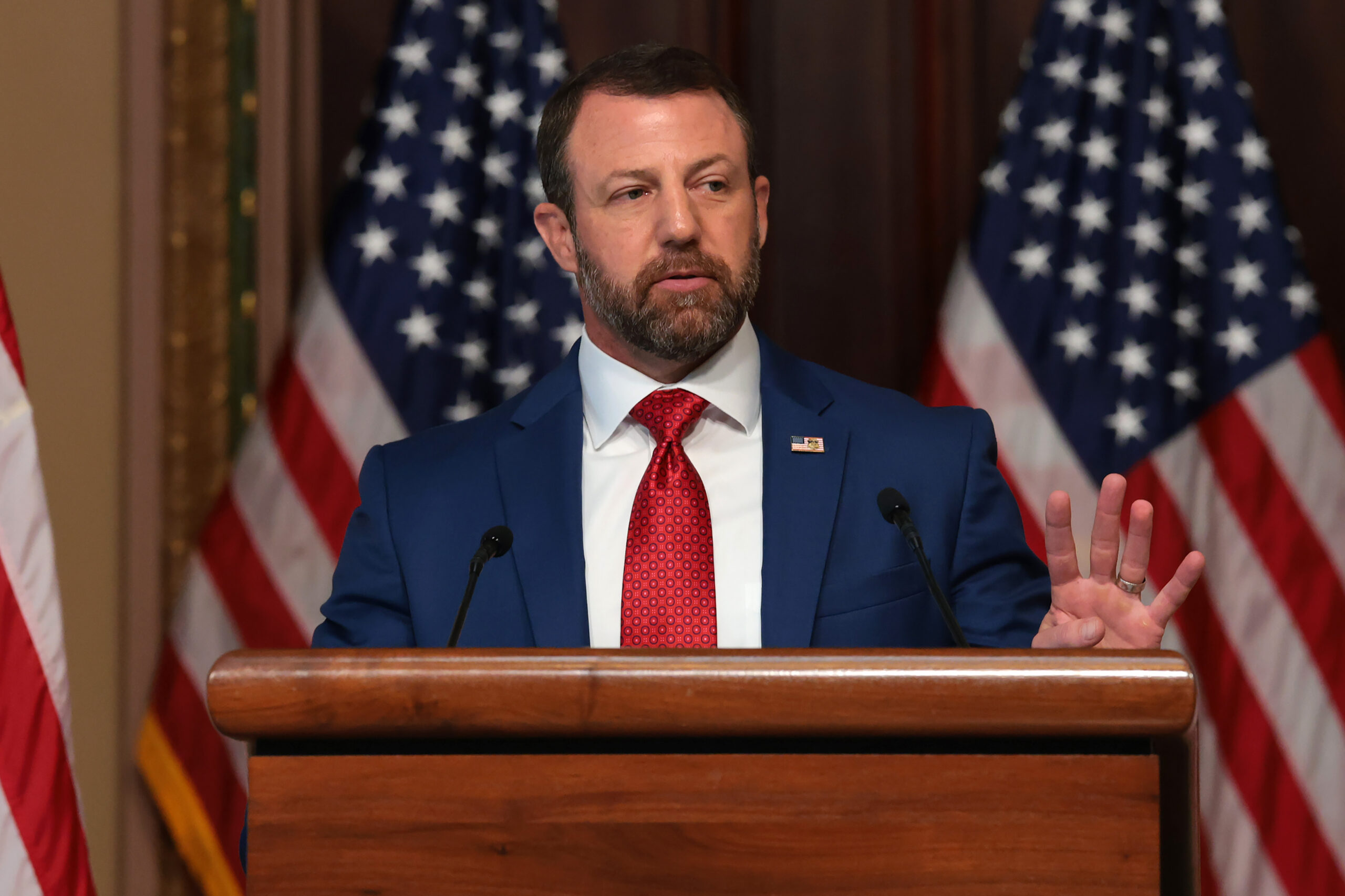
Additionally, Homeland Security Secretary Markwayne Mullin threatened state election chiefs earlier this year with criminal charges if they do not use the SAVE program to check their voter rolls.
'The states who choose not to participate with the SAVE program, and they choose not to participate in secure elections, we will make sure that we make those states a priority to look at who voted in their states and will hold them, the election officials, accountable,' Mullin said.
Voting groups and privacy groups have repeatedly warned that the SAVE program was never designed to check voter eligibility and, when used in this manner, would likely erroneously disqualify eligible voters.
In fact, in states where the database has been used, eligible voters were routinely flagged as noncitizens.
Before Sooknanan's block, the Trump administration used SAVE to check the citizenship status of more than 67 million registered voters. Those checks flagged thousands of people as potential noncitizens, but further investigations found that most were actually eligible voters.
Though the D.C. Circuit Court of Appeals kept Sooknanan's order in place, it did order that the Trump administration's underlying appeal be expedited.
Now, the DOJ has gone directly to the Supreme Court before the appeals court has officially weighed in on the matter.
DHS's overhaul of the SAVE database is just one prong in its effort to shape state voter rolls and influence who can vote.
Following the playbook outlined in Trump's March 2026 executive order, DHS is also centralizing Americans' sensitive personal data to compile lists of people eligible to vote in every state.
Combined, the lists would amount to a national voter registration list managed by the federal government — something that has never existed before.
The Electronic Privacy Information Center, which is among the plaintiffs challenging the SAVE program's expansion, sued DHS last week over the compilation of those lists.
This is a breaking news story. Please check back for additional details.
A note on cookies
Newshunt uses essential cookies to keep you signed in and to remember your language and country, so the site works the way you expect. With your permission, we'd also like to use analytics cookies to understand how people use Newshunt and improve it over time.
Accepting only affects analytics. To learn more, view our Privacy Policy or Terms & Conditions.
(0)Comments