


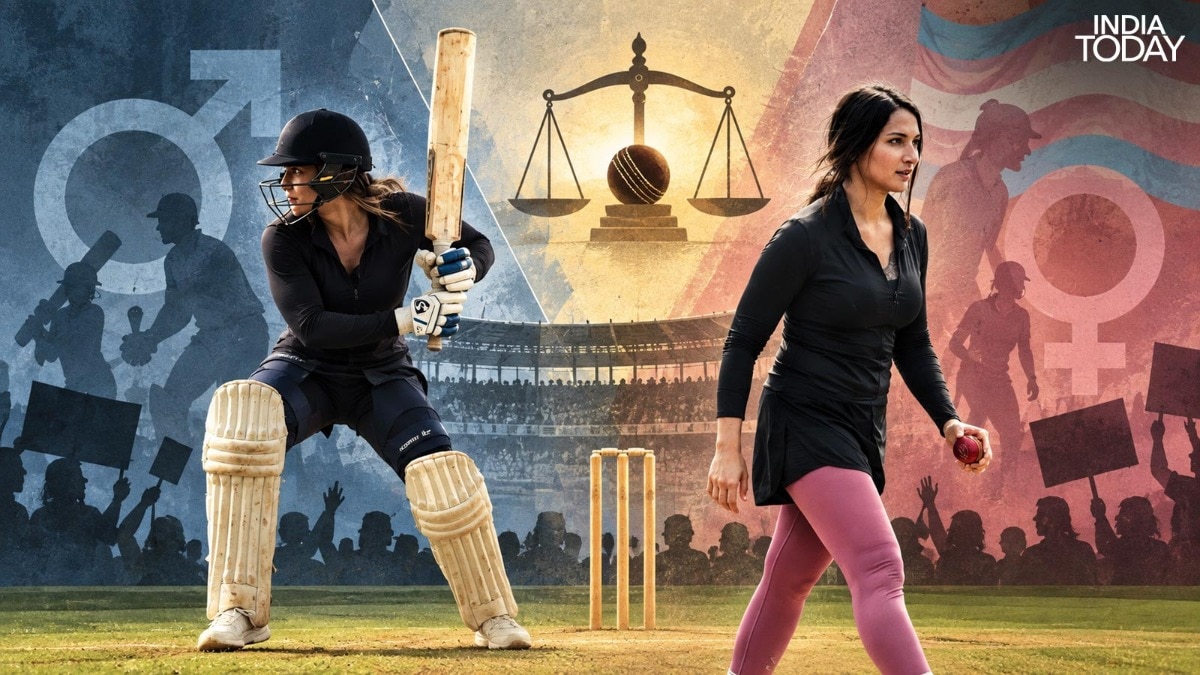
Transgender women in cricket: Can inclusion and competitive fairness coexist?
Category: Sports
Share
Archive
Like
Anaya Bangar, a transgender woman, can see a way back into competitive cricket. From March 2027, the transgender cricketer has been deemed eligible to participate in elite women's cricket in Australia.Anaya, the child of former India cricketer Sanjay Bangar, was assigned male at birth. She later underwent hormone therapy and gender-affirming surgery as she transitioned. That transition, a defining moment of Anaya's life, is also the key reason why she had to move away from the game.advertisement❮❯ Read Full StoryICC does not allow transgender women who have experienced male puberty to play international women's cricket, irrespective of whether they have undergone surgery or gender-affirming hormone treatment.But Cricket Australia, in 2026, allowed her participation in elite Australian cricket, sparking a major debate on whether transgender athletes should be allowed to participate in the women's game.
Marizanne Kapp, one of the world's most prominent female cricketers, publicly hit out at the decision, calling it "absolutely ridiculous". While most kept quiet, it would not come as a surprise if they had quietly dissented to the move in their own private circles.A similar instance occurred when the Algerian Boxer Imane Khelif's gender was questioned after her dominance in the women's boxing event at the Paris Olympics.
Cricket has always prided itself on being a game for everyone. But as the sport evolves, it is confronting a difficult question: should transgender women be allowed to compete in women's cricket?At the heart of the debate are two competing considerations: inclusion and competitive fairness.Supporters of inclusion argue that transgender athletes should be able to participate according to their gender identity. Those focused on protecting women's sport point to physiological differences that can influence performance.The cases of Bangar and and Canadian cricketer Danielle McGahey have now given a human dimension to a debate often dominated by policy and biology.WHAT'S ICC'S REASONING?In November 2023, the ICC introduced new gender eligibility regulations for international women's cricket following a nine-month consultation.The policy prevents transgender women who have experienced male puberty from competing in international women's cricket, irrespective of whether they have undergone surgery or gender-affirming hormone treatment.The ICC said the policy was based on four principles, in order of priority: protecting the integrity of the women's game, safety, fairness and inclusion.The regulations apply specifically to international women's cricket. Domestic cricket is left to individual member boards, which means countries can have different rules for their own competitions.That is where Cricket Australia's approach becomes important.WHAT DOES CRICKET AUSTRALIA ALLOW?Cricket Australia's framework provides a different model.The organisation allows transgender and gender-diverse players to participate in community cricket according to its inclusion framework, while elite cricket carries additional requirements.advertisementUnder Cricket Australia's current policy, a player seeking to compete in the female category of elite cricket must maintain serum testosterone below 10 nmol/L continuously for at least 12 months.That distinction has become particularly relevant to Bangar.Cricket Australia has confirmed that Bangar will be eligible to participate in elite women's cricket from March 2027, provided she continues to meet the applicable requirements. The decision followed an eligibility determination and consideration of medical information provided by Bangar, including the timing of her testosterone suppression treatment and definitive surgery.
Anaya Bangar will be eligible to take part in elite competitions in Australia from March 2027. (Image: Instagram/@anayabangar)
Until then, she can pursue community cricket, including Premier Cricket.The Women's Big Bash League is classified as elite cricket, meaning Bangar could potentially pursue a WBBL opportunity once eligible.But that distinction is crucial: eligibility does not mean selection.Bangar will still have to return to competitive cricket, rebuild her fitness and form, perform in Australian cricket and convince a franchise that she deserves a place.advertisementCricket Australia has opened a pathway. It has not handed her a contract.WHY DOES TESTOSTERONE MATTER?This is where the debate becomes more complicated.The women's category is regarded as a protected category in sport because biological differences can affect performance. Testosterone is one of the factors sporting bodies consider because it influences characteristics such as muscle mass and strength.Dr Khalid Khader of the Sports Injury Centre in New Delhi, believes testosterone is central to the discussion."The determination of sex is valid only for the female sports as it is considered a protected category. Testosterone has a massive advantage in women's sports upto 30% increase in performance and hence the strict norms by WADA and international federations to keep a level and fair playing standard."However, testosterone is not a simple measure of sex or sporting ability.Women can also naturally have higher levels of testosterone. Dr Khader points to conditions such as PCOD and certain differences in sex development that can result in higher-than-usual androgen levels."Hyperandrogenism in females can happen in PCOD, DSD (difference in sexual development) like 5 alpha reductase deficiency and Androgen insensitivity syndrome and in congenital adrenal hyperplasia outside of the transgender category."advertisementHyperandrogenism simply means higher-than-usual levels of androgen hormones such as testosterone.This is important because it shows why sporting authorities have struggled to create rules that are both fair and simple.WHAT HAPPENS AFTER HORMONE THERAPY?One of the central questions is whether hormone therapy can reduce the physical differences associated with male puberty enough for a transgender woman to compete fairly in women's sport.Hormone therapy can reduce testosterone levels and can lead to changes in characteristics such as muscle mass and strength.But the disagreement is over how much competitive advantage remains after those changes.Dr Khader says the current approach in some sports is to maintain low testosterone levels for a sustained period."The current cut-off is less than 5 nmol/L of testosterone for at least six months. This is the current norm, which provides leeway for biological women with hyperandrogenism."He also points to what he sees as the limitations of hormone suppression."A testosterone level of less than 5mmol for 6 months in accordance with the ABP (athlete biological passport) is the international consensus, though many consider this as unethical in transgenders as it can reduce performance, decrease haemoglobin, oxygen varying capacity and muscle mass. On the flip side there is also a retained 12% advantage in transgender women despite suppression with drugs."advertisementThe Athlete Biological Passport (ABP) tracks biological markers over time rather than relying on a single test.However, there is no single testosterone threshold that applies universally across sport. Cricket Australia's current elite policy, for example, requires serum testosterone to remain below 10 nmol/L continuously for at least 12 months.The distinction matters because eligibility rules differ between sports and governing bodies.CAN THE EFFECTS OF MALE PUBERTY BE REVERSED?This is one of the hardest questions in the debate.Hormone therapy can change the body, but the argument is about whether all of the physical effects associated with male puberty can be removed.Dr Khader believes some advantages developed during puberty may remain."Keeping constantly low levels of androgen levels the playing ground is the current consensus, but the advantage at puberty cannot be taken away, as is the case of steroid use during adolescence before competitive sports."Supporters of inclusion, however, point to the substantial physical changes that can occur through prolonged hormone therapy.The question is therefore not simply whether hormone therapy changes the body. It is how much competitive advantage remains and whether that advantage can be measured reliably.And that is precisely where the disagreement between the ICC and Cricket Australia becomes significant.The ICC has chosen male puberty as the decisive point for international women's cricket. Cricket Australia has instead retained a hormone-based eligibility framework for elite domestic competition.WHAT DOES SCIENCE SAY?There is no simple scientific test that can settle the debate.Dr Khader believes current testing has limitations."Athlete Biological Passport is the best we have at present, but cannot nullify already achieved advantages."He believes future research could offer more sophisticated ways of assessing athletes."We are working on gene-based precision techniques for determination of unfair advantage in sport with omic studies and biomarkers which can identify gene doping and other genetic changes."Omics broadly refers to the large-scale study of biological systems, including genes and proteins.Dr Khader also believes the way sport understands sex and biological differences will continue to evolve."The science is evolving. We started with Barr bodies, then moved to the SRY gene, and have now reached testosterone levels."A Barr body is an inactive X chromosome found in certain cells, while SRY is a gene on the Y chromosome involved in typical male sex development. Both have featured in the history of attempts to understand or determine sex in sport.Dr Khader believes genomics could eventually provide a clearer picture, although not necessarily a final answer."Once we get genomics into this we should get a clearer picture but that too cannot give definite answers as continuously adapting complex systems will change dynamically with the improvement of research and technology."DANIELLE MCGAHEY KNOWS THE COST OF CHANGEFor Danielle McGahey, this is not simply a question of science or policy.McGahey became the first transgender cricketer to play in an official international match when she represented Canada in 2023. She played six matches before the ICC changed its eligibility regulations later that year.The new rules meant she could no longer play international women's cricket.Her international career was over almost as soon as it had begun.Now McGahey is supporting Anaya Bangar, another transgender cricketer attempting to continue her career.McGahey has argued that transgender women should have a place in women's sport. She also believes the physical effects of gender-affirming hormone therapy are sometimes understated in public discussions.Her view is that hormone therapy can substantially reduce strength, muscle mass and other performance-related measures, with some characteristics moving closer to ranges seen among cisgender women.She believes the discussion should be guided by evidence rather than assumptions about transgender athletes.It is a different interpretation from Dr Khader's concern that some advantages associated with male puberty may remain.DANGERS OF SIMPLIFYING THE TESTOSTERONE DEBATEThe debate around testosterone is not new to women's sport.Indian sprinter Dutee Chand, who is not a transgender athlete, was barred from competition in 2014 after her naturally occurring testosterone levels were found to be above the threshold under athletics' then-existing hyperandrogenism regulations.Chand challenged the rule at the Court of Arbitration for Sport (CAS). In 2015, CAS suspended the regulations, finding that there was insufficient scientific evidence at the time to establish the extent of the performance advantage associated with naturally elevated testosterone and whether the restrictions were justified.The case did not establish that testosterone has no relationship with athletic performance. Instead, it highlighted how difficult it can be to quantify that relationship and decide what level of advantage should matter for eligibility.Chand's case was different from Bangar's because she had not undergone male puberty. But it does offer an important reminder: biological differences and testosterone levels do not always fit neatly into simple categories.For Bangar, the question is more specific: does sustained testosterone suppression sufficiently address the physiological considerations that Cricket Australia believes should govern eligibility for elite women's cricket?BANGAR'S PATHWAY IS NOW OPENFor Bangar, the difference between the two policies could determine whether she gets another opportunity to build a cricket career.She had previously stepped away from competitive cricket following her transition. Now she has the possibility of returning through Australia's women's cricket system.But that return will not be straightforward.Bangar will have to rebuild her fitness and form, play competitive cricket and prove that she belongs at the elite level.#WATCH | Mumbai, Maharashtra: On making a comeback in cricket, Anaya Bangar, a cricketer and the daughter of former Indian international cricketer and national batting coach, Sanjay Bangar, said, "...I am preparing to return to women's cricket in Australia with the aim of pic.twitter.com/NVgrICOjgT— ANI (@ANI) August 27, 2026The Women's Big Bash League may be an option once she becomes eligible, but eligibility alone will not guarantee a contract.That is what makes her case different from simply being "allowed" into a professional league.Cricket Australia has opened a pathway. It has not handed her a contract.A QUESTION WITHOUT AN EASY VERDICTThe transgender debate in cricket cannot easily be reduced to either inclusion or fairness.There are legitimate questions about protecting women's sport and understanding the effects of male puberty. There are equally serious questions about how much hormone therapy changes an athlete's physiology and whether exclusion can be justified after substantial physical transition.McGahey's case shows what happens when an international eligibility rule closes a pathway. Bangar's case shows what happens when a domestic governing body chooses a different approach.The ICC has answered the question by drawing the line at male puberty for international cricket. Cricket Australia has chosen a different framework, centred on hormone levels and individual eligibility assessments.Perhaps the more useful questions are these: Can competitive fairness and inclusion coexist? Should community, domestic and international cricket have the same rules? Can testosterone alone measure sporting advantage? Can the effects of male puberty be sufficiently mitigated? And if the science changes, should the regulations change with it?For now, cricket is left with a difficult balancing act: finding a framework that is fair, evidence-based, transparent and respectful of the athletes involved.The question remains open.- Ends
A note on cookies
Newshunt uses essential cookies to keep you signed in and to remember your language and country, so the site works the way you expect. With your permission, we'd also like to use analytics cookies to understand how people use Newshunt and improve it over time.
Accepting only affects analytics. To learn more, view our Privacy Policy or Terms & Conditions.
(0)Comments