


India's UPI Payment Revolution Faces New Hurdles as Merchants Brace for
Category: Business
Share
Archive
Like
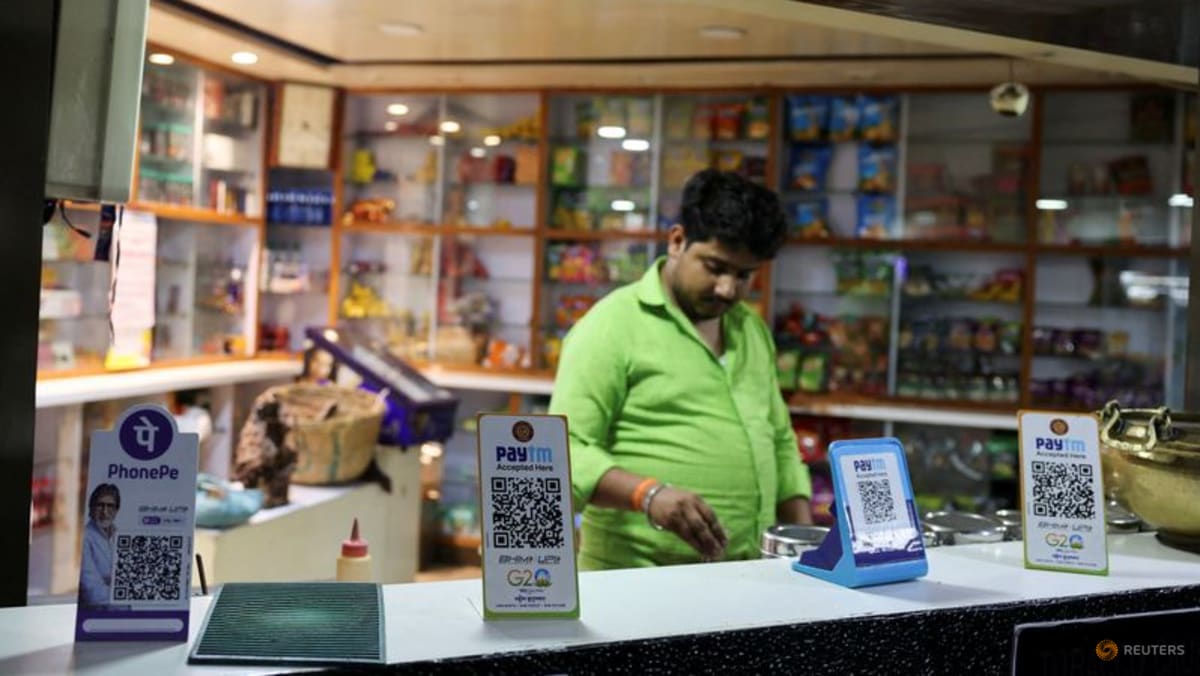
POLICY WIRE — Bengaluru, India — A decade ago, cash was the standard for transactions at Zachariah Jacob's restaurants in Delhi. Today, the Unified Payments Interface (UPI) has become the primary method for his customers, accounting for roughly 60 per cent of his business revenue.
While the system has been a boon for efficiency, a recent legislative shift threatens to change the landscape. On Aug 10, the Indian parliament passed a bill allowing banks and payment providers to levy fees on UPI transactions that exceed a specific, yet-to-be-determined threshold, ending a zero-fee policy that has been in place since 2020.
The Ministry of Finance has stated that any future fees will be nominal and significantly lower than those associated with credit cards. This move comes as the government seeks to move away from subsidies, having spent approximately 82.7 billion rupees (US$876 million) on UPI incentives over the four financial years leading up to March 2025.
The stakes are high for small businesses operating on thin margins. Piyush Jhunjhunwala, founder and CEO of the investment platform Stockify, warned that even a 0.5 per cent charge could erode 25 per cent of a merchant's profit if their total margin is only 2 per cent. Restaurant owners like Jacob, who sees monthly UPI volume reach 10 million rupees, estimate that a 0.5 per cent fee could cost his business 50,000 rupees monthly.
Zorawar Kalra, vice-president of the National Restaurant Association of India (NRAI), noted that while a 0.1 to 0.2 per cent fee might be manageable, anything higher would force businesses to reconsider their payment strategies. He emphasized that the goal should be to monetize the ecosystem without placing an undue burden on small enterprises or consumers.
Industry experts are also questioning the logic of percentage-based fees. Harsh Bhudolia, co-founder of the payments platform Takkada, pointed out that the technical cost of processing a 50,000-rupee transaction is essentially the same as a 500-rupee one. He suggested that a fixed-fee model might be more appropriate for high-value payments.
As the government pushes for infrastructure upgrades, cybersecurity, and fraud prevention, officials argue that the current subsidy model is no longer viable for the next phase of growth. Meanwhile, merchants are exploring alternatives, such as encouraging direct bank transfers or splitting payments to avoid potential thresholds.
Despite the uncertainty, UPI remains the dominant force in India's digital economy, accounting for 77.3 per cent of merchant transactions as of July. Whether businesses can absorb these new costs or will be forced to pass them on to customers remains the central question for the future of India's real-time payment system.
Reporting by Policy-Wire (PW)
A note on cookies
Newshunt uses essential cookies to keep you signed in and to remember your language and country, so the site works the way you expect. With your permission, we'd also like to use analytics cookies to understand how people use Newshunt and improve it over time.
Accepting only affects analytics. To learn more, view our Privacy Policy or Terms & Conditions.
(0)Comments