


First impressions matter: Islamabad's transformed avenues blend heritage with modern design
Category: Tourism
Share
Archive
Like
Moniba Iftikhar
ISLAMABAD, Sep 20 (APP):As dawn breaks over the horizon, warm golden light sweeps across Islamabad's freshly paved entry avenues. Pakistan's capital welcomes travelers with a redesigned urban landscape featuring landscaped green belts and colorful murals, public art and upgraded roads set against the Margalla Hills.
The city's major entry points and avenues are taking on a fresh appearance as the Capital Development Authority (CDA) carries out a range of beautification and improvement works aimed at making public spaces more attractive, functional and welcoming for residents and visitors alike.
From flower-filled road medians and tree-lined avenues to brightly painted underpasses and cultural murals, the changing street cape offers travelers a glimpse of Islamabad's distinctive combination of nature, art and modern urban design from the moment they enter the city.
The CDA spokesperson Nawazish Ali Asim, while talking to APP, said the authority was carrying out beautification and improvement works under the directives of the CDA Chairman, with particular attention being given to the visual appearance, greenery and functionality of major roads and public spaces.
He said Islamabad had a unique advantage in its natural setting, where the Margalla Hills, open spaces and distinctive cityscape come together to create a memorable experience for visitors.
He added that the improved surroundings would also strengthen the capital's image among foreign tourists and travel bloggers, who increasingly showcase Islamabad's scenic beauty, peaceful atmosphere and distinctive character to audiences around the world.
Nawazish said the government's development focus was also centered on improving the beauty, environment and overall infrastructure of Islamabad, giving renewed momentum to the CDA' s ongoing efforts to enhance the capital's appearance and create a more inviting urban landscape.
'The initiative goes far beyond cosmetic improvements,' Asim said, explaining the vision behind the capital's ongoing transformation. 'What we are pursuing is a comprehensive and sustained beautification strategy aimed at strengthening Islamabad's identity as a planned, green, clean, beautiful and environmentally sustainable federal
Capital.'
He said that we are working on a citywide approach covering major roads, entry points, green belts, medians, underpasses, flyovers and other important public spaces.
Nawazish Ali Asim said the government's present emphasis on the beautification of Islamabad had further encouraged the authority to accelerate efforts aimed at improving both the appearance and functionality of the capital.
Rather than treating individual walls, underpasses, or flyovers as isolated projects, he said, the CDA was adopting a coordinated approach in which infrastructure was being integrated with the surrounding natural and urban environment.
'The principal objective is to enhance the visual character, environmental quality and overall experience of Islamabad for residents, visitors, and international guests,' he said.
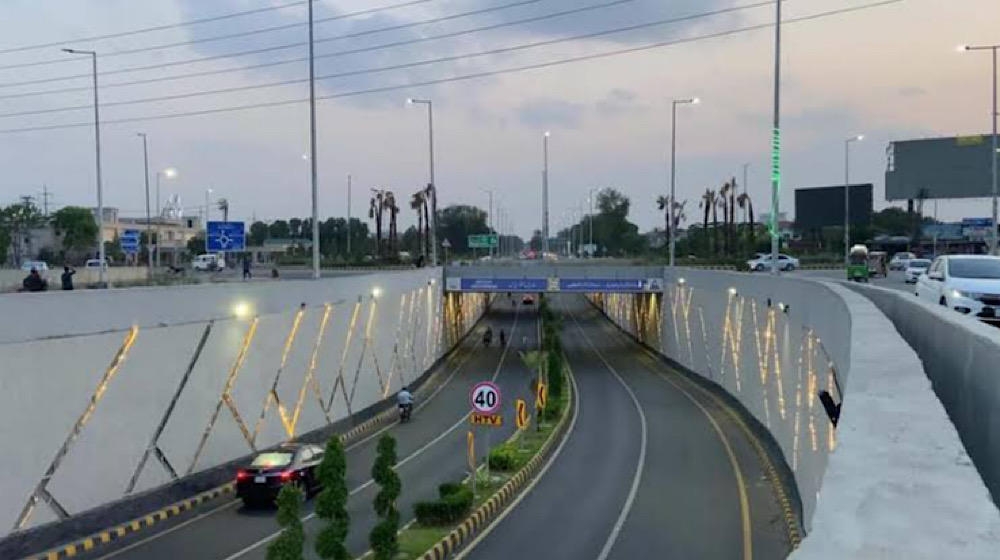
'We want to ensure that our main entry points, avenues, underpasses and green belts present a coordinated, modern, and attractive image. Major structures like the 7th Avenue underpasses or the Faisal Avenue flyover should not appear merely as functional concrete infrastructure, but as living, artistic components of our urban canvas.'
Public art has emerged as an important part of this transformation.
Large-scale murals, nature-inspired designs, traditional patterns and decorative lighting are being used to give major corridors a more distinctive appearance.
'Our aim is not simply to paint walls,' Asim emphasized. 'It is about developing visually meaningful public spaces where art complements Islamabad's natural landscape and planned urban character. We want every gateway to feel like an inviting, vibrant introduction to the city.'
Yet, beneath the colors and artwork, greenery remains at the heart of Islamabad's identity.
The CDA Environment Wing is carrying out targeted plantation along important corridors, including the planting of Tabebuia trees at Serena Interchange and Sapium trees along the 7th Avenue. The authority is also working towards its 'City of Flowers' concept through seasonal floral displays and landscaping at prominent locations.
'Plantation provides benefits far beyond beauty,' Asim said. 'Urban greenery contributes to cleaner air, shade, biodiversity and a reduction in the urban heat island effect. That is why plantation must be a continuous, year-round commitment rather than a seasonal campaign.'
The approach of the CDA is also moving towards greater use of technology and community participation. Plans include GIS-based plant tracking, automated irrigation systems and private-sector partnerships through Corporate Social Responsibility initiatives.
'Beautification is becoming a continuous citywide process,' Asim added. 'From upgraded footpaths and signage in commercial sectors to smart environmental monitoring and illuminated flyovers, our broader vision is clear: an Islamabad that is greener in its landscape, cleaner in its environment, and truly welcoming to everyone who steps into the capital.'
The changing face of the city is already attracting attention from motorists and visitors traveling along major routes.
Mukhtar Ahmad, a visitor from Sialkot in Islamabad, said the once-plain gray walls had acquired a new character through artwork and greenery.
'The artwork and greenery make Islamabad look different from other cities,' he observed, appreciating the way infrastructure and beautification had been combined.
A female motorist traveling along Srinagar Highway also admired the transformation, saying that artwork, green belts, and improved road surroundings had added color and character to the capital. Other motorists expressed similar views, particularly appreciating the transformation of underpasses where colorful paintings of flowers, trees, and natural scenes have replaced previously plain surfaces.
They said such artwork could be particularly appealing to children, making routine journeys more visually engaging while introducing younger generations to creativity and public art.
Another striking feature is the use of traditional Pakistani truck art on overhead bridges. Bilal Javed, a motorist taking a selfie on Islamabad Expressway, appreciated the initiative as a way of bringing elements of Pakistani culture into everyday public spaces.
Talking to APP, he said such artwork could help project the country's cultural heritage before both domestic and international visitors.
'It is important to introduce the younger generation to the colors and artistic traditions of Pakistani culture,' he said, adding that public artwork could also help children learn about the country's history and heritage.
Daniyal Raja, another citizen, also appreciated the incorporation of cultural artwork into public spaces, saying it could give Islamabad a more distinctive identity while allowing residents and visitors to experience elements of Pakistani art and culture during their daily journeys.
'It is a brilliant transformation of neglected urban spaces,' observed Minal, a student at Margalla College (F-7/4) who also documents local culture as a vlogger. 'Instead of leaving underpasses and bridge walls cold, grey and empty, these paintings breathe identity and character into public corridors.They seamlessly integrate our cultural roots into daily commutes, engaging everyday passersby who might not otherwise step into an art gallery.'
The motorists also pointed to improvement works along Islamabad Expressway, Jinnah Avenue, Srinagar Highway, Margalla Road, Club Road, Park Road, and Faisal Avenue. Alongside road improvements, attention is being given to lane markings, zebra crossings, footpath repairs, median strips, green belts, and rights-of-way.
As Islamabad continues to evolve, the objective is not simply to make its roads more colorful. The broader effort is to bring infrastructure, greenery, culture, and public spaces together while preserving the capital's carefully planned character.
The transformation is also drawing the attention of national and international bloggers, who are capturing the colorful underpasses, landscaped avenues, cultural artwork, and changing street capes in their videos, sharing glimpses of Islamabad's evolving beauty with audiences at home and abroad.
As the evening light falls across the capital and the Margalla Hills stand quietly above its wide avenues, the new colors of Islamabad begin to tell their own story. Trees line the roads, murals brighten once-gray walls, and illuminated structures add a new glow to familiar routes.
Far above the mist-draped crests of the Margalla Hills, the capital's aesthetic revival breathes new life into its most cherished landmarks. From the quiet shores of Rawal Lake and the terraced blooms of Daman-e-Koh to the majestic silhouette of the Faisal Mosque, Islamabad is no longer a city you merely pass through it is an immersive, living
canvas.
As vibrant murals, lush green belts and illuminated avenues weave these iconic spaces together, the federal capital leaves an indelible imprint on every traveler.
Foreign visitors and international bloggers routinely marvel at its picturesque grandeur, drawing striking comparisons between the city's pristine, forest-lined corridors and Europe's most lauded green capitals. Capturing a landscape where rich cultural heritage harmonizes with modern civic design, Islamabad reveals itself as a scenic sanctuary where nature, art and urban life effortlessly meet.
A note on cookies
Newshunt uses essential cookies to keep you signed in and to remember your language and country, so the site works the way you expect. With your permission, we'd also like to use analytics cookies to understand how people use Newshunt and improve it over time.
Accepting only affects analytics. To learn more, view our Privacy Policy or Terms & Conditions.
(0)Comments